


Global Fuel Oil Price Outlook – Q2 2026
Global Fuel Oil Prices continued on a downward trajectory in Q2 2026, declining by approximately 8–12% quarter-on-quarter across major markets, reflecting weaker industrial demand and softer crude benchmarks. Procurement activity remained cautious, particularly in Asia and Europe, as buyers deferred bulk purchases amid ample inventories. According to insights aligned with Fuel Oil Price Trend 2026, the market experienced persistent bearish pressure due to refinery output normalization and reduced seasonal demand.
For detailed data and real-time updates, refer to the comprehensive analysis on
Fuel Oil Price Trend 2026, where IMARC Group tracks verified monthly benchmarks using a robust pricing intelligence methodology.
Fuel Oil Prices June 2026: Regional Price Snapshot
- Northeast Asia: USD 0.88/kg (↓ -7.4%)
- Europe: USD 1.51/kg (↓ -12.2%)
- South America: USD 0.72/kg (↓ -11.1%)
- North America: USD 3.39/kg (↓ -0.6%)
The June spread highlights a significant regional price disparity, with North America maintaining a premium due to higher refining and logistics costs, while South America and Asia benefited from lower import parity pricing. The broader decline across all regions indicates synchronized demand softness, although the limited drop in North America suggests relatively stable downstream consumption.
Across regions, June pricing reflects weak global industrial fuel demand, with Europe and South America experiencing the steepest declines due to reduced manufacturing activity and high inventory levels. Northeast Asia followed a similar trend, driven by subdued bunker fuel demand. North America, however, showed relative resilience due to consistent domestic consumption and tighter supply conditions.
Fuel Oil Price Analysis: Where Are Prices Moving?
North America (USA)
Fuel oil prices in the United States averaged USD 3.39/kg, registering a marginal -0.6% decline. The modest drop reflects steady demand from power generation and industrial sectors. Supply remained balanced, supported by stable refinery utilization rates and controlled export volumes.
Asia-Pacific (Japan, India, China)
Across Asia-Pacific, prices ranged around USD 0.88/kg (regional average) with a -7.4% downward movement. China and India saw weakened industrial fuel demand, while Japan’s bunker fuel consumption softened amid lower shipping activity. Increased refinery output in China contributed to oversupply pressure.
South America (Brazil)
Brazil recorded prices near USD 0.72/kg, declining by -11.1%. Reduced imports and slower industrial consumption drove the drop. Additionally, currency fluctuations and lower freight costs contributed to easing pricing pressure in the region.
Supply And Demand Overview – June 2026
Supply conditions remained adequate to oversupplied globally, with refiners increasing output following improved crude availability. Middle Eastern exporters maintained stable shipments, while Asian refiners operated at higher utilization rates.
On the demand side, consumption weakened across key sectors including shipping, power generation, and heavy industry. Seasonal factors also played a role, as lower heating demand reduced fuel oil usage in Europe. The imbalance between supply growth and subdued demand created downward pricing pressure across all major regions.
Fuel Oil Price Index & Historical Analysis
The Fuel Oil Price Index for June 2026 showed a continued decline compared to May, reflecting consistent bearish sentiment throughout Q2. Compared to Q1 2026, prices have dropped significantly due to normalization after earlier supply disruptions.
Historical analysis indicates that fuel oil prices peaked in early 2026 due to tighter crude supply and strong winter demand. However, as supply chains stabilized and seasonal demand tapered off, prices corrected sharply. Data derived from IMARC Group’s June 2026 price-tracking database confirms that the current index level is aligned with pre-seasonal averages, signaling a return to equilibrium conditions.
Fuel Oil Price Forecast 2026: What To Expect In The Next 12 Months
Looking ahead, the market is expected to remain moderately volatile with a slight downward bias in the short term, followed by gradual stabilization.
- Q3 2026: Prices may remain under pressure due to continued oversupply and weak industrial demand.
- Q4 2026: Seasonal demand recovery could support mild price increases.
- Early 2027: Stabilization expected as supply-demand balance improves.
Key forecast drivers include crude oil price movements, refinery output levels, and global economic recovery trends. Buyers are likely to adopt a cautious procurement strategy, focusing on short-term contracts.
Key Factors Affecting Prices: Monthly Perspective
Several critical factors influenced pricing trends in June:
- Crude Oil Benchmarks: Lower crude prices directly reduced fuel oil production costs.
- Refinery Output: Increased refining capacity utilization led to higher supply levels.
- Shipping Demand: Reduced maritime fuel consumption impacted bunker fuel pricing.
- Freight Costs: Declining freight rates lowered import costs in Asia and South America.
- Industrial Activity: Slower manufacturing output reduced demand for heavy fuel oils.
These factors collectively contributed to the downward trend observed during the month.
What Is Fuel Oil?
Fuel oil is a residual product derived from crude oil refining, primarily used in power generation, marine bunkering, and industrial heating. It is categorized into different grades based on viscosity and sulfur content, including low-sulfur fuel oil (LSFO) and high-sulfur fuel oil (HSFO).
Its pricing is closely linked to crude oil markets, refinery operations, and environmental regulations, making it a critical commodity for global energy and industrial sectors.
Recent Developments: June 2026 Highlights
- Refinery Expansion in Asia: Increased capacity in China led to higher exports and pricing pressure.
- Shipping Sector Slowdown: Reduced global trade activity lowered bunker fuel demand.
- Stable Middle East Exports: Consistent supply from major producers maintained global availability.
- Environmental Regulations: Ongoing compliance requirements influenced demand for low-sulfur variants.
These developments reinforced the bearish trend observed across major markets.
Stay Ahead with Latest Price Trends – Grab Your Sample Today: https://www.imarcgroup.com/fuel-oil-pricing-report/requestsample
FAQs About Fuel Oil Prices Analysis & Market Insights
What Is The Fuel Oil Price Index In June 2026?
The fuel oil price index declined in June 2026 compared to May, reflecting continued weak demand and stable supply. It indicates a broader market correction following higher prices earlier in the year.
How Does The Fuel Oil Price Chart Look For 2026?
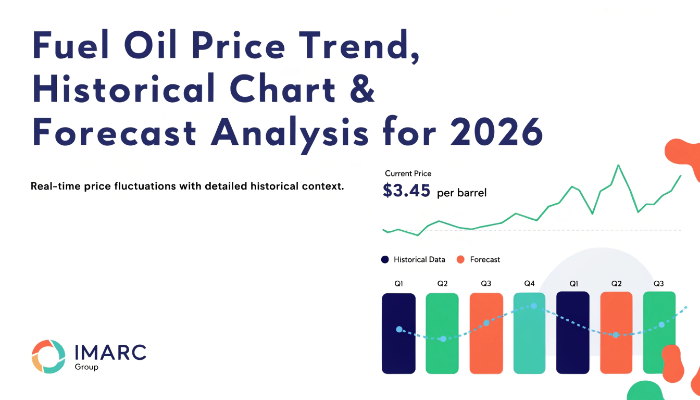
The fuel oil price chart for 2026 shows a clear downward trend in Q2 after a stronger Q1. Prices peaked early in the year and gradually declined due to improving supply conditions and reduced seasonal demand.
What Is The Fuel Oil Price Forecast 2026?
The outlook suggests mild volatility with a short-term bearish trend, followed by stabilization toward late 2026. Seasonal demand recovery and supply adjustments are expected to support prices in the longer term.
Conclusion
Fuel oil prices in June 2026 reflected a broad-based global decline, driven by oversupply and weak industrial demand. Regional disparities remain significant, particularly between North America and other markets. Moving forward, market stability will depend on supply discipline and demand recovery. Procurement strategies should remain flexible to navigate ongoing volatility.
Contact Us:
IMARC Group
134 N 4th St., Brooklyn, NY 11249, USA
Email: sales[@]imarcgroup.com
Tel No:(D) +91 120 433 0800
United States: +1-201971-6302
