


Top Chin Reduction in Dubai for Personalized Treatment
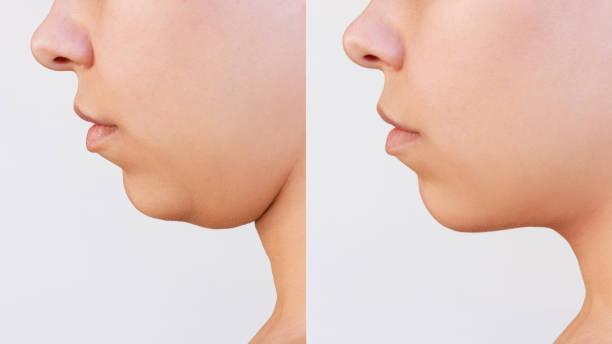
A human face is not a standardized template. It is a unique map of genetic inheritance, environmental adaptation, and personal history. No two chins are exactly alike.
Therefore, the very concept of a "standard" chin reduction surgery is flawed. A top-tier result cannot come from a one-size-fits-all approach. It must emerge from a deeply personalized treatment plan.
The best chin reduction in Dubai is not a product a surgeon retrieves off a shelf. It is a bespoke solution, meticulously designed around the unique data of your individual facial skeleton, your soft tissue envelope, and your personal aesthetic goals.
Personalization is the difference between a surgical outcome that looks technically correct and one that looks beautifully, naturally yours.
The Diagnostic Blueprint: Your Face, Your Numbers
Personalized treatment begins with a comprehensive diagnostic process. Before any surgery is discussed, the surgeon must become intimately familiar with the unique architecture of your face.
This is not a subjective "eye-balling." It is a data-driven analysis.
-
Cephalometric Analysis: A lateral X-ray of your skull is taken. The surgeon traces your bone contours and performs a mathematical analysis. They measure your SNA, SNB, and ANB angles to precisely quantify your maxilla-mandibular relationship. They measure your vertical facial thirds to the millimeter.
-
3D CBCT Scan: A 3D scan rotates your skull on a screen. The surgeon measures your chin's absolute width, its symmetry, and the exact three-dimensional path of the mental nerve canals on both sides.
-
Soft Tissue Assessment: The surgeon physically examines the thickness of your chin pad, the tone of your mentalis muscle, and the elasticity of your skin.
From this data set, a complete anatomical diagnosis is made. For example: "This patient has a 5mm vertical chin excess, a 3mm horizontal over-projection, and a 2mm horizontal deviation to the right, with a moderate soft tissue pad thickness."
The surgical plan is built from this diagnosis. It is a prescription written for a single person.
Tailoring the Osteotomy: Not All Chin Reductions Are the Same
The term "chin reduction" is an umbrella. A personalized treatment plan specifies the exact type and combination of bone cuts required.
A surgeon might perform one of the following, or a combination:
-
Simple Sliding Setback: For a chin that is purely over-projecting.
-
Vertical Reduction with Wedge Resection: For a chin that is purely too long.
-
Narrowing Genioplasty: For a chin that is purely too wide.
-
Asymmetrical Multi-Segment Osteotomy: For a chin that is off-center and needs to be shifted in multiple planes.
-
Combined Reduction: A single procedure might involve a setback and a vertical reduction and a narrowing, all performed through the same intraoral incision.
The specific osteotomy lines are drawn digitally in the pre-operative plan. They are not improvised in the operating room. This bespoke plan ensures that no healthy bone is unnecessarily removed and that every cut serves a specific proportional goal.
Gender-Specific Personalization in Chin Contouring
One of the most important, and often overlooked, aspects of personalization is gender. The aesthetic ideals for a male and female chin are fundamentally different.
A generic reduction can produce an unnatural, gender-incongruent result. A personalized approach respects and sculpts for the patient's gender identity.
Personalized Chin Contouring for a Female Face:
-
The goal is typically a softer, narrower, and more tapered shape.
-
The chin point is often rounded and more retruded.
-
The width is narrowed to create an elegant, oval, or V-shaped lower face.
-
The transitions from chin to jawline are smoothed and softened.
Personalized Chin Contouring for a Male Face:
-
The goal is usually a strong, but not dominant, chin.
-
The shape is preserved as more squared-off and defined.
-
The reduction is more conservative in projection to maintain a masculine profile.
-
A flat, horizontal lower chin border is maintained.
This is not about applying stereotypes; it is about respecting the patient's identity and creating a result that feels authentic to them.
Incorporating the Patient's Personal Aesthetic Goals
True personalization goes beyond the surgeon's mathematical ideals and incorporates the patient's subjective vision.
This is the art of the consultation. The patient might bring reference images. The surgeon's job is to interpret these images and translate them into a surgically achievable plan.
For example:
-
A patient might say, "I want a softer, more feminine profile, but I'm afraid of looking too weak."
-
The surgeon translates this: "We will perform a conservative 3mm setback, not a full 6mm. We will round the chin point but preserve a slight anterior projection to maintain a gentle strength in your profile."
This collaborative dialogue builds a shared vision. The patient understands what is anatomically possible and what the limits are. The surgeon understands the patient's deepest aesthetic anxieties and aspirations. The final, personalized plan is a consensus, a signed agreement between surgeon and patient on the exact, millimetric goal of the operation.
Conclusion
Personalized treatment is the ethical and aesthetic core of top-tier chin reduction surgery. It is a process that honors the unique data of your anatomy, respects your gender identity, and listens to your personal vision. It refuses the shortcut of a generic template in favor of a bespoke surgical sculpture. For a treatment experience where every decision is tailored exclusively to you, from the digital plan to the final suture, Tajmeels Clinic defines the personalized approach to surgical care.
FAQs
1. How do I communicate my personal aesthetic goals to my surgeon?
Bring images of profiles and jawlines you find beautiful, but more importantly, describe how you want to feel. Use descriptive words like "soft," "elegant," "strong," or "tapered." Discuss what you want to keep about your face, not just what you want to change.
2. Will a personalized chin reduction look natural?
Yes. The entire purpose of personalization is to create a result that is in harmony with your specific cheekbones, nose, and jaw angles, not a generic ideal. A personalized result looks like a natural, balanced version of you.
3. Can I get a chin reduction that preserves my strong jawline?
Absolutely, particularly for male patients. This is a classic personalized request. The surgeon will reduce the excess projection or height that creates imbalance but will use contouring techniques to preserve the squared-off, defined shape and the strong jawline transition.
4. What is a "multi-segment osteotomy" and why might it be personalized for me?
This is an advanced technique where the chin bone is cut into several pieces and reassembled. It is personalized for patients who have complex, multi-dimensional problems such as a chin that is too wide, too long, and deviated to one side simultaneously. It solves all the problems in one surgery.
5. How do I know if my surgeon’s plan is truly personalized or just a standard approach?
If the surgeon can show you your own cephalometric tracing with the specific measurements, your 3D CBCT scan with the planned osteotomy lines digitally drawn, and a computer-generated morph of your profile based on these specific measurements, you are receiving a personalized, data-driven treatment plan.

 Bangla