


Suffering an injury because of someone else's negligence can leave you with medical bills, lost income, and uncertainty about the future. If settlement negotiations don't result in fair compensation, filing a personal injury lawsuit may become necessary. Understanding the legal process can help reduce uncertainty and allow you to make informed decisions every step of the way. The experienced attorneys at The Trial Lawyers guide injured individuals through complex personal injury cases while protecting their rights and pursuing the compensation they deserve.
When Does a Personal Injury Lawsuit Become Necessary?
Not every personal injury claim ends up in court. Many cases are resolved through negotiations with the insurance company. However, a lawsuit may become necessary when:
-
The insurance company denies liability.
-
A fair settlement cannot be reached.
-
The extent of your injuries is disputed.
-
Multiple parties are involved.
-
The insurance company refuses to negotiate in good faith.
Filing a lawsuit doesn't automatically mean your case will go to trial. In fact, many lawsuits are resolved before reaching the courtroom.
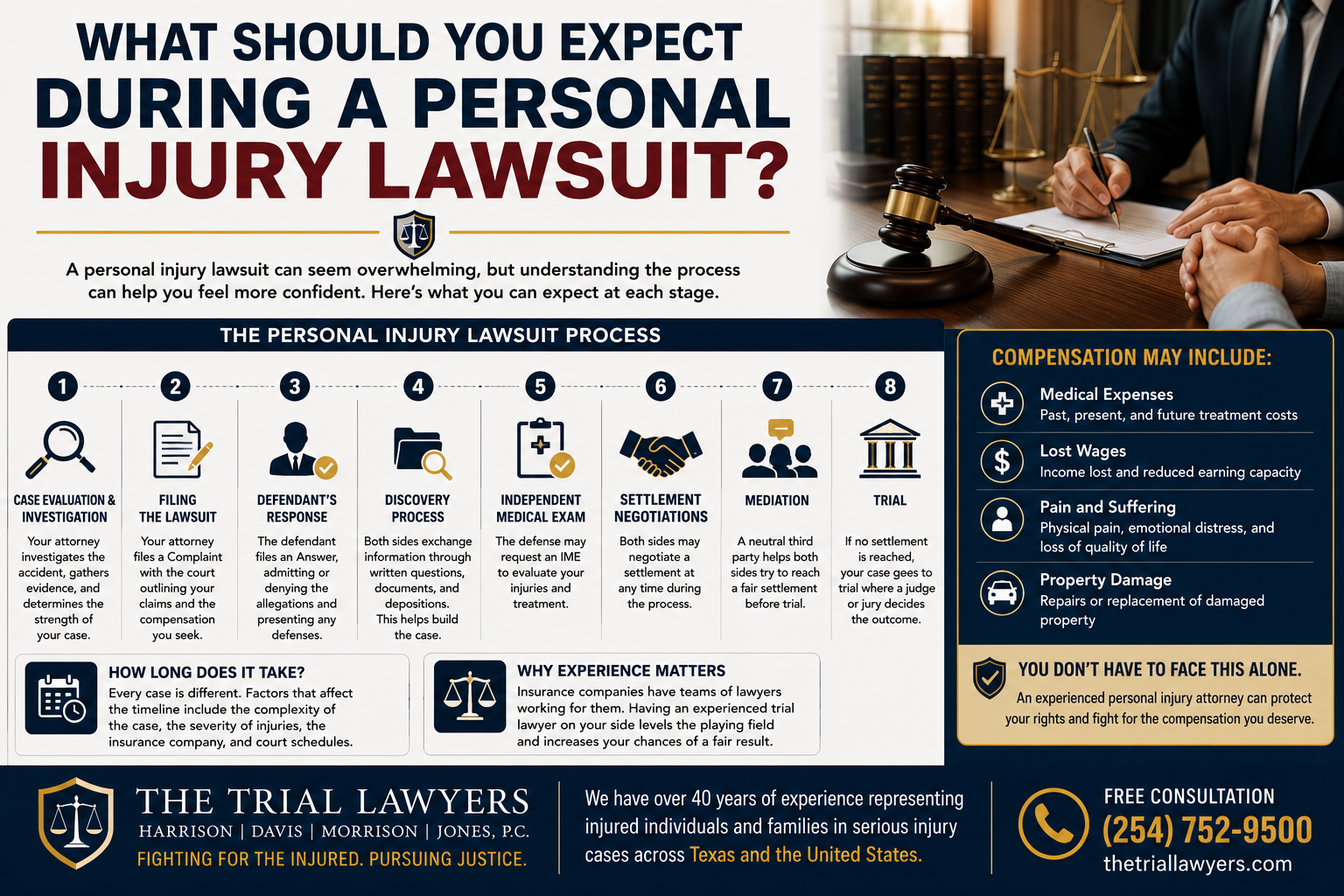
Step 1: Case Evaluation and Investigation
The first stage involves gathering evidence to determine whether you have a strong legal claim.
Your attorney may collect:
-
Police reports
-
Medical records
-
Accident scene photographs
-
Witness statements
-
Surveillance footage
-
Employment records
-
Medical bills
-
Expert opinions
A thorough investigation helps establish negligence and calculate the full value of your damages.
Step 2: Filing the Lawsuit
If negotiations fail, your attorney files a legal document called a Complaint.
The Complaint outlines:
-
What happened
-
Who is responsible
-
The injuries you suffered
-
The damages being requested
Once filed, the defendant is formally notified and given an opportunity to respond.
Step 3: The Defendant's Response
After receiving the lawsuit, the defendant files an Answer.
The response may:
-
Admit certain facts
-
Deny liability
-
Raise legal defenses
-
Challenge the amount of damages
At this point, both sides begin preparing their evidence.
Step 4: The Discovery Process
Discovery is often the longest stage of a personal injury lawsuit.
During discovery, both parties exchange information and evidence related to the case.
This process may include:
Written Questions (Interrogatories)
Each side answers written questions regarding the accident, injuries, and damages.
Requests for Documents
Documents commonly requested include:
-
Medical records
-
Insurance policies
-
Employment records
-
Accident reports
-
Repair estimates
-
Photographs
-
Financial records related to damages
Depositions
A deposition is sworn testimony taken outside the courtroom.
You, witnesses, medical professionals, and other parties may be asked questions by attorneys while a court reporter records the testimony.
Depositions often play an important role in evaluating the strengths and weaknesses of a case.
Step 5: Independent Medical Examination
In some cases, the defendant's insurance company may request an Independent Medical Examination (IME).
The purpose is to evaluate:
-
The nature of your injuries
-
Whether treatment is reasonable
-
Future medical needs
-
Permanent impairments
Your attorney can help prepare you for this process and explain your rights.
Step 6: Settlement Negotiations
Even after a lawsuit has been filed, settlement discussions usually continue.
Negotiations may occur:
-
After discovery
-
Following depositions
-
During mediation
-
Shortly before trial
As additional evidence becomes available, both sides gain a clearer understanding of the strengths of the case, often increasing the likelihood of settlement.
Step 7: Mediation
Many courts encourage or require mediation before trial.
During mediation:
-
A neutral third party facilitates negotiations.
-
Both sides present their positions.
-
Settlement options are discussed.
-
No final decision is imposed unless both parties agree.
Mediation often resolves disputes while avoiding the time and expense of a trial.
Step 8: Going to Trial
If no settlement is reached, the lawsuit proceeds to trial.
During trial, both sides present:
-
Witness testimony
-
Medical evidence
-
Expert opinions
-
Physical evidence
-
Accident reconstruction analysis
Attorneys question witnesses, present arguments, and explain why their client should prevail.
Depending on the case, the decision may be made by a judge or a jury.
What Types of Compensation May Be Available?
If your lawsuit is successful, you may recover compensation for both economic and non-economic damages.
These may include:
Medical Expenses
Compensation may cover:
-
Emergency care
-
Hospitalization
-
Surgeries
-
Rehabilitation
-
Prescription medications
-
Future medical treatment
Lost Income
You may recover damages for:
-
Lost wages
-
Reduced earning capacity
-
Future income losses
Pain and Suffering
These damages compensate for the physical and emotional effects of your injuries, including:
-
Chronic pain
-
Emotional distress
-
Anxiety
-
Loss of enjoyment of life
-
Permanent disability
Property Damage
If applicable, compensation may include repair or replacement of damaged property.
How Long Does a Personal Injury Lawsuit Take?
Every case is different.
The timeline depends on factors such as:
-
The complexity of the accident
-
The severity of injuries
-
The number of parties involved
-
Court schedules
-
Settlement negotiations
-
Availability of evidence
Some lawsuits resolve within several months, while others may take a year or longer if trial becomes necessary.
How Can You Strengthen Your Case?
There are several steps you can take to support your claim throughout the legal process:
-
Seek medical treatment immediately.
-
Follow your doctor's recommendations.
-
Keep copies of all medical bills and records.
-
Save photographs and videos related to the accident.
-
Avoid discussing your case on social media.
-
Keep track of missed work and lost income.
-
Preserve receipts for accident-related expenses.
-
Communicate openly with your attorney.
Taking these steps can help strengthen the evidence supporting your claim.
Why Legal Representation Matters
Personal injury lawsuits involve legal procedures, deadlines, negotiations, and detailed evidence. Insurance companies often have experienced legal teams working to minimize payouts.
An experienced personal injury attorney can:
-
Investigate the accident thoroughly.
-
Preserve critical evidence.
-
Work with medical and accident reconstruction experts.
-
Handle communications with insurance companies.
-
Negotiate aggressively on your behalf.
-
Present a compelling case if trial becomes necessary.
Having knowledgeable legal representation allows you to focus on your recovery while your attorney manages the legal process.
Conclusion
A personal injury lawsuit can seem overwhelming, but understanding each stage of the process helps you know what to expect and how to prepare. From investigating the accident and gathering evidence to negotiating a settlement or presenting your case at trial, every step plays an important role in protecting your rights.
If you've been injured because of someone else's negligence, seeking experienced legal guidance early can make a significant difference. A thorough investigation, strong evidence, and effective legal representation can help you pursue the compensation you need to move forward with confidence.
