


Why Is the North American Frozen & Canned Seafood Market Surging Toward $33 Billion?
The North American dining landscape is undergoing a quiet revolution. Amid soaring busy schedules, evolving dietary trends, and a cultural shift toward health-conscious eating, a quiet staple of the pantry and freezer aisle has taken center stage: preserved seafood. Gone are the days when canned fish or frozen fillets were viewed merely as emergency provisions or uninspired fallback options. Today, they are prized as convenient, nutrient-dense, and highly versatile protein sources for modern households across the continent.
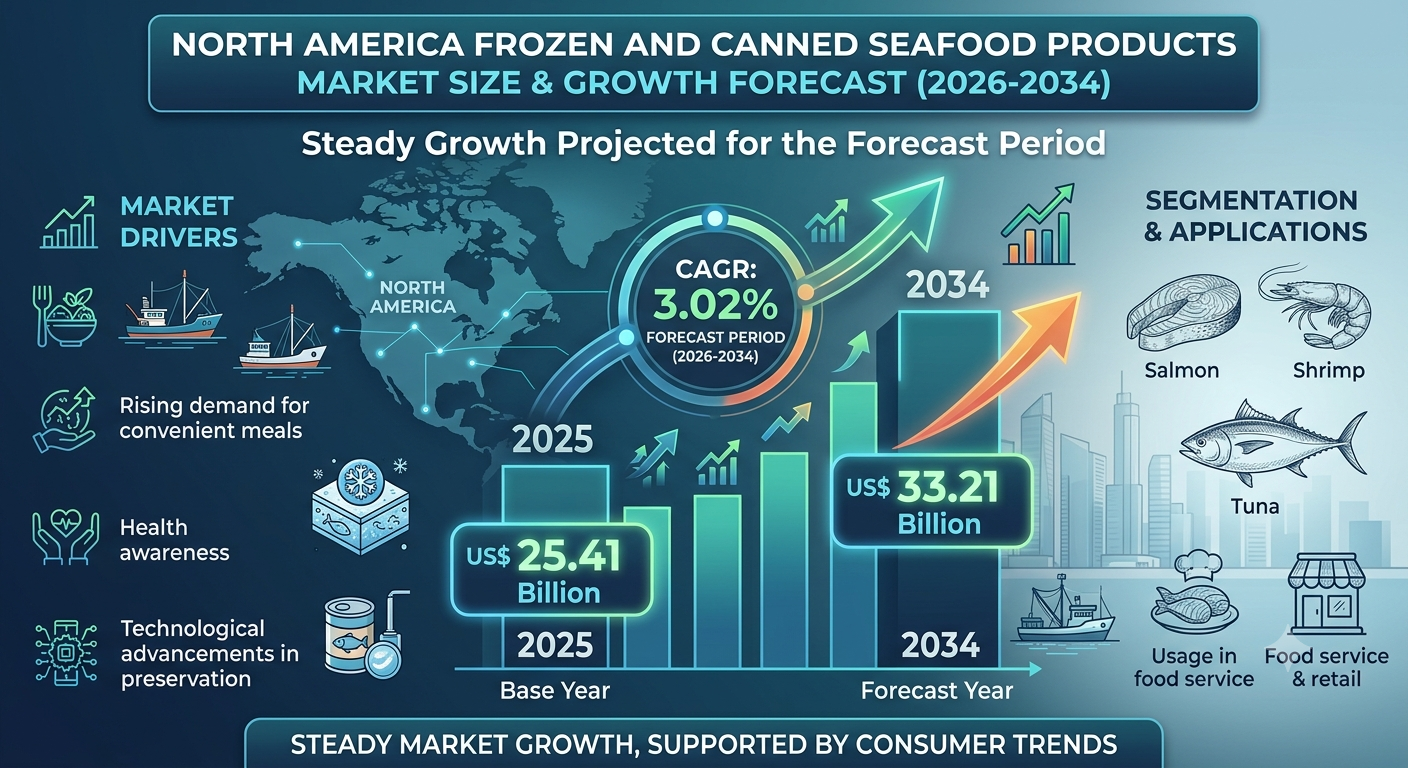
According to market research data, the North American frozen and canned seafood market is on a steady upward trajectory. Valued at $25.41 billion in 2025, the regional market is projected to reach $33.21 billion by 2034. This expansion represents a compound annual growth rate (CAGR) of 3.02% between 2026 and 2034, driven by a convergence of consumer convenience, health trends, and rapid advancements in cold chain logistics.
Market Overview: Preserving Freshness and Longevity
At its core, preserved seafood encompasses two primary methods of extension: freezing and canning. Freezing relies on low temperatures to halt microbial decay while locking in the natural taste, texture, and nutritional value of aquatic species. Canning involves vacuum sealing fish or shellfish in cans or glass jars followed by a thermal heating process, rendering the product shelf-stable for months or even years.
Across North America, species such as tuna, salmon, shrimp, sardines, and crab remain household staples.
                  PRESERVATION & CONSUMPTION DYNAMICS

  ┌───────────────────────────────┐   ┌───────────────────────────────┐
  │         FROZEN SEAFOOD        │   │        CANNED SEAFOOD         │
  ├───────────────────────────────┤   ├───────────────────────────────┤
  │ • Quick-frozen fillets & shrimp│   │ • Shelf-stable tuna & sardines│
  │ • Ideal for stir-fries & grills│   │ • Ready for salads & pasta    │
  │ • Retains texture & moisture  │   │ • Highly economical protein   │
  └───────────────────────────────┘   └───────────────────────────────┘
The enduring popularity of these items stems from their dual appeal: functional convenience and culinary flexibility. Frozen marine products allow home cooks to prepare meals like grilled salmon, shrimp stir-fries, or fish tacos without the pressure of cooking fresh catch within 24 to 48 hours. Meanwhile, canned offerings serve as instant, high-protein bases for lunch sandwiches, grain bowls, and Mediterranean-style salads.
Key Growth Drivers Behind the Expansion
1. The Surge in Demand for Convenient, Ready-to-Cook Options
Modern North American lifestyles demand quick meal solutions that do not compromise nutritional value. Cleaning, gutting, and filleting raw fish can present a steep learning curve or time barrier for busy professionals and families. Pre-cleaned fillets, deveined shrimp, and pre-seasoned seafood mixes effectively eliminate these prep hurdles.
To capture this demand, seafood processors are continually innovating. For example, in March 2026, High Liner Foods Incorporated introduced its Sea Cuisine Skillet Meals product line at the Seafood Expo North America (SENA), showcasing how brands are tailoring easy-to-cook, pre-seasoned offerings directly to time-strapped consumers.
2. Heightened Health Awareness and the Protein Boom
Despite long-standing recommendations in the Dietary Guidelines for Americans advising adults to consume at least 8 ounces of seafood per week, historically only about 50% of U.S. adults meet this threshold. This gap presents a significant growth opportunity for accessible, value-added products.
               HEALTH BENEFITS DRIVING CONSUMPTION

         ┌───────────────────────────────────────────┐
         │          Omega-3 Fatty Acids              │
         │      (Heart, Brain, & Joint Health)       │
         └─────────────────────┬─────────────────────┘
                               │
         ┌─────────────────────┴─────────────────────┐
         │            High Lean Protein              │
         │     (Supports Keto, Paleo, & Med Diets)   │
         └─────────────────────┬─────────────────────┘
                               │
         ┌─────────────────────┴─────────────────────┐
         │         Essential Micronutrients          │
         │       (Vitamin D, B12, & Selenium)        │
         └───────────────────────────────────────────┘
With the proportion of working women reaching 58.51% in recent years, household demand for fast, nutrient-rich meals has climbed. Seafood fits seamlessly into popular dietary paradigms—including Keto, Paleo, and Mediterranean diets—due to its high concentration of lean protein, essential omega-3 fatty acids, and vital micronutrients.
3. Breakthroughs in Cold Chain Logistics and Packaging
The expansion of the preserved seafood market relies heavily on underlying supply chain infrastructure. Technological developments in flash freezing ensure that fish are frozen within hours of harvest, locking in peak freshness and preventing texture degradation.
Distribution capabilities have similarly expanded through major industry partnerships. In July 2025, Beaver Street Fisheries signed a major distribution agreement with Dot Foods, one of the largest food redistributors in North America, streamlining the movement of frozen inventory across retail and foodservice networks. Modern packaging—such as easy-peel foil lids, single-serve portion cups, and recyclable vacuum seals—further enhances safety, usability, and environmental appeal.
Market Headwinds: Sustainability and Volatility
Despite optimistic growth forecasts, the North American industry faces distinct environmental and operational challenges.
Environmental Stewardship and Eco-Labeling
Overfishing, habitat destruction, and marine conservation are central concerns for modern consumers. Meeting stringent environmental guidelines and acquiring eco-certifications (such as Marine Stewardship Council or Aquaculture Stewardship Council labels) requires substantial capital investment and administrative oversight. Brands that fail to demonstrate transparent sourcing risk losing market share among eco-conscious shoppers.
Supply Chain Vulnerabilities and Price Volatility
The seafood industry is inherently vulnerable to external shocks, including fluctuating fuel costs, ocean temperature shifts, regulatory catch quotas, and international trade policies.
      SUPPLY CHAIN RISKS & COST PRESSURES

 ┌─────────────────────────────┐   ┌─────────────────────────────┐
 │     Environmental Factors   │   │     Economic Pressures      │
 ├─────────────────────────────┤   ├─────────────────────────────┤
 │ • Climate/Ocean shifts      │   │ • Fuel & freight volatility │
 │ • Strict harvest quotas     │   │ • Cold chain energy costs   │
 │ • Stock level fluctuations  │   │ • Consumer price sensitivity│
 └─────────────────────────────┘   └─────────────────────────────┘
Because a significant volume of seafood consumed in North America is imported, international logistics disruptions directly impact wholesale pricing. Furthermore, maintaining an uninterrupted cold chain—from harvest vessel to retail freezer—demands continuous energy and infrastructure expenditure.
Segment Breakdown: Fish, Shrimp, and Retail Channels
Frozen & Canned Fish vs. Shrimp
-
Fish (Tuna, Salmon, Cod, Sardines): The fish segment retains a dominant position, driven primarily by canned tuna sales and frozen salmon fillets. Salmon's reputation as a superfood rich in heart-healthy oils continues to boost both frozen and shelf-stable formats.
-
Shrimp: Shrimp remains one of the most widely consumed seafood items in North America due to its rapid cooking time, mild flavor profile, and versatility across American, Asian, and Mediterranean cuisines. Pre-peeled, deveined, and tail-off varieties dominate freezer aisles.
Distribution Dynamics: Convenience Stores and E-Commerce
-
Convenience Stores: C-stores cater to on-the-go consumers in urban settings, stocking single-serve canned fish, seafood snacks, and microwavable frozen options.
-
Online & Direct-to-Consumer (DTC): Powered by insulated thermal packaging and dry-ice logistics, online grocery services and direct-to-consumer seafood subscriptions have grown rapidly, granting shoppers access to specialty catches and premium frozen portions.
Country Spotlight: Regional Market Nuances
+-------------------------------------------------------------------+
|               NORTH AMERICAN SEAFOOD MARKET BY COUNTRY            |
+---------------+---------------------------------------------------+
| Country       | Key Market Characteristics                        |
+---------------+---------------------------------------------------+
| United States | Largest market by volume; heavy reliance on       |
|               | convenience formats and imported wild-caught stock|
+---------------+---------------------------------------------------+
| Canada        | Rich coastal fisheries; strong emphasis on local  |
|               | salmon/lobster and sustainable aquaculture        |
+---------------+---------------------------------------------------+
| Mexico        | High domestic consumption of tuna & sardines;     |
|               | rapid growth in modern supermarket refrigeration   |
+---------------+---------------------------------------------------+
United States: The Consumption Powerhouse
The U.S. represents the largest consumer base in the region. Industry consolidation and strategic acquisitions continue to shape supply capabilities. In December 2024, Pacific Seafood acquired the Kodiak, Alaska operations of Trident Seafoods—including three processing facilities (Star of Kodiak, Alkod, and Kodiak Near Island)—significantly expanding its capacity to process and distribute wild whitefish and wild salmon across North America.
Canada: Sustainable Abundance
Flanked by the Atlantic and Pacific oceans, Canada benefits from a robust domestic fishery infrastructure. Canadian consumers place a high premium on sustainability and regional sourcing. Industry investment remains active; for instance, in March 2025, Cooke Incorporated expanded its operational footprint by acquiring AquaBounty Canada's Prince Edward Island facilities, strengthening regional seafood production.
Mexico: Cultural Integration & Affordability
In Mexico, canned seafood—particularly canned tuna and sardines—holds a significant share of household food spending due to its affordability and convenience. Concurrently, expanding supermarket chains and improved domestic cold storage infrastructure are driving rapid adoption of frozen seafood products in urban areas.
To support sustainable domestic consumption, educational initiatives are also gaining traction. In March 2026, a prominent Mexican non-governmental organization launched the 256-page book "Conociendo México a través de sus pescados y mariscos", designed to educate consumers on regional marine species, sustainable harvest practices, and traditional culinary applications.
Major Industry Competitors
The North American market is populated by an array of specialized seafood processing entities, global harvesters, and commercial distributors, including:
-
High Liner Foods Inc. – A leading North American processor of value-added frozen seafood products.
-
Mowi ASA – A global leader in salmon farming and processing with extensive distribution across North America.
-
Beaver Street Fisheries – A major importer and distributor offering comprehensive frozen seafood portfolios.
-
Dongwon Industries Ltd / FCF Co. Ltd – Key international players with significant market share in shelf-stable canned tuna and seafood products.
-
Admiralty Island Fisheries Inc. (Aqua Star), American Tuna Inc., Dulcich Inc. (Pacific Seafood), and Gulf Shrimp Co. LLC – Key specialized regional processors and suppliers.
Community Discussion & Final Thoughts
As the North American frozen and canned seafood market advances toward its $33.21 billion valuation by 2034, consumer preferences will continue to shape how marine proteins are harvested, packaged, and prepared.
Community Questions
-
Pantry vs. Freezer: Do you rely more on shelf-stable canned seafood (like tuna or sardines) for quick protein, or do you prefer keeping frozen salmon and shrimp on hand for dinner prep?
-
Sustainability Priorities: Does eco-certification (like MSC labels) influence your seafood purchases, or do you prioritize price and convenience first?
-
Packaging Preferences: What innovations—such as easy-peel foil lids or microwave-safe steam bags—have made seafood easier to incorporate into your routine?

 Bangla