


Fitaro 0.25mg Explained: Safe Weight Management Guide
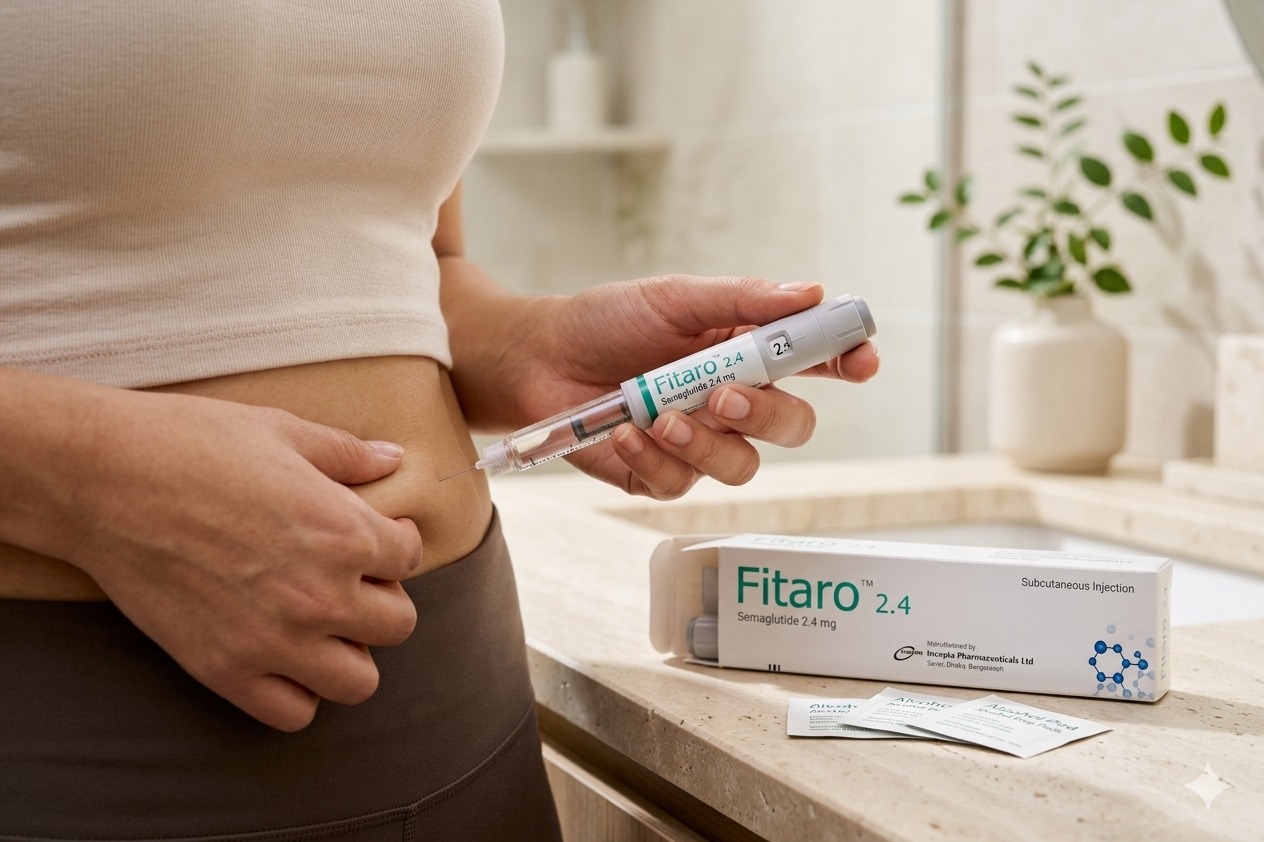
A syringe box with an unfamiliar brand name and a number 0.25mg printed on the label isn't much to go on. If that's what landed in front of you, or you've been told this is where treatment begins, it makes sense to want the full picture before your first dose rather than piecing it together from forum posts and pharmacy listings.
Fitaro is a semaglutide injection manufactured by Incepta Pharmaceuticals and sold mainly across South Asian markets. It is not the FDA-approved or MHRA-licensed brand available in the United States or United Kingdom; in those countries, the same active ingredient, semaglutide, is sold under the approved names Ozempic (type 2 diabetes) and Wegovy (chronic weight management). The molecule behaves the same way no matter which box it comes in, but regulatory approval affects everything from manufacturing quality control to what a prescriber can legally and responsibly recommend. This guide covers how Fitaro 0.25mg works, what the dose is actually for, how to manage the early weeks, and the safety information that matters most, plus a troubleshooting section for the problems people most commonly run into.
A Quick Overview
Fitaro 0.25mg is a pre-filled, single-dose subcutaneous injection pen containing 0.25 mg of semaglutide. It's not a stand-alone treatment dose; it's the entry point of a longer titration schedule designed to let your body adjust gradually, minimizing digestive side effects before the dose increases toward a therapeutic level.
How Semaglutide Works in the Body
Semaglutide belongs to a class of medicines called GLP-1 receptor agonists. GLP-1 (glucagon-like peptide-1) is a hormone your gut naturally releases after eating. It signals fullness to the brain, slows gastric emptying, and helps regulate insulin release relative to blood sugar levels. Semaglutide mimics this hormone but remains active in the bloodstream for about a week, which is why dosing is weekly rather than daily.
In practical terms, this means food sits in the stomach longer, hunger cues quiet down, and blood sugar swings become less extreme after meals three effects that, together, support both glycemic control and gradual weight loss.
Approved Uses and Who May Benefit
Semaglutide-based treatment is generally approved for:
-
Improving blood glucose control in adults with type 2 diabetes, alongside diet and exercise
-
Chronic weight management in adults with a BMI of 30+ (obesity), or 27+ with at least one weight-related condition such as hypertension, type 2 diabetes, or dyslipidemia
It tends to be considered when previous diet and exercise efforts haven't produced lasting change, or when excess weight is directly contributing to a separate, diagnosed medical condition.
Who Should Avoid It
Certain groups should not use semaglutide without very close medical supervision, or should avoid it altogether:
-
Anyone with a personal or family history of medullary thyroid carcinoma, or Multiple Endocrine Neoplasia syndrome type 2 (MEN 2)
-
Anyone with a prior episode of pancreatitis
-
Anyone with a known hypersensitivity to semaglutide or any component of the injection
-
Anyone pregnant, breastfeeding, or planning pregnancy within the next two months
-
Anyone with significant gastroparesis or another condition that already delays stomach emptying
Dosage Overview
Semaglutide treatment plans generally follow a step-up titration, illustrated below. A prescriber may adjust the pace based on side effects and response.
|
Treatment Period |
Typical Weekly Dose |
|---|---|
|
Weeks 1–4 |
0.25 mg |
|
Weeks 5–8 |
0.5 mg |
|
Weeks 9–12 |
1 mg |
|
Weeks 13–16 |
1.7 mg |
|
Week 17 onward |
Up to 2.4 mg (weight management) |
This information is general and educational; your prescriber sets the actual schedule based on your health profile.
How to Take It, Missed Doses, and Overdose
The injection is given subcutaneously — under the skin of the abdomen, thigh, or upper arm — once weekly, on a consistent day, with or without food. Rotating the injection site each week helps prevent irritation and lumps under the skin.
Missed dose: If fewer than 5 days have passed since the missed date, take it as soon as you remember. If more than 5 days have passed, skip that dose entirely and resume your regular weekly schedule — never double up to compensate.
Overdose: Signs may include severe nausea, vomiting, or low blood sugar (particularly if also taking insulin or a sulfonylurea). Seek medical attention promptly if an overdose is suspected.
Side Effects and Serious Warning Signs
Common, often temporary: nausea, vomiting, diarrhea, constipation, bloating, and stomach discomfort — most noticeable in the days following a dose increase.
Contact a healthcare professional promptly for: severe abdominal pain radiating to the back (a possible sign of pancreatitis), yellowing of the skin or eyes, sudden vision changes, signs of an allergic reaction, or a new lump or swelling in the neck.
Drug, Food, and Alcohol Interactions
Because semaglutide slows gastric emptying, it can change how quickly other oral medications are absorbed — this is particularly relevant for insulin, sulfonylureas, and blood thinners, where dose timing may need adjusting. Alcohol doesn't interact with semaglutide directly, but it can intensify nausea and make blood sugar harder to manage, so it's worth discussing moderation with a provider. High-fat meals may also worsen nausea during the early weeks.
Pregnancy, Breastfeeding, and Storage
Semaglutide is not recommended during pregnancy or while breastfeeding. Anyone planning to conceive should discuss stopping treatment well in advance with their provider. Unopened pens require refrigeration; once in use, most can be kept at room temperature for a limited period specified in the manufacturer's instructions — always check the leaflet that comes with your specific prescription.
Monitoring and When to Contact a Healthcare Professional
Regular follow-up typically includes weight tracking, blood glucose or HbA1c testing, and a review of side effects. Reach out to a healthcare professional between appointments if side effects worsen, if you notice signs of dehydration from persistent vomiting or diarrhea, or if you're unsure whether a symptom is expected or concerning — it's always better to ask than to guess.
Troubleshooting Common Challenges
Most people run into a handful of predictable hurdles during the first few months. Here's how each is typically approached:
Persistent nausea after a dose increase
Eating smaller, slower meals and avoiding rich or greasy food often helps. If nausea is severe or doesn't ease within a week or two, a prescriber may hold the current dose longer before increasing it further, rather than pushing ahead on schedule.
Constipation or bloating
Increasing water intake, adding fiber gradually, and staying physically active can help regulate digestion. This is a common, usually manageable side effect rather than a sign something is wrong.
Injection site soreness or small lumps
This is often linked to injecting in the same spot repeatedly. Rotating between the abdomen, thigh, and upper arm on a set rotation usually resolves it.
A weight-loss plateau
Weight loss on semaglutide is rarely linear — plateaus partway through treatment are common and don't necessarily mean the medication has stopped working. This is a good moment to revisit diet, activity levels, and sleep with a provider rather than assuming a dose change is the only fix.
Difficulty affording ongoing treatment
Cost is one of the most common real-world barriers to staying on GLP-1 therapy. Patient assistance programs, manufacturer savings cards (where applicable), and discussing lower-cost alternatives with a prescriber are all worth exploring before stopping treatment abruptly.
Common Mistakes to Avoid
-
Increasing the dose early to “speed things up” — this raises side effects without improving outcomes
-
Assuming every semaglutide brand carries the same regulatory approval and quality assurance
-
Stopping suddenly after reaching a goal weight, instead of discussing a taper or maintenance plan
-
Skipping meals to “help” the medication work, which can worsen nausea and fatigue
-
Not mentioning all current medications to the prescriber, especially insulin or blood thinners
Myths vs. Facts
|
Myth |
Fact |
|---|---|
|
Starting on a higher dose works faster |
Higher starting doses mainly increase side effects, not the speed of results |
|
All semaglutide products are the same, regardless of brand or country |
Only specific brands (Wegovy, Ozempic) carry FDA/MHRA approval in the US/UK |
|
The weight loss is permanent once you reach your goal |
Weight often returns toward baseline without continued lifestyle habits after stopping |
|
It replaces the need for diet and exercise |
Results are consistently better when paired with lifestyle changes, not instead of them |
|
Nausea means the medication isn't working |
Nausea is a common, expected side effect during dose increases, unrelated to effectiveness |
Product Alternatives
Semaglutide is one of several GLP-1-based options. Liraglutide (Saxenda) is an older alternative requiring daily rather than weekly injections. Tirzepatide (Mounjaro or Zepbound) acts on two hormone pathways instead of one and is sometimes used when semaglutide alone hasn't achieved the desired result. In the US and UK, Wegovy and Ozempic remain the approved semaglutide brands with full regulatory oversight. No single option is universally superior — the right choice depends on individual health history, tolerability, cost, and a prescriber's clinical judgment.
Frequently Asked Questions
Is Fitaro 0.25mg the same medication as Ozempic or Wegovy? It shares the same active ingredient, semaglutide, but Fitaro is produced for South Asian markets and is not the FDA- or MHRA-approved brand available in the US or UK.
How long should I stay on the 0.25mg starting dose? Typically about four weeks, though a prescriber may extend this period if side effects need more time to settle before increasing the dose.
Can Fitaro 0.25mg be prescribed for weight loss without diabetes? Yes, when the BMI and health criteria for chronic weight management are met and treatment is supervised by a licensed provider.
What should I do if I feel nauseated every week after my injection? Mention it to your prescriber — adjusting meal timing, food choices, or the pace of dose increases can often make a meaningful difference.
Is it safe to combine semaglutide with other weight-loss supplements? Not without medical guidance. Combining GLP-1 medications with other appetite suppressants or stimulant-based supplements can increase side effects and isn't recommended without a provider's input.
A Final Word
None of this replaces a conversation with a healthcare professional who knows your medical history. If you're considering semaglutide for weight management, the safest next step is to discuss your goals, health conditions, and current medications with a licensed doctor or pharmacist, and to source treatment only through channels they've confirmed are appropriate for where you live.
Medical Disclaimer
This article is intended for educational purposes only and should not be considered medical advice. Always consult a qualified healthcare professional before starting, stopping, or changing any medication. Do not ignore professional medical advice because of information found in this article. Product availability may vary by country, and medications should only be used as directed by a licensed healthcare provider.

 Bangla