


Stem Cell Treatment and New Hope for Autism Care
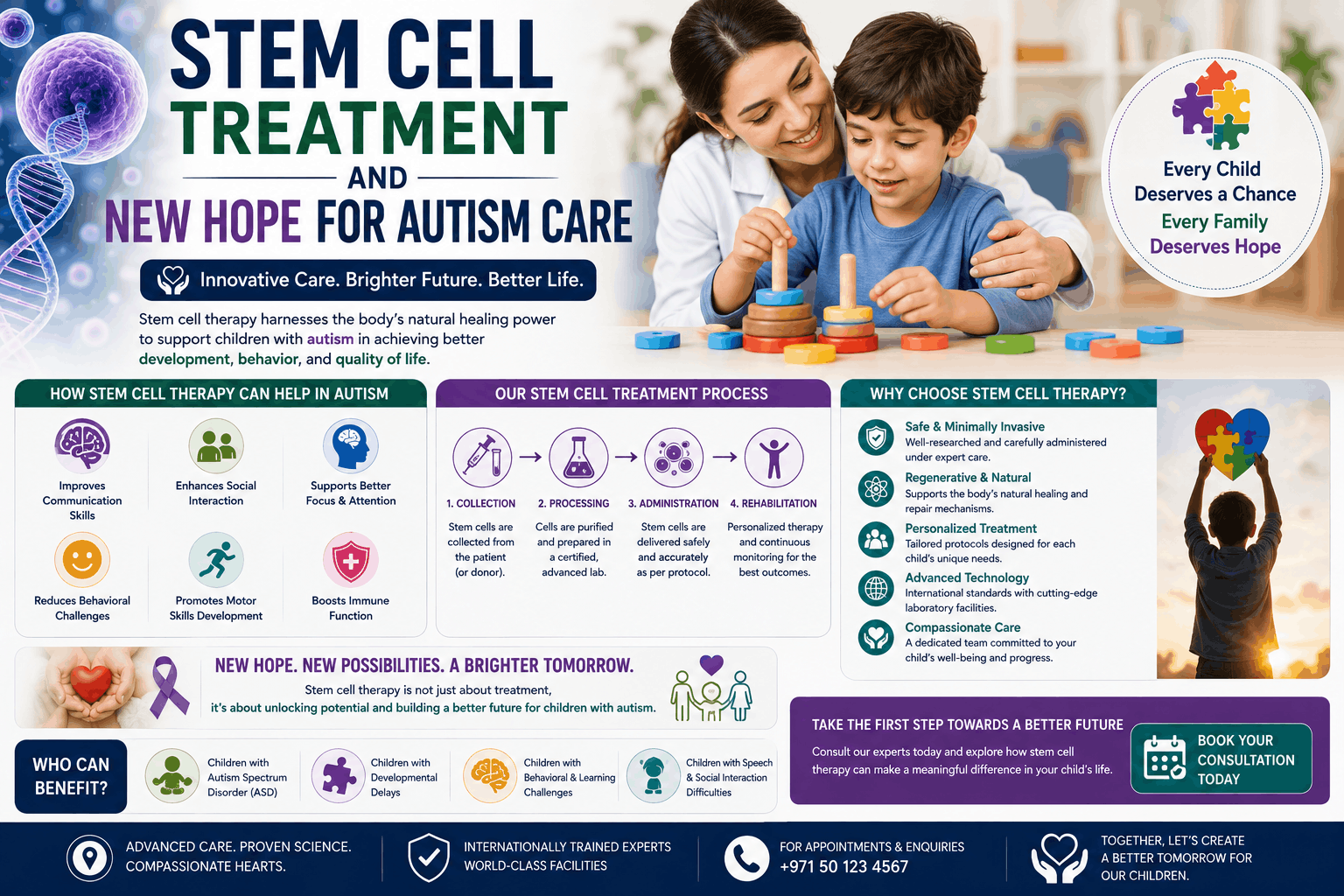
Autism is a developmental disability that may impact communication, social interaction, behavior and learning. Plans will necessarily be different for each person with autism. Scientists want to learn how stem cells can repair or function in damaged or affected tissues and stem cell treatment has gained attention in medical research. It is crucial to bear in mind that Stem cell therapy for autism is currently under study and is not yet proven to be a real solution to the disease.
Understanding Autism and Its Different Needs
There are numerous ways that autism spectrum disorder might present itself. Speech and communication may be difficult for some children and social interactions and changes in others daily routines may be difficult. Sensory sensitivities are concurrent in a number of instances as well. Support can be given efficiently in the early days and assist children in developing skills that can benefit them for the future and in facing everyday problems.
Treatment tends to be targeted toward individual needs. This can involve speech therapy, occupational therapy, behavioural support and educational programmes. In many cases, doctors will collaborate with therapists to develop a plan that works for them. Another reason why family involvement is important is the ability for children to practise new skills at home with regular support from family.
What Researchers Are Exploring About Stem Cells
Research into stem cells is being conducted due to their capacity to differentiate into other cell types and their involvement in tissue repair. Scientists are looking at how these cells interact with inflammation, immune response and cell communication.
There are some studies which have investigated the use of stem cells in children who have autistic disorders. But scientific testing is a work in progress! Findings of clinical research have been inconsistent and currently insufficient strong evidence exists to support the use of stem cells for the treatment of the primary characteristics of autism. Clinics that claim a guaranteed treatment or a cure should be avoided by families.
How Researchers Are Studying Stem Cell Therapy for Autism
Clinical studies are underway to uncover the potential risks and benefits of Stem cell therapy for autism. Some studies have been directed towards trying to understand if specific stem cell types could affect immune function or other biological mechanisms involved in autism.
Research might use various treatment methods. In some studies, cells have been obtained from the umbilical cord or bone marrow. Patients are carefully monitored before and after treatment is carried out. They can include measuring communication, behaviour, and social interaction, among other things.
Note that just because improvements during a study does not necessarily mean that the stem cells brought about the improvement. Therapy, education and natural development can also be a way for learning new skills with children. That is why it is necessary to have more and better studies.
Key Points Families Should Know Before Treatment
-
The use of stem cells, which is not yet accepted as the regular standard of care for autism, is still a developing area.
-
There is ongoing research and results are continuing to be evaluated.
-
Other clinics will use different electric cells and treatments.
-
Families must enquire about scientific bases of the suggested treatment.
-
One of the healthcare professionals should discuss potential risks and benefits with the individual.
-
Parents need to be aware of guarantees for improvement.
Hiring a Medical Team At Carefully
The patient's family needs to look into the clinic and the medical team in detail before opting for experimental treatments. An important item to review is the doctor's background and credentials. It should also be asked from the family where the cells were derived from and how the cells were prepared.
If someone has a clear treatment plan, they'll explain what will happen before, during and after the procedure. Discuss potential side effects and after-care. The Clinic should offer factual information instead of guarantees.
Also, ask whether the treatment is a part of a registered clinical trial. The conduct of enquiries among children should be ethically and safely done. Families should consult with their child's usual doctor before making a decision.
Looking Ahead to Future Autism Research
The future of autism studies may lead to a greater understanding of the biological aspects of autism. The unique properties of stem cells may give scientists a chance to use them to study these processes and develop new strategies. Nonetheless, they will require more studies to understand the potential for these treatments.
The first and crucial step for the family is to make informed and sound decisions (based on reliable medical information). New research is motivating, but cannot replace such established support and stem cell treatment. There may be future evidence to help doctors comprehend the function of stem cells in the future care of autism patients.
The use of stem cells is a scientific interest and not a treatment for autism. Families should make informed decisions after reading the evidence, talking through options with qualified health care providers, and weighing the pros and cons of any experimental medical intervention.
Conclusion
Research into stem cells is a rapidly emerging field in medicine, and currently not used to help treat autism. It's important for families to know about the evidence and talk with trained healthcare providers about their decisions. Families can make informed choices with the correct guidance and carry on therapies and support to develop important skills.
For families exploring stem cell treatment and stem cell therapy for autism, NJINSKY Clinic can be considered for guidance and personalized care options.

 Bangla