


An interior designer working on a Bandra apartment lobby once sent us the same brief three times, rejecting each round of samples for the same reason — the finish looked plastic under the lobby's warm lighting. That's the problem nobody warns first-time buyers about. Picking a FRP pot isn't just a material decision. It's a finish decision, a proportion decision, and often a lighting decision, and getting only the material part right still leaves you with something that photographs badly.
Between premium homeowners furnishing a terrace, interior designers finishing a commercial lobby, and garden centers stocking shelves for the festive season, "the right planter" means completely different things depending on who's asking. Fiberglass gives you the range to answer all three, but only if you actually know what to specify instead of just picking from whatever's in stock. Here's how the good designs differ from the merely available ones.
The Design Variables Buyers Usually Ignore
Most buyers browse FRP pot by shape and color. That's the least important part of the decision, honestly.
Silhouette and Proportion
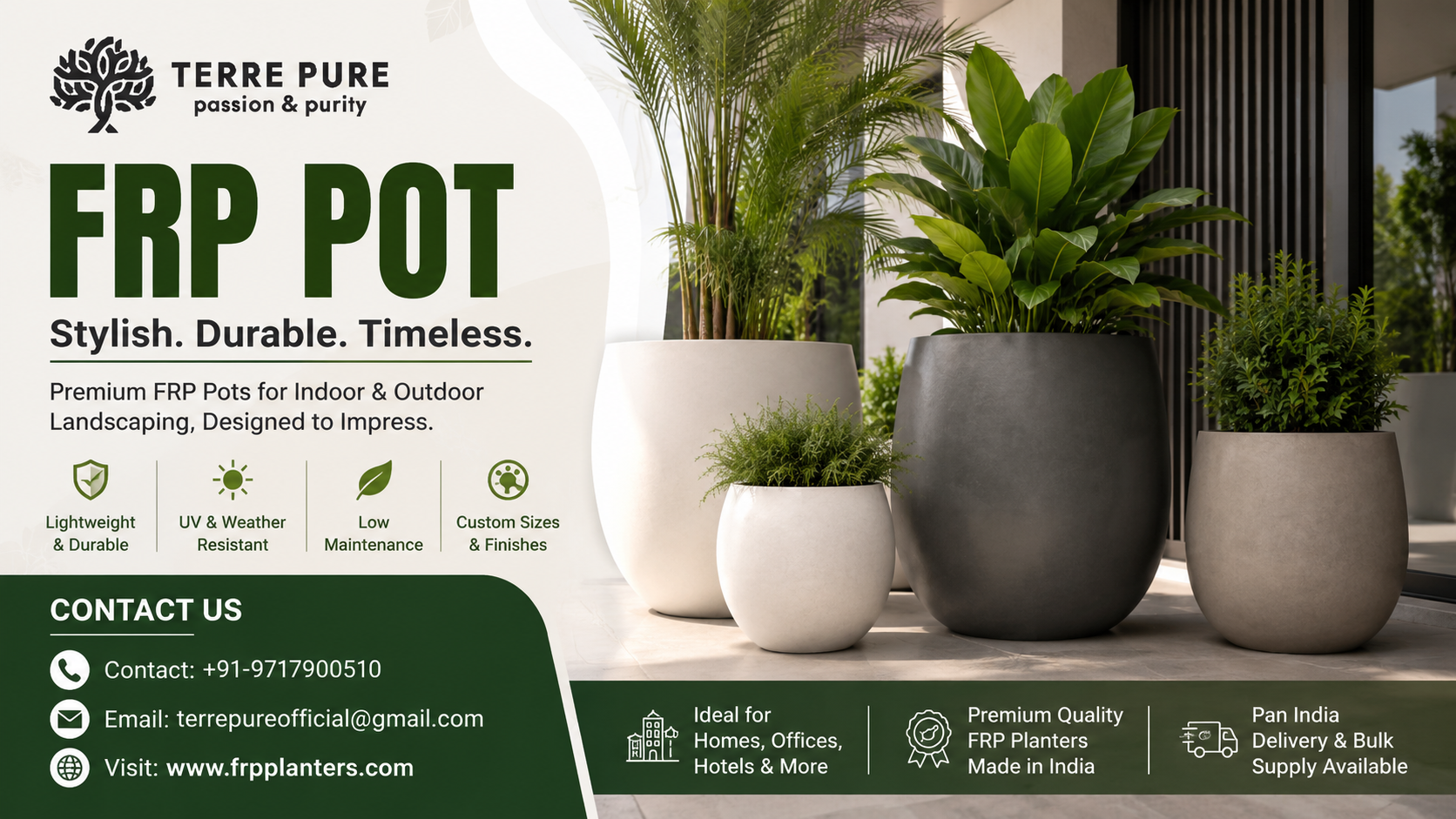
Cylindrical, tapered, cube, bowl, urn – the shape has a greater influence on how the planter is read in room than the color. The taper of a container reduces the visual weight at the floor, especially important when in a limited interior volume. A wide cylinder is indeed very stabilising but approaches dangerous proportions in many interiors.
Finish Categories
Different finishes reflect lighting in unique ways. Matte stone-effect, high-gloss lacquer, textured concrete-effect, and metallic leaf finish glisten under warm interior lighting; high-traffic commercial shopping mall lobbies reveal fingerprints and water spots that accrue on the high-gloss finish of the decor; this is a design trade-off that the interior designer should weigh in with before showing the future customer this design option.
Custom Color Matching
Color can be either matched to a Pantone or RAL reference while the gelcoat is being applied rather than painted afterward and subsequently places the color on the surface for many times longer than having it painted over the gelcoat. Painted-after finishes chip and expose the underlying material after a year or two of normal handling while pigment added to the gelcoat chips down to much the same color.
The one thing pretty much no one bothers to ask about at the design table: weight of pot e.m. When empty and filled. A large decorative planter pot could weigh less than 8kg empty, yet be shockingly light in the showroom with a shiny finish, until filled with moist earth for a twenty-foot cedar over 100kg. That‘s a whole new arena in floor loading discussions for terrace apartments that tenants rarely get a chance to have with their structural engineer in advance.
What Separates a Design-Grade Supplier From a Bulk Producer
Sourcing decorative FRP pots for a premium interior project needs different diligence than sourcing bulk nursery stock. The questions should reflect that.
-
Do they offer physical finish samples before a full order? A bad supplier sends digital renders only and asks you to trust the color online. A real one ships a small physical swatch, because screen colors and cured gelcoat colors rarely match exactly.
-
Can they hold a finish specification across a multi-phase project? A bad answer is "it'll be close enough." Multi-year commercial fit-outs need documented pigment formulas on file so a repeat order two years later actually matches.
-
What's their actual defect rate on decorative finishes? A bad supplier claims zero defects, which is not credible for hand-finished gelcoat work. An honest one quotes a realistic range and explains their quality-check process before packing.
-
Do they photograph the batch before shipping for design sign-off? A bad supplier ships and expects you to inspect on arrival, when returns are expensive and slow. A good one sends pre-dispatch photos for approval.
-
How do they handle a client rejecting the finish after delivery? A bad supplier treats this as entirely the buyer's problem. A real one has a documented remake or refinishing policy, even if it comes at a partial cost.
Where the Right Planter Protects Design Budgets and Client Relationships
For interior designers, a wrong planter choice isn't just an aesthetic miss. It's a client relationship problem and a reorder cost nobody budgeted for.
FRP's light weight means large, dramatic silhouettes are possible in interior spaces where structural load limits would rule out stone or ceramic of the same size, which protects a designer's ability to deliver a bold concept without a structural engineer vetoing it later. Because gelcoat holds pigment through the material rather than as a surface layer, minor scuffs during installation or moving don't expose a different-colored base — a real cost saver on commercial projects where furniture crews aren't always careful.
Consistent mold-based production means a matched set of six or eight pots for a hotel lobby arrives visually identical, avoiding the shade mismatch that plagues hand-finished materials and forces designers into awkward client conversations. Low maintenance also protects ongoing property costs: a wipe-down keeps most finishes looking new, compared to the periodic resealing or repainting other materials demand.
And because FRP resists cracking under transport stress far better than ceramic or stone, breakage-related reorders — which delay installation timelines and strain client patience — happen far less often. For premium homeowners investing in a considered outdoor space, that durability also means the investment doesn't need revisiting every couple of seasons.
Finding the Right FRP Pot Supplier Near Your Project
Sourcing for a design-led project isn't only about who's closest. It's about who can actually match your finish spec consistently across the order.
Design studios and premium homeowners working across Delhi NCR, Mumbai, and Bangalore increasingly favor FRP pot manufacturers in India with in-house gelcoat labs, since color consistency depends heavily on controlled mixing conditions rather than outsourced finishing steps that introduce variation between batches. That's a detail worth asking about directly rather than assuming every manufacturer handles finishing in-house.
For nurseries and garden centers restocking seasonally, working with FRP pot suppliers in India who maintain standing inventory in common finishes cuts reorder lead time significantly compared to full custom runs — useful when festive-season demand spikes and there isn't time to wait on a fresh production batch.
About Us
We've been building FRP planters since 2013, and design-focused orders taught us to slow down in ways bulk nursery orders never demanded — a client rejecting a finish over a subtle undertone difference is a different problem than a crack in a batch of utility pots.
We built a dedicated pigment-matching station in 2020 after losing a hospitality client over a repeat order that didn't quite match the original installation's warm-grey tone. It cost us that project, and it changed how we log color formulas for every custom job since. That's the kind of lesson that only comes from actually losing the account.
We stock standard finishes for nurseries and garden centers who need quick turnaround, and we run fully custom color and silhouette work for interior designers and homeowners who need something a catalogue can't offer.
Talk to FRP Planters About Your Project
Share your space photos, dimensions, and preferred finish direction, and we'll get back to you with options and pricing within 24 hours. Minimum order quantity is 10 units for standard decorative sizes and 50 units for fully custom color-matched runs. Reach us through tell us the lighting in the space, not just the color you're picturing, and we'll get the finish closer to right the first time.
Conclusion
Finding the right FRP pot is less about browsing a catalogue and more about matching silhouette, finish, and weight to the actual space it's going into. Interior designers, homeowners, and garden centers all need something slightly different from the same material, and a good manufacturer should be able to tell you honestly which option fits your specific brief. Get that conversation right at the start, and the planter stops being a line item you revisit next year.
FAQs
Shop indoor powder-coated, single-walled FRP can what‘s the major distinction between a matte vs. Gloss coating?
Though a gloss coat reflects light nicely, it leaves fingerprints and water spots more at ease in a high-traffic setting. Though a matte coat does hide normal wear more easily, it can appear dull when lit with the warm lighting of indoor environments. Generally, we recommend matte in high-traffic commercial entrances and gloss in feature areas with lighter foot traffic.
Can the FRP pot manufacturers in India match a given paint or design reference?
Yes, most of the well known manufacturers can match Pantone or RAL references at the gelcoat stage. Keep in mind that screen colors and cured gelcoat will seldom match exactly, get a physical sample before placing the order.
How heavy is a big FRP container once filled with soil and a plant?
It depends heavily on the dimension, but a big decorative container that is lightweight empty can top 100kg once filled and planted. That is something to keep in mind for apartment terraces or roof-scape spaces - always check the floor loadings before purchasing large-format items.
