


How Automotive Radar Is Reshaping Safer Mobility in the U.S.
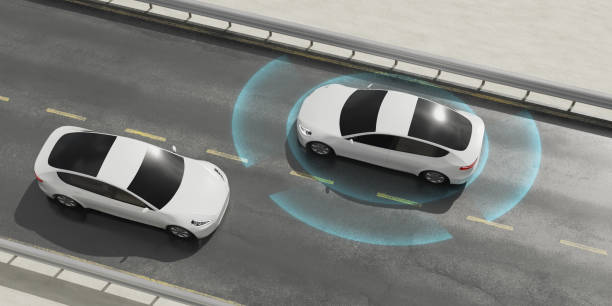
The automotive industry is entering a new era where vehicles are expected to do far more than simply transport passengers. Modern cars are becoming intelligent systems equipped with technologies that can detect surrounding vehicles, monitor road conditions, and assist drivers in making safer decisions. Among these innovations, automotive radar has emerged as one of the most critical sensing technologies, enabling advanced driver assistance systems (ADAS) and supporting the transition toward autonomous mobility.
The United States continues to witness strong adoption of radar-based safety technologies as automakers integrate increasingly sophisticated driver assistance features into passenger and commercial vehicles. According to a recent analysis by industry research on automotive radar technologies in the U.S., the sector is projected to grow steadily through the 2026–2032 forecast period, driven by stricter vehicle safety regulations, growing consumer demand for intelligent safety systems, and advancements in radar sensor capabilities.
As safety expectations evolve and connected vehicle technologies become more common, automotive radar is no longer viewed as an optional premium feature. Instead, it is becoming an essential component that enables collision avoidance, adaptive cruise control, lane assistance, and automated emergency braking, making roads safer for drivers, passengers, and pedestrians alike.
What Is Automotive Radar?
Automotive radar is a sensing technology that uses radio waves to measure the distance, speed, and direction of surrounding objects. Unlike cameras that depend heavily on lighting conditions or lidar systems that may struggle in adverse weather, radar maintains reliable performance in rain, fog, snow, and darkness.
Radar sensors continuously scan the vehicle's surroundings and transmit real-time information to onboard control systems. These systems analyze nearby traffic conditions and help activate safety features whenever potential risks are detected.
Why Automotive Radar Is Becoming Essential
The increasing complexity of modern traffic environments requires vehicles to process large volumes of real-time information within milliseconds. Radar technology plays a crucial role by providing continuous environmental awareness regardless of weather or visibility.
Several factors are accelerating adoption across the United States:
- Growing implementation of Advanced Driver Assistance Systems (ADAS)
- Increasing government emphasis on vehicle safety standards
- Rising consumer awareness regarding accident prevention technologies
- Expansion of semi-autonomous and autonomous driving capabilities
- Continuous improvements in radar accuracy and sensor integration
As these technologies become more affordable, radar sensors are gradually expanding from premium vehicles into mid-range and entry-level vehicle segments.
Applications Driving Market Expansion
Automotive radar supports numerous intelligent safety functions that are now becoming standard across many new vehicles.
Adaptive Cruise Control
Radar continuously measures the distance from the vehicle ahead, automatically adjusting speed to maintain a safe following distance while improving driver comfort during highway travel.
Automatic Emergency Braking
When radar detects an imminent collision, the system can alert the driver and automatically apply braking if necessary, helping reduce accident severity or prevent collisions altogether.
Blind Spot Detection
Side-mounted radar sensors monitor adjacent lanes and notify drivers when another vehicle enters their blind spot, reducing the likelihood of lane-change accidents.
Forward Collision Warning
By monitoring traffic ahead, radar systems identify potential hazards early and provide drivers with sufficient warning to react before an accident occurs.
Parking Assistance
Short-range radar sensors assist drivers while maneuvering in tight parking spaces by identifying nearby obstacles that may not be visible through mirrors alone.
Technology Advancements Are Improving Radar Performance
Radar technology has evolved significantly over the past decade. New-generation sensors provide higher resolution, faster processing speeds, and improved object recognition capabilities. These advancements enable vehicles to distinguish between pedestrians, cyclists, motorcycles, and other vehicles with greater precision.
The growing adoption of 77 GHz radar systems is further enhancing performance by delivering improved detection range while supporting compact sensor designs that integrate seamlessly into modern vehicle architectures.
Artificial intelligence is also enhancing radar capabilities. Machine learning algorithms help interpret radar data more accurately, allowing safety systems to make smarter driving decisions in complex road scenarios.
Challenges Facing Wider Adoption
Although automotive radar offers numerous benefits, manufacturers still face several challenges during large-scale implementation.
- Higher integration costs for advanced sensing systems
- Complex calibration requirements
- Need for seamless integration with cameras, lidar, and vehicle software
- Continuous cybersecurity improvements for connected vehicles
- Compliance with evolving regulatory standards
Despite these challenges, continuous technological advancements and economies of scale are expected to lower deployment costs while improving system reliability.
The Road Toward Autonomous Mobility
Automotive radar represents one of the foundational technologies supporting future autonomous driving. While fully self-driving vehicles continue to evolve, radar will remain indispensable because of its ability to provide accurate environmental sensing under nearly all driving conditions.
Future vehicles are expected to combine radar with cameras, ultrasonic sensors, lidar, artificial intelligence, and vehicle-to-everything (V2X) communication to create comprehensive perception systems capable of making highly reliable driving decisions.
As connected mobility ecosystems continue expanding, radar will also play an increasingly important role in improving traffic flow, reducing congestion, and enhancing overall transportation safety.
Conclusion
The evolution of automotive radar reflects the broader transformation occurring throughout the automotive sector. As safety regulations strengthen and consumers increasingly prioritize intelligent driver assistance technologies, radar systems are becoming a standard feature rather than a luxury.
Advancements in sensor technology, artificial intelligence, and autonomous vehicle development will continue driving innovation throughout the forecast period. Organizations seeking deeper insights into technology trends, competitive developments, regional opportunities, and long-term projections can explore the comprehensive analysis published by MarkNtel Advisors, which provides detailed coverage of the U.S. automotive radar landscape and its future outlook.

 Bangla