

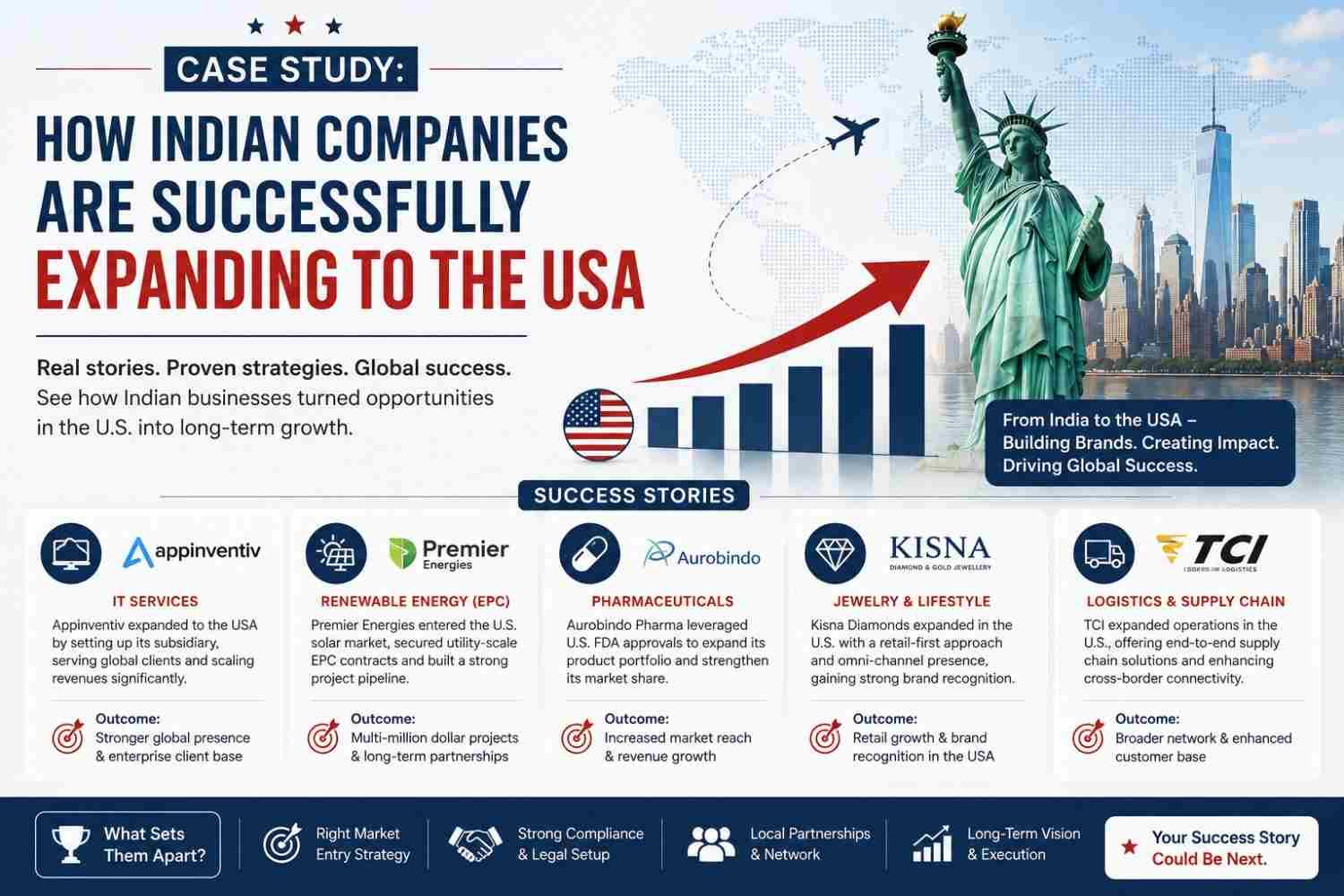

Rather than looking at US expansion in the abstract, it helps to look at what actually separates Indian companies that succeed in the US from those that struggle. Patterns emerge quickly once you look closely at enough of these journeys, and they consistently point to a handful of decisions that make the biggest difference, regardless of the industry involved.
The Common Thread Among Successful Expansions
Across different industries, from technology to manufacturing to professional services, the Indian companies that build lasting success in the US almost always share one trait: they treated the US market as genuinely different from India, rather than assuming their domestic playbook would work unchanged. This single mindset shift shapes everything from how they structured their entity to how they approached their first US clients.
Getting the Foundation Right From Day One
Companies that succeed tend to invest properly in their legal and financial foundation before scaling, rather than treating compliance as something to figure out later. This includes proper entity structure, accurate tax planning, and clean financial reporting from the outset. Businesses that get tax planning right early consistently avoid the kind of costly corrections that slow down less prepared competitors months or years into their expansion.
Choosing Focus Over Breadth in the Early Stages
A recurring pattern among successful Indian companies is starting narrow. Rather than trying to serve the entire US market immediately, they picked a specific customer segment or geographic region to prove their model first. This focus allowed them to gather real feedback, refine their offering, and build initial credibility before expanding more broadly, a much more sustainable approach than spreading resources too thin from the start.
Building Genuine Local Relationships
Companies that succeeded consistently invested time in building real relationships with US clients, partners, and even local advisors, rather than trying to operate entirely at arm's length from India. This often meant regular calls at inconvenient hours, occasional travel for key meetings, and a genuine effort to understand what mattered to their US counterparts beyond just closing deals.
Adapting Without Losing Their Core Strengths
Successful companies adapted their approach for the US market without abandoning what made them competitive in the first place, whether that was cost efficiency, technical expertise, or specialized industry knowledge. They resisted the temptation to completely reinvent themselves, instead finding ways to position their existing strengths in language and formats that resonated with American buyers.
Why This Market Continues to Reward Patient, Prepared Companies
The broader environment continues to favor companies that approach US expansion this way. A closer look at why in an uncertain world, one market still stands strong offers useful context on why the US continues to be a strategic choice for Indian businesses, even amid broader global uncertainty, provided companies approach it with the right preparation.
What Other Founders Can Learn From These Journeys
The biggest takeaway from studying these successful expansions is that there is no shortcut around proper preparation. Companies that invested in getting their structure, compliance, and market approach right from the start consistently outperformed those that tried to move faster by skipping these fundamentals, even when the faster-moving companies had more initial resources.
Final Thoughts
The Indian companies succeeding in the US today are not necessarily the ones with the most funding or the boldest ambitions. They are the ones that respected the market enough to prepare properly, stayed focused rather than spreading too thin, and built genuine relationships rather than treating the US as a purely transactional opportunity.
Want to Build Your Own US Success Story?
If you want your company's US expansion to follow the same kind of deliberate, well-prepared path that has worked for other Indian businesses, it helps to talk through your specific plan with experienced guidance. Reach out to the team at Indam Advisors to get started.
Frequently Asked Questions
What do successful Indian companies do differently when expanding to the USA?
Successful companies treat the US market as genuinely different from India, invest properly in legal and financial foundations early, and start with a focused customer segment rather than trying to serve the entire market at once.
How important is local relationship building for Indian companies in the US?
Local relationships are very important, since companies that invest time in genuine relationships with US clients and partners consistently build stronger, longer-lasting business outcomes than those operating purely at arm's length.
Do Indian companies need to change their business model to succeed in the US?
Not entirely, since successful companies typically adapt their positioning and messaging for the US market while preserving the core strengths that made them competitive in India, rather than reinventing themselves completely.
How long does it take for Indian companies to become successful in the US market?
Timelines vary, but most successful expansions take at least one to two years of consistent effort before reaching meaningful scale, with the first several months focused on validation and relationship building.
What is the biggest factor separating successful and unsuccessful US expansions?
The biggest factor is consistently proper preparation, particularly around legal structure, tax planning, and compliance, since companies that skip these fundamentals tend to face costly setbacks regardless of how strong their product or service is.
