

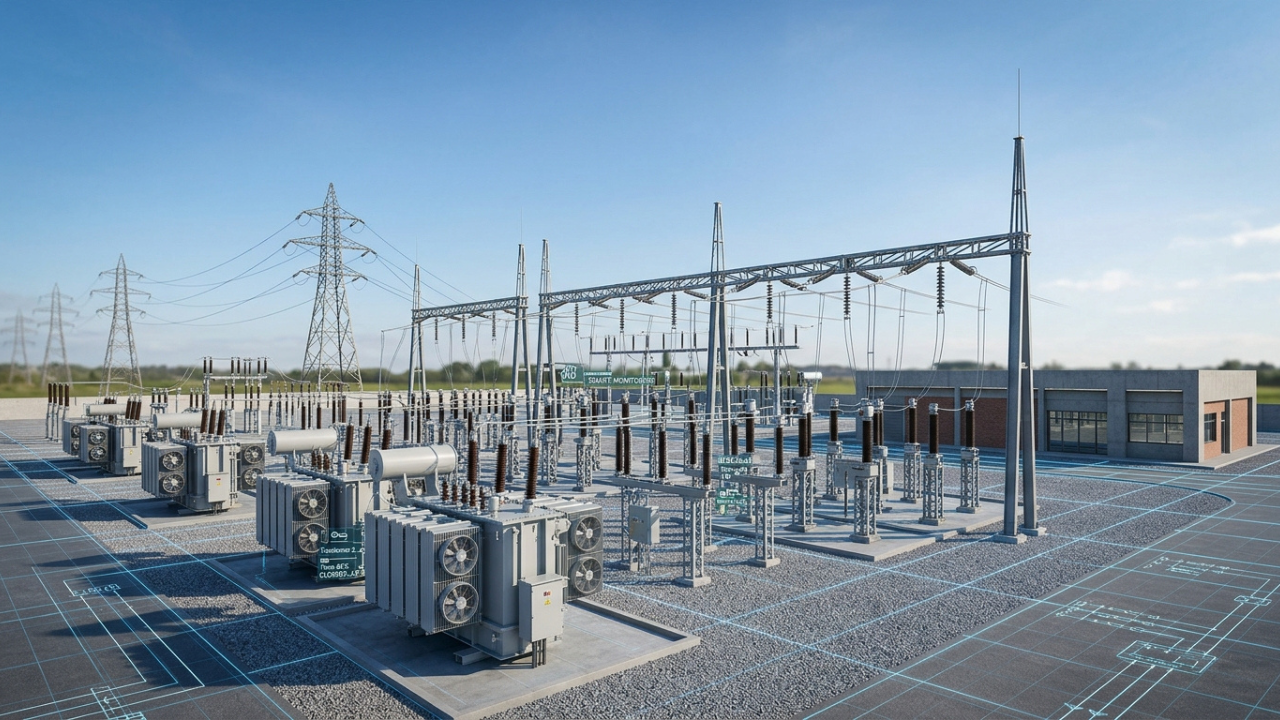
Modern electrical networks are becoming more complex as utilities, industries, renewable energy projects, and large-scale facilities demand greater reliability and efficiency. From traditional generation plants to solar farms, battery storage systems, transmission networks, and substations, every part of an electrical system must work together safely.
This is where electrical power system analysis becomes essential. By studying how electricity flows and how equipment responds under normal and abnormal operating conditions, engineers can identify potential problems before they become costly failures.
Whether a project involves a new power plant, transmission line, substation, or industrial facility, detailed power system studies provide the technical information needed to design and operate a dependable electrical network.
What Is Electrical Power System Analysis?
Electrical power system analysis is the process of evaluating the performance, behavior, and reliability of an electrical network. Engineers use mathematical models, engineering software, equipment data, and established technical standards to understand how a system will perform under different operating conditions.
A typical analysis may examine voltage levels, power flows, short-circuit currents, equipment loading, system stability, and protection performance.
The objective is not simply to determine whether electricity can flow from generation to consumers. Engineers also need to verify that the network can handle changing loads, equipment outages, faults, and future expansion without creating unacceptable risks.
In simple terms, electric power system analysis helps answer an important question: Will the electrical network perform safely and reliably when real-world conditions change?
Why Power System Studies Are Important
Electrical systems are exposed to many operating challenges. Demand can fluctuate throughout the day, generators may be added or removed, transmission lines can experience outages, and faults can occur unexpectedly.
Without proper analysis, these conditions may lead to voltage instability, overloaded equipment, excessive fault currents, or unnecessary protection trips.
Power system studies allow engineers to identify these risks during the planning and design stages. This can prevent expensive modifications after construction and reduce the possibility of unexpected outages.
For example, a load flow study can identify overloaded transformers or transmission lines, while a short-circuit study can determine whether switchgear can safely interrupt the available fault current.
As networks become more interconnected and renewable generation continues to grow, these studies are increasingly important for maintaining dependable system performance.
Key Types of Power System Studies
Different engineering questions require different types of analysis. Several studies are commonly performed as part of a comprehensive power system assessment.
Load Flow Analysis:
Load flow, or power flow, analysis evaluates voltage levels, real and reactive power flows, equipment loading, and losses throughout the network. It helps engineers determine whether the system can operate within acceptable limits during normal and contingency conditions.
Short-Circuit Analysis:
This study calculates fault currents resulting from events such as three-phase, line-to-ground, or line-to-line faults. The results are important for selecting properly rated circuit breakers, switchgear, busbars, transformers, and other equipment.
Protection Coordination Study:
Protection coordination examines how protective devices respond to electrical faults. The goal is to ensure that the device closest to a fault operates first while allowing healthy sections of the network to remain energized whenever possible.
Transient and Voltage Stability Studies:
Stability analysis evaluates how the electrical system responds to major disturbances. These studies can be particularly important for large interconnected networks and systems containing significant amounts of inverter-based renewable generation.
Arc Flash Analysis:
Arc flash studies help determine incident energy levels and support appropriate equipment selection, labeling, and electrical safety practices.
Together, these studies provide engineers with a detailed understanding of how an electrical network is expected to behave.
How Analysis Supports Better Electrical Design
A reliable network starts with informed engineering decisions. Power system analysis provides quantitative information that can guide equipment selection and system configuration.
For example, engineers may discover through analysis that a transformer is approaching its thermal loading limit or that a proposed generator connection could increase fault levels beyond existing switchgear ratings.
Instead of discovering these issues after installation, the design team can make adjustments early. This may involve changing equipment ratings, modifying network configurations, installing reactive power compensation, revising protection settings, or upgrading specific components.
This approach can improve reliability while controlling project costs.
Analysis is also valuable when existing networks are expanded. When a new generator, industrial load, transmission line, or substation is connected, its impact on the existing system should be evaluated before implementation.
The Role of Modern Engineering Tools
Today's electrical power system analysis increasingly relies on sophisticated simulation and modeling tools. These platforms allow engineers to represent generators, transformers, transmission lines, cables, loads, protection devices, and other network components within a digital model.
Engineers can then simulate different scenarios without physically disturbing the electrical system.
Modern analysis may include normal operating conditions as well as contingency scenarios such as generator outages, transmission line failures, transformer outages, and changing demand levels.
Accurate results, however, depend on accurate input data. Equipment ratings, impedance values, operating conditions, network topology, protection settings, and generation characteristics all need to be properly represented.
This is why experienced engineering judgment remains just as important as software capability.
Building More Reliable Electrical Networks
The ultimate purpose of power system studies is to support safer, more reliable, and more efficient electrical infrastructure. Analysis gives utilities, developers, industrial operators, and project owners the information required to make confident engineering decisions.
As electrical networks evolve, the importance of analysis will continue to grow. Renewable energy integration, distributed generation, energy storage, electrification, and increasing demand are changing traditional power system behavior.
A well-executed analysis helps engineers understand these changes and develop solutions that maintain acceptable voltage, loading, stability, protection, and reliability levels.
For organizations planning new electrical infrastructure or modifying an existing network, professional electric power system analysis can provide valuable insight before major engineering and construction decisions are finalized.
At Keentel Engineering, comprehensive power engineering expertise can help project stakeholders evaluate electrical networks, identify potential technical challenges, and develop practical engineering solutions. By combining engineering knowledge with detailed system studies, organizations can build electrical infrastructure designed for dependable performance today and future requirements tomorrow.
Reliable electrical networks do not happen by chance—they are designed, analyzed, tested, and continuously improved through sound engineering.

