

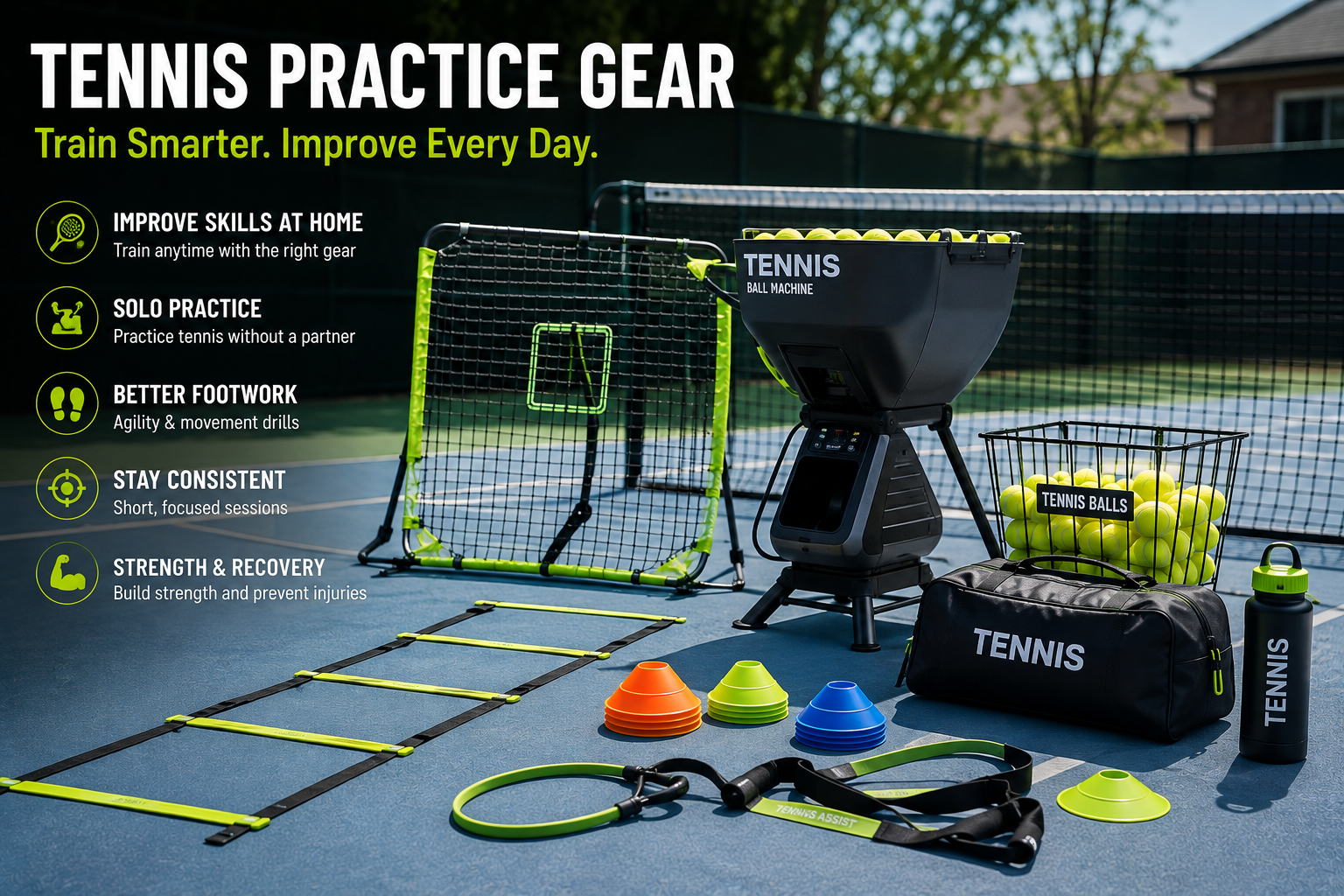

Choosing the right tennis practice gear can make training more organised, productive, and enjoyable. You do not always need a full tennis court or a practice partner to work on important parts of your game. With suitable equipment and a simple routine, players can work on movement, coordination, ball control, fitness, and stroke consistency.
Whether you are a beginner, regular club player, or junior athlete, the right equipment should support a specific training goal. The focus should always be on useful practice rather than simply collecting more gear.
For players looking for equipment for strength, rehabilitation, fitness, and tennis development, the Tennis Assist strength and rehabilitation collection offers options for different training requirements. Tennis Assist provides practical sports and tennis equipment for players who want to build a more consistent practice routine.
What Is Tennis Practice Gear?
Tennis practice gear includes equipment that helps players develop tennis-specific skills outside normal match play. Some products are designed for stroke repetition, while others focus on footwork, strength, coordination, or recovery.
Common examples include:
-
Practice tennis balls
-
Rebound trainers
-
Training cones
-
Agility ladders
-
Resistance equipment
-
Practice targets
-
Training nets
-
Ball machines
-
Recovery and support equipment
The best choice depends on your current skill level and what you want to improve.
Why the Right Tennis Training Equipment Matters
Good tennis training equipment can make repetitive practice easier and more structured. Instead of waiting for a partner to feed every ball, players can use training aids to create independent drills.
Equipment can help with:
-
Stroke repetition
-
Footwork
-
Balance
-
Coordination
-
Reaction speed
-
Accuracy
-
Tennis fitness
-
Solo practice
Before purchasing anything, identify one or two areas that need improvement. This makes it easier to choose equipment that will actually be useful during regular training.
Improve Tennis Skills at Home
You can improve tennis skills at home when you have a safe and suitable practice area. Not every training session needs to involve a full tennis match.
Home sessions can include:
Shadow Swings
Practise forehand and backhand movements without hitting a ball. Concentrate on preparation, body rotation, and recovery.
Footwork Drills
Use cones or an agility ladder to practise lateral movement, forward movement, and recovery steps.
Target Practice
Use safe targets to work on directional control and accuracy.
Rebound Training
A rebound trainer can provide repeated returns so you can work on timing and ball control independently.
The key is to keep each session focused on a particular skill.
Practice Tennis Balls for Consistent Repetition
Practice tennis balls are among the simplest and most useful pieces of tennis equipment. They can be used for feeding drills, rebound exercises, target practice, serves, and ball-machine sessions.
Players who train regularly may want to keep enough balls available for longer sessions. This reduces interruptions and makes repetitive drills easier.
Inspect your balls regularly. Worn balls can lose their normal bounce and may affect the consistency of certain drills.
Practice Tennis at Home Without a Partner
One of the biggest benefits of training equipment is the ability to practice tennis at home without depending on another player.
A simple solo session might include:
-
Five minutes of warm-up.
-
Ten minutes of footwork.
-
Ten minutes of stroke or rebound practice.
-
Five minutes of accuracy or coordination work.
You can adjust the routine according to your age, experience, fitness, and available space.
Solo training should complement rather than replace coaching, partner practice, and match play.
Tennis Practice With a Ball Machine
Tennis practice with a ball machine can provide repeated feeds without requiring another player. It can be useful for players who want to practise movement and shot consistency.
Start with comfortable feeds and focus on technique. Once you can maintain good form, gradually increase the speed, direction, or movement required.
A productive ball-machine session could focus on:
-
Forehand consistency
-
Backhand consistency
-
Lateral movement
-
Recovery position
-
Shot placement
-
Reaction speed
Avoid treating the session as a competition to see how hard you can hit. Controlled repetition is more useful for technical development.
Tennis Drills at Home for Juniors
Tennis drills at home for juniors should be simple, safe, and suitable for the child's age and ability.
Cone Movement Drill
Place cones several steps apart and ask the player to move between them using controlled side steps and recovery movements.
Shadow Tennis
Have the junior player practise forehand and backhand preparation without a ball.
Target Game
Create safe target zones and give the player a specific number of attempts to reach each target.
Coordination Drill
Use suitable tennis balls or rebound equipment to practise catching, tracking, and controlled contact.
Keep junior sessions short and enjoyable. The goal is to develop coordination, movement, and confidence rather than excessive training volume.
Best Knee Support for Tennis Players
Tennis involves running, stopping, lunging, jumping, and frequent changes of direction. Players looking for the best knee support for tennis players should consider fit, comfort, flexibility, and the intended purpose of the support.
Support equipment can be part of a wider training routine, but it should not replace proper warm-ups, suitable footwear, strength training, or recovery.
If you have persistent, severe, or worsening knee pain, stop the activity and seek advice from an appropriate healthcare professional.
Combine Tennis Practice Gear With Strength Training
Tennis is not only about racket skills. Strength and conditioning can support movement and physical preparation.
Depending on your level, training may include:
-
Squats
-
Lunges
-
Calf raises
-
Core exercises
-
Resistance-band movements
-
Balance exercises
-
Agility drills
Strength work should be performed with appropriate technique and progressed gradually.
For younger players, exercises should be age-appropriate and supervised when necessary.
How to Choose Tennis Practice Gear
A simple way to select equipment is to match it with a specific training goal.
|
Goal |
Useful Gear |
|
Stroke repetition |
Rebound trainer |
|
Footwork |
Cones or agility ladder |
|
Accuracy |
Target equipment |
|
Ball control |
Practice tennis balls |
|
Solo practice |
Rebound equipment |
|
Repeated feeds |
Ball machine |
|
Strength |
Resistance equipment |
|
Support |
Appropriate knee support |
You do not need to purchase everything at once. Start with equipment that addresses your most important training requirement.
Create a Weekly Home Training Routine
A balanced schedule can make practice easier to maintain:
Monday: Stroke technique
Tuesday: Footwork and agility
Wednesday: Rebound or solo practice
Thursday: Strength and mobility
Friday: Ball-machine practice
Saturday: Accuracy and coordination
Sunday: Rest or light movement
The schedule can be adjusted based on your other tennis sessions and recovery needs.
Common Tennis Training Mistakes
Even good equipment will not improve training if it is used without a plan.
Avoid:
-
Practising without a clear objective
-
Focusing only on power
-
Ignoring footwork
-
Skipping warm-ups
-
Increasing intensity too quickly
-
Training through significant pain
-
Using equipment incorrectly
Focus on controlled movement and gradually increase difficulty as your skills develop.
Conclusion
The right tennis practice gear can make independent training easier and more structured. Practice tennis balls, rebound equipment, cones, strength tools, and ball machines can each support different parts of tennis development.
Whether your goal is to improve tennis skills at home, practice tennis at home, develop junior movement, or add tennis practice with a ball machine to your schedule, start with a clear objective and choose equipment that supports it.
Consistent, focused practice is more valuable than simply spending more time on the court. Build your routine gradually, pay attention to technique, allow adequate recovery, and use training equipment as a practical tool for developing your game.
Frequently Asked Questions
What is the most useful tennis practice gear for beginners?
Practice tennis balls, cones, a simple rebound trainer, and basic fitness equipment can provide a useful starting point. The right combination depends on the player's goals.
Can I practice tennis at home?
Yes. Footwork, shadow swings, coordination drills, target exercises, and rebound training can all be performed at home when you have a suitable and safe space.
Can I practice tennis without a partner?
Yes. Rebound equipment, practice targets, cones, and ball machines can provide opportunities for independent training.
Is tennis practice with a ball machine useful?
Yes. Ball machines provide repeated feeds that can help players work on timing, movement, consistency, and shot placement.
What are good tennis drills at home for juniors?
Cone movement, shadow swings, target games, coordination activities, and age-appropriate rebound drills are useful options for junior players.
How often should I use tennis practice gear?
Frequency depends on your age, playing level, fitness, and overall training schedule. Several short, focused sessions each week can be easier to maintain than occasional very long workouts.
