


Choosing the right office desk can have a major impact on how comfortable, organized, and productive your workspace feels. Two of the most popular options are L-shaped desks and straight desks. Both designs have advantages, but the better choice depends on your available space, work style, storage needs, and budget.
If you're comparing an L-shaped vs. straight desk, understanding the differences can help you choose the option that works best for your workspace.
What Is an L-Shaped Desk?
An L-shaped desk consists of two connected work surfaces that meet at a 90-degree angle. The design typically fits neatly into a corner, creating two separate work areas within one workstation.
One side can be used for your computer and primary tasks, while the other can hold documents, office equipment, or provide additional workspace.
L-shaped desks are particularly popular in private offices, home offices, executive workspaces, and areas where maximizing corner space is important.
What Is a Straight Desk?
A straight desk, sometimes called a rectangular or linear desk, consists of one continuous work surface. It is one of the most versatile and widely used desk designs.
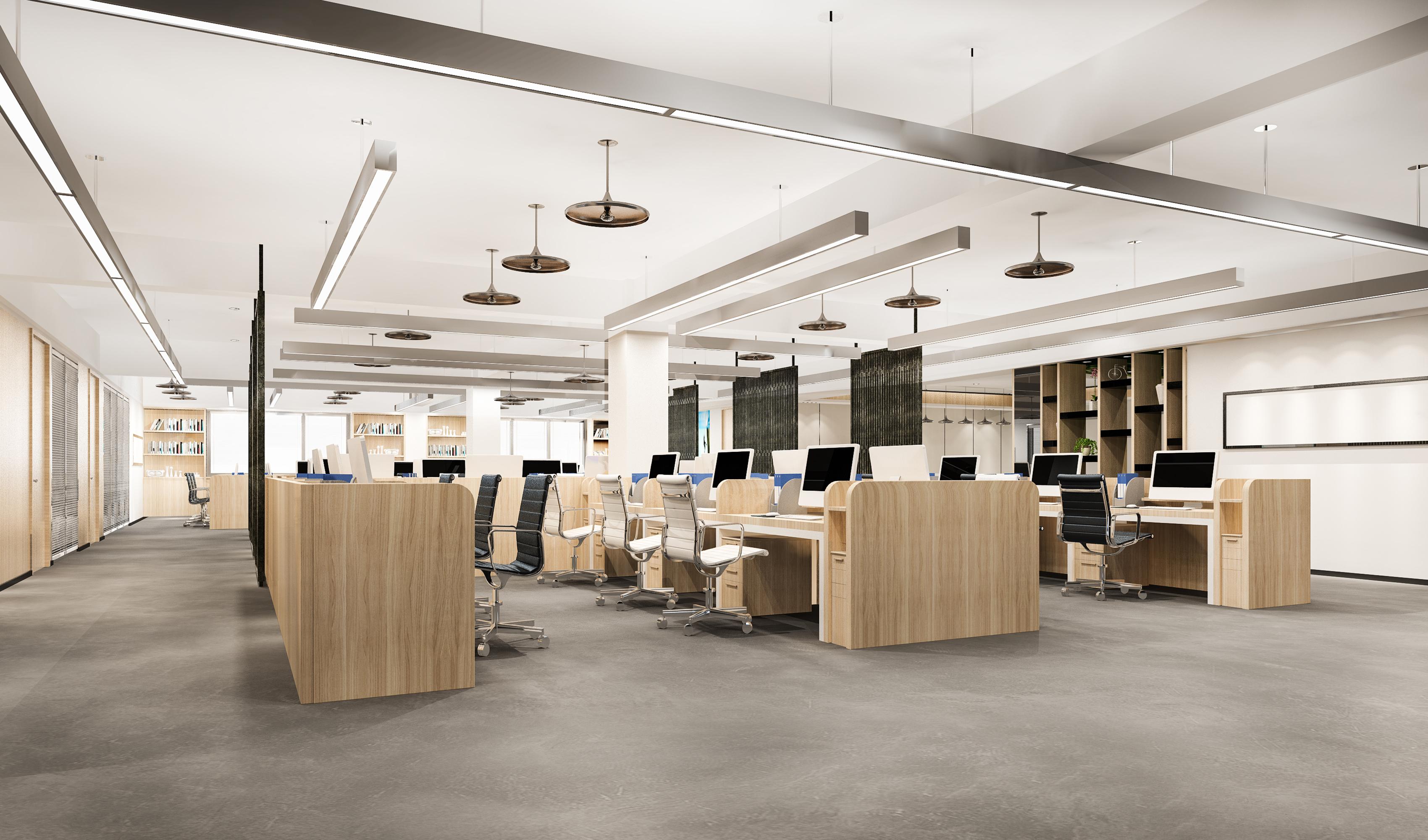
Straight desks can be positioned against a wall, placed in the middle of a room, or arranged side-by-side with other desks in an open office.
Their simple design makes them easy to incorporate into different office layouts.
L-Shaped vs. Straight Desk: Key Differences
The main difference between the two designs is the amount and arrangement of workspace they provide.
| Feature | L-Shaped Desk | Straight Desk |
|---|---|---|
| Workspace | Large, divided surface | Single continuous surface |
| Space efficiency | Excellent for corners | Easy to fit in various locations |
| Room required | Usually requires more floor space | Generally requires less space |
| Storage | Often provides more workspace for equipment | May require separate storage |
| Collaboration | Better for individual multitasking | Easier to position for shared work |
| Flexibility | Less portable due to shape | Easy to move and rearrange |
| Best for | Multitasking and large work setups | Simple, flexible workstations |
Let's take a closer look at when each desk makes the most sense.
Advantages of an L-Shaped Desk
1. More Workspace
One of the biggest advantages of an L-shaped desk is the additional surface area.
If you use multiple monitors, paperwork, office equipment, or other accessories, the extra surface can help prevent your primary work area from becoming cluttered.
You can dedicate one side to computer work and use the other for writing, organizing documents, or handling other tasks.
2. Excellent Use of Corner Space
L-shaped desks are designed to fit naturally into corners.
Instead of leaving a corner of the room unused, you can turn it into a functional workstation.
This can be especially useful in private offices or home workspaces where every square foot matters.
3. Suitable for Multitasking
If your job requires you to switch between different activities, an L-shaped desk can make multitasking easier.
For example, you could keep your computer and monitor on one side while using the other side for paperwork, a printer, or a second monitor.
4. Creates a Defined Workspace
The L-shape naturally separates different areas of your workstation.
This can help organize tasks and equipment without requiring additional tables.
Disadvantages of an L-Shaped Desk
Despite its advantages, an L-shaped desk isn't ideal for every workspace.
Takes Up More Space
Although it uses corners efficiently, an L-shaped desk can occupy a substantial amount of floor space.
Before purchasing one, measure the room carefully and make sure there is enough space for your chair and movement.
Less Flexible
The shape can make L-shaped desks more difficult to move or rearrange compared with straight desks.
This can be a consideration for businesses that frequently change their office layout.
Can Be More Expensive
Because L-shaped desks generally use more materials and provide a larger working surface, they may cost more than comparable straight desks.
Advantages of a Straight Desk
1. Simple and Versatile
Straight desks are easy to incorporate into almost any office layout.
They can be placed against walls, arranged in rows, or positioned in open areas.
Their straightforward design makes them suitable for offices of different sizes.
2. Better for Smaller Workspaces
If you're working with limited floor space, a straight desk is often easier to accommodate.
You can choose a compact model while still maintaining a functional workstation.
3. Easy to Rearrange
Straight desks are generally easier to move and reconfigure.
This makes them useful in growing businesses where employees may change positions or departments.
4. Often More Affordable
Straight desks are available at many different price points, making them a practical choice for businesses furnishing multiple workstations.
Because of their simple design, you can also find many options in different sizes, materials, and configurations.
Disadvantages of a Straight Desk
Limited Surface Area
A compact straight desk may not provide enough space for multiple monitors, paperwork, and office equipment.
If your work requires a lot of equipment, you may need a larger model or additional furniture.
May Require Additional Storage
A straight desk may not provide the same amount of built-in workspace as an L-shaped desk.
You may need to add a filing cabinet, mobile pedestal, bookcase, or separate side table.
Which Desk Is Better for a Small Office?
For a very small office, a straight desk is often the easier option because it can fit against a wall without taking up too much floor space.
However, an L-shaped desk can also work well if the room has a suitable corner and you need a larger work surface.
The important thing is to measure the space before deciding.
If the L-shaped desk blocks walkways or makes it difficult to move around the room, a straight desk may be the better choice.
Which Desk Is Better for Multiple Monitors?
If you use two or more monitors, an L-shaped desk can provide valuable additional surface area.
The second section of the desk can hold additional screens, equipment, documents, or accessories.
However, a large straight desk can also accommodate multiple monitors. The choice ultimately depends on how much surface area you need and how you prefer to organize your equipment.
Which Desk Is Better for Multitasking?
An L-shaped desk generally has the advantage for multitasking.
The two work surfaces allow you to create separate zones for different activities. For example, one side can be your computer station while the other serves as a paperwork or project area.
A straight desk can still work well, particularly if you prefer a simple and uncluttered setup.
Which Desk Is Better for an Open Office?
Straight desks are often easier to use in open-plan offices because they can be arranged in rows, clusters, or shared workstation configurations.
Multiple straight desks can also be combined to create larger workstation arrangements.
L-shaped desks may be better suited to private offices or individual work areas where employees need more personal workspace.
Consider Your Office Chair Too
Whichever desk you choose, don't forget about your office chair.
Your chair should fit comfortably underneath the desk and provide enough space for your legs. Adjustable chairs are especially useful because they allow you to create a better relationship between your seat height and desk height.
The combination of desk and chair is more important than either piece alone.
L-Shaped vs. Straight Desk: Which Should You Choose?
The best choice depends on your priorities.
Choose an L-shaped desk if:
- You need a large working surface.
- You use multiple monitors.
- You regularly multitask.
- You have an available corner.
- You need separate work zones.
- You want additional workspace without adding another table.
Choose a straight desk if:
- You have limited floor space.
- You want a simple workstation.
- You frequently rearrange your office.
- You are furnishing multiple employees.
- You prefer a minimalist layout.
- You want more affordable options.
Final Thoughts
When comparing an L-shaped vs. straight desk, there is no universal winner. Both designs can create an effective workstation when matched to the right environment.
An L-shaped desk is ideal when you need more workspace, want to maximize a corner, or regularly multitask. A straight desk is better when flexibility, simplicity, affordability, and space efficiency are your priorities.
Before buying, measure your office, consider your daily tasks, determine how much workspace you need, and think about how the desk will work with your office chair and other furniture.
The best office desk is ultimately the one that fits your space and makes your everyday work easier.
