

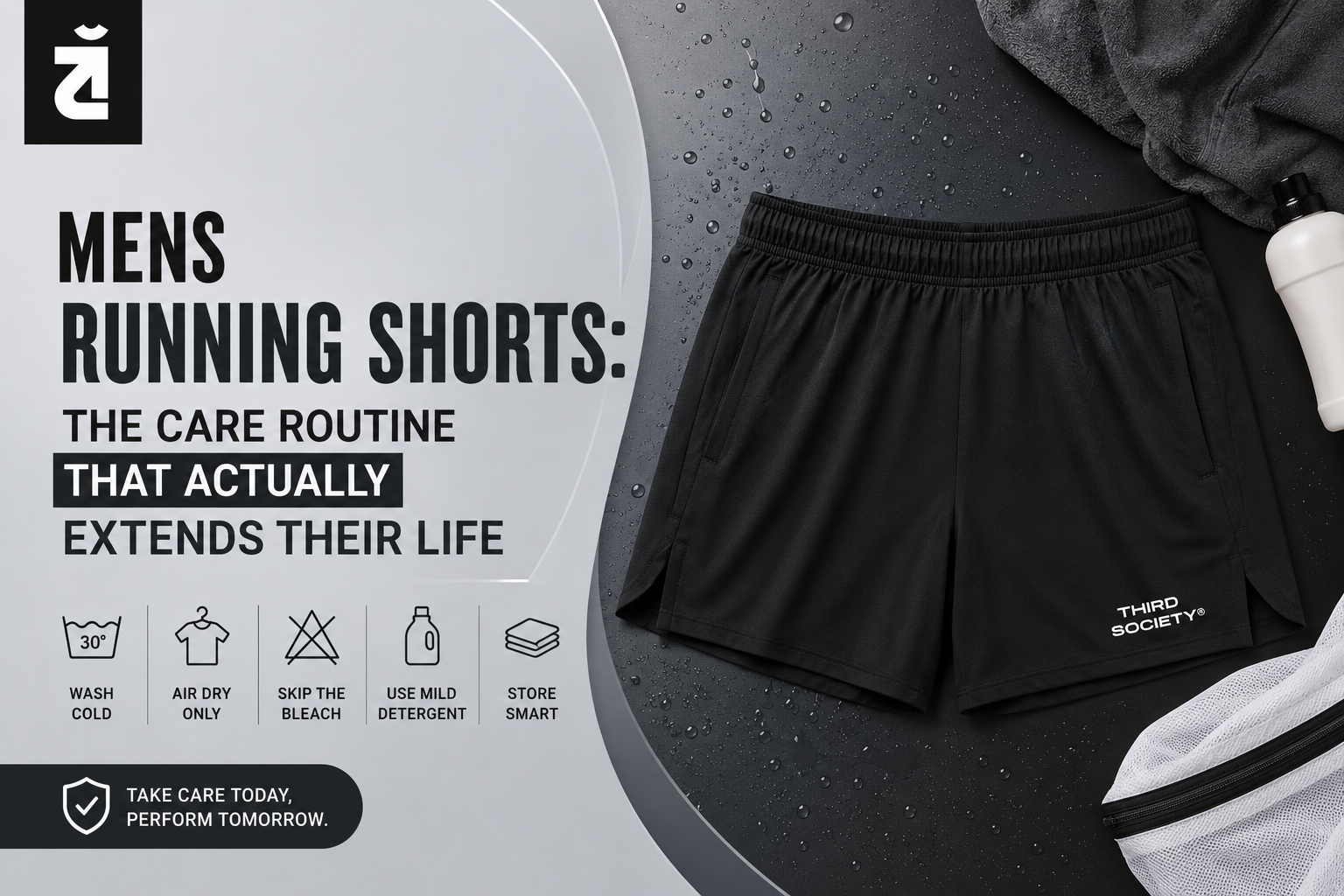

A good pair of running shorts represents a reasonable investment, technical fabric, secure liners, and thoughtful construction don't come cheap. Yet many mens running shorts lose their stretch, develop odour issues, or start chafing again within months, not because the shorts were poorly made, but because of how they were washed and dried. The fabrics used in performance running gear behave very differently from everyday cotton clothing, and treating them the same way in the laundry shortens their usable life considerably.
Why Standard Laundry Habits Damage Performance Fabric
Most running shorts are made from synthetic blends like nylon-elastane or polyester-elastane, chosen specifically for stretch, quick-drying performance, and moisture-wicking. These same properties make the fabric more sensitive to heat and harsh detergents than regular cotton. High heat, whether from hot water washing or machine drying, breaks down elastane fibres over time, causing shorts to lose their snap-back stretch and develop a looser, less supportive fit. Fabric softeners and strong detergents can also clog the fabric's moisture-wicking pores, making shorts feel damp and heavy sooner during a run than they used to.
The Right Way to Wash Running Shorts
A few adjustments to a normal wash routine go a long way in preserving fit and performance:
• Wash in cold or lukewarm water rather than hot, since heat is the biggest factor in elastane breakdown
• Use a mild detergent and skip fabric softener entirely, as it coats synthetic fibres and reduces breathability over time
• Turn shorts inside out before washing to reduce friction on the outer fabric and any printed branding
• Wash with similar synthetic activewear rather than mixing with heavier cotton items, towels, or zippered garments that can snag delicate fabric
• Avoid overloading the washing machine, since cramped conditions increase friction and pilling on technical fabric
Drying Without Damaging the Fabric
Tumble drying on high heat is one of the fastest ways to degrade elastane and shorten a pair of running shorts' lifespan. Air drying, ideally laid flat or hung in shade rather than direct sunlight, protects both the stretch and the colour of the fabric. Direct, prolonged sun exposure can fade darker colours and weaken synthetic fibres over repeated drying cycles, so a shaded, well-ventilated spot works better for both fit retention and appearance.
Managing Odour Without Overwashing
Performance fabrics are prone to holding onto sweat-related odour more than cotton, largely because synthetic fibres can trap bacteria in a way natural fibres don't as easily. Rather than washing after every single wear (which accelerates fabric wear), a soak in cold water with a small amount of white vinegar before the regular wash cycle can help neutralise odour-causing bacteria without needing more frequent washing overall.
Runners rotating through a few pairs regularly can reduce overall wear per pair. Browsing the running shorts for men range for a second or third pair to rotate is a simple way to extend the usable life of any single pair, since less frequent washing per pair naturally means slower fabric fatigue.
Storage Habits That Help Too
Folding rather than hanging running shorts helps maintain waistband elasticity over time, since hanging by the waistband can gradually stretch it out of shape. Keeping shorts away from direct heat sources, like a sunny windowsill or a radiator, during storage also helps preserve the fabric's stretch and colour between wears.
Brands designing specifically for performance rather than general athleisure, such as Third Society, build their running shorts with fabric blends meant to hold up well when cared for properly, making a small amount of washing discipline go a long way.
The Takeaway
The biggest threat to a pair of running shorts usually isn't the miles logged in them, it's the wash and dry routine afterward. Cooler water, mild detergent, air drying, and smarter storage habits collectively add months, sometimes longer, to how well a pair holds its stretch, shape, and comfort over time.
FAQs
Can I machine dry running shorts?
It's best to avoid high-heat tumble drying, as it breaks down elastane fibres over time. Air drying in shade helps preserve both stretch and colour for longer.
Why do my running shorts smell even after washing?
Synthetic fabrics can trap odour-causing bacteria more than cotton. A cold water soak with a small amount of white vinegar before the regular wash can help address persistent odour.
Should I use fabric softener on running shorts?
No, fabric softener tends to coat synthetic fibres and reduce their breathability and moisture-wicking performance over time. A mild detergent alone is generally sufficient.
How often should running shorts be washed?
This depends on frequency of wear and sweat levels, but washing after every one or two runs, rather than every single wear, combined with rotating between a couple of pairs, can reduce overall fabric fatigue.
Does hanging running shorts damage them?
Hanging by the waistband over long periods can gradually stretch out the elastic. Folding is generally a safer storage method for maintaining waistband shape.
