


U.S. Semiconductor Expansion Raises Demand for Ultra-Pure Water Infrastructure
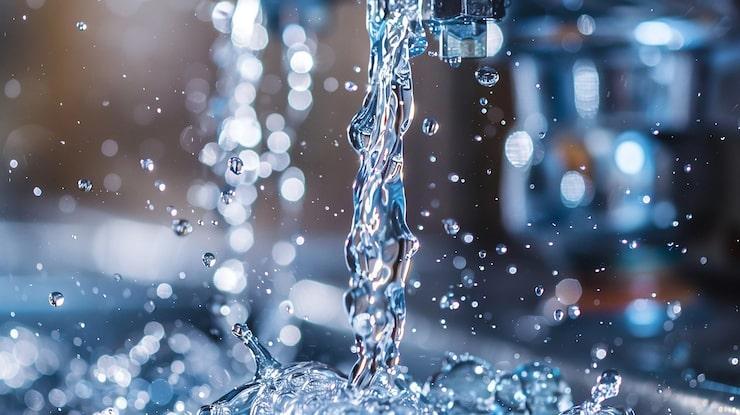
The United States is strengthening its ultra-pure water infrastructure as semiconductor fabrication, pharmaceutical manufacturing, advanced packaging, power generation, and other precision industries expand. Ultra-pure water is treated to extremely low levels of ionic, organic, particulate, and microbial contamination, making it essential for processes where even minor impurities can affect product quality. The growing emphasis on water recycling is also encouraging manufacturers to integrate purification with closed-loop systems.
A comprehensive market assessment by MarkNtel Advisors reveals that the U.S. ultra-pure water market was valued at USD 3.13 billion in 2025 and is projected to grow from USD 3.38 billion in 2026 to USD 5.32 billion by 2032, registering a CAGR of 7.84% during 2026–2032. Wafer cleaning accounts for 38.7% of the market in 2026, while the semiconductor segment leads by end user with a 51.6% share.
Semiconductor Manufacturing Drives High-Purity Water Demand
Semiconductor fabrication remains the largest application for ultra-pure water in the United States. Wafer cleaning, rinsing, chemical dilution, photolithography, etching, deposition, and chemical mechanical polishing require highly controlled water quality because contaminants can interfere with precision manufacturing processes.
The U.S. Department of Commerce has been supporting domestic semiconductor production through the CHIPS Incentives Program. As of December 2024, more than USD 32 billion in semiconductor manufacturing incentives had been finalized, supporting more than USD 450 billion in announced private-sector semiconductor investments. The CHIPS Program Office provides information on these investments and the broader effort to expand domestic semiconductor manufacturing capacity.
As new fabrication facilities and advanced packaging operations come online, demand is extending beyond chipmaking equipment to supporting utilities, including high-capacity ultra-pure water generation, polishing, storage, distribution, and recycling infrastructure.
Wafer Cleaning Remains the Largest Application
Wafer cleaning represents 38.7% of the U.S. ultra-pure water market in 2026. The segment’s leading position reflects the repeated cleaning requirements involved in semiconductor fabrication, where wafers may undergo multiple processing and rinsing stages.
The increasing complexity of advanced logic and memory manufacturing can raise the need for tightly controlled water quality. Ultra-pure water systems therefore need to deliver consistent purity while operating continuously across large production facilities.
The semiconductor manufacturing infrastructure expansion supported through federal initiatives is creating additional requirements for high-purity utility systems. The relationship between fabrication capacity and water infrastructure is particularly significant because semiconductor plants cannot operate reliably without carefully controlled process-water supplies.
Advanced Membrane Technologies Improve Treatment Performance
Reverse osmosis, electrodeionization, ultrafiltration, microfiltration, ultraviolet oxidation, ion exchange, and membrane-contacting technologies are being combined to produce ultra-pure water for demanding industrial applications.
Reverse osmosis can provide a major purification stage, while electrodeionization and polishing technologies can further reduce ionic contamination. Ultraviolet treatment can also help address organic compounds and microbial control within appropriately designed treatment trains.
Recent advances are increasingly focused on improving recovery rates, reducing energy consumption, minimizing system footprints, and enabling continuous operation. These improvements are particularly important for semiconductor and pharmaceutical facilities where water quality and supply reliability are closely connected with production performance.
Pharmaceutical and Biotechnology Applications Expand
Pharmaceutical and biotechnology manufacturing is another important demand center. Ultra-pure and high-purity water can be required for formulation, cleaning, laboratory processes, sterile manufacturing, and other controlled applications.
The U.S. Food and Drug Administration reported that its Center for Drug Evaluation and Research approved 50 novel drugs in 2024, reflecting continued innovation within the pharmaceutical sector. The FDA drug approval information provides context on the development pipeline and the manufacturing infrastructure supporting advanced therapeutics.
As biologics and sterile-processing facilities expand, water systems must provide consistent quality and support validated monitoring and documentation procedures. This creates demand for treatment configurations designed around stringent quality requirements.
Data Centers Add an Emerging Application
The expansion of artificial intelligence and cloud computing is introducing another consideration for industrial water treatment. Large data centers increasingly use liquid-cooling architectures that can require carefully managed water quality and closed-loop treatment systems.
The U.S. Department of Energy projects that data center electricity consumption could reach between 325 and 580 terawatt-hours annually by 2028. Its data center energy assessment highlights the rapidly increasing energy requirements associated with AI and high-performance computing.
As cooling infrastructure becomes more sophisticated, water treatment can play a role in maintaining system performance, controlling contaminants, and supporting water reuse. This creates an additional application for advanced purification technologies beyond traditional manufacturing.
Closed-Loop Water Reuse Gains Importance
Water-intensive manufacturing is increasingly examining opportunities to recover and reuse treated water. Closed-loop systems can reduce dependence on fresh water by treating process streams and returning recovered water to production or utility applications.
The U.S. Environmental Protection Agency identifies water reuse as an important component of improving water-resource resilience. Its National Water Reuse Action Plan provides a framework for expanding water reuse across different applications.
For semiconductor facilities, reuse can involve multiple purification stages because recovered water must meet demanding quality specifications before returning to sensitive manufacturing processes. Advanced membrane systems, polishing technologies, monitoring, and wastewater treatment can therefore operate as an integrated water cycle.
PFAS Regulations Increase Treatment Complexity
Environmental compliance is adding another layer of complexity to industrial water management. The EPA finalized national drinking-water standards for six PFAS in 2024, establishing enforceable limits for PFOA and PFOS and requiring monitoring and compliance actions.
The EPA’s PFAS drinking-water regulation provides the regulatory context for these requirements. Although drinking-water rules primarily apply to public water systems, the broader regulatory focus on persistent contaminants is also increasing attention toward industrial wastewater treatment, water reuse, and contaminant control.
Manufacturers handling fluorinated chemicals may therefore need more sophisticated treatment and monitoring strategies as environmental requirements develop.
Semiconductor End Users Maintain Market Leadership
The semiconductor segment accounts for 51.6% of the U.S. ultra-pure water market in 2026. Its leadership reflects the country's expanding fabrication ecosystem and the extremely strict water-quality requirements associated with advanced chip production.
The construction of new fabrication and advanced packaging facilities is also creating demand for high-capacity water-treatment infrastructure. Such systems must be designed around continuous operation, redundancy, contamination control, water recovery, and precise monitoring.
Pharmaceuticals and biotechnology, power generation, food and beverage, healthcare laboratories, chemicals, and research institutions provide additional applications, creating a diversified end-user base for ultra-pure water technologies.
Digital Monitoring Supports Reliable Water Quality
Digital water monitoring is becoming increasingly important as treatment systems become more complex. Sensors and analytical platforms can track conductivity, resistivity, flow, pressure, temperature, total organic carbon, and other parameters relevant to ultra-pure water quality.
Continuous monitoring can help operators identify changes in system performance and respond before water quality falls outside required specifications. Data analytics can also support preventive maintenance and help facilities evaluate water recovery and treatment efficiency.
The integration of digital monitoring with membrane filtration, electrodeionization, ultraviolet treatment, and polishing systems is therefore strengthening the ability of industrial operators to manage high-purity water infrastructure.
Ultra-Pure Water Moves Toward Integrated Resource Management
The U.S. ultra-pure water industry is increasingly connected with semiconductor expansion, pharmaceutical innovation, advanced computing, water reuse, and environmental compliance. Semiconductor manufacturing remains the dominant end-user application, while wafer cleaning continues to represent the largest application.
The broader direction is toward integrated water systems that combine purification, monitoring, recycling, and resource efficiency. Advanced membrane technologies and digital controls are helping industrial operators address increasingly stringent water-quality requirements while improving treatment performance.
As U.S. investments in precision manufacturing and high-value industrial infrastructure continue, ultra-pure water systems are becoming an increasingly important part of the supporting utility ecosystem. The emphasis is shifting from producing highly purified water alone toward managing the complete water cycle across demanding industrial operations.

 Bangla