

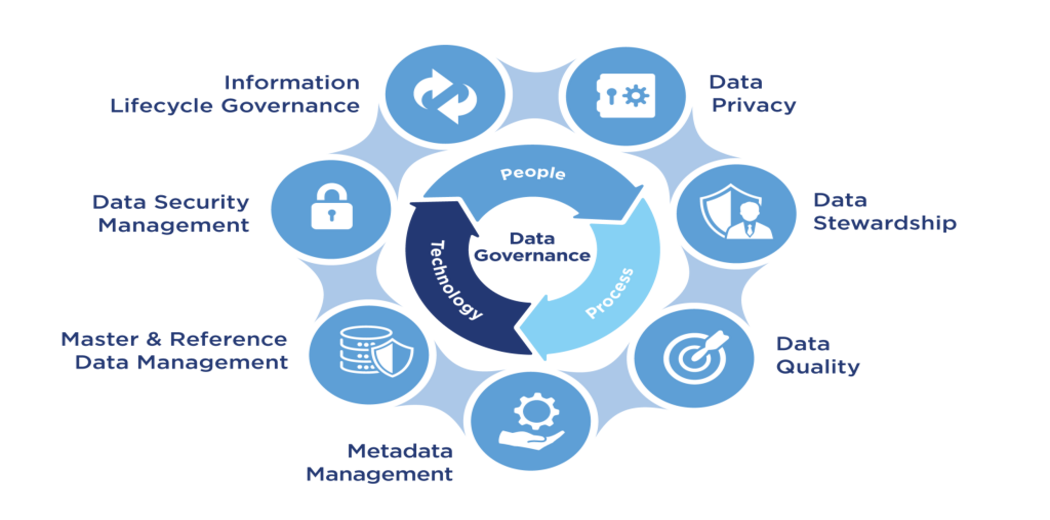

The data governance market is rapidly evolving from a reactive, compliance-driven discipline into a proactive, intelligent, and business-enabling function. A forward-looking view of the most impactful Data Governance Market Trends reveals a clear trajectory towards greater automation, a more federated approach to ownership, and a deeper focus on data literacy. The single most significant trend is the infusion of AI and machine learning into governance platforms to automate complex tasks, a concept often referred to as "augmented data governance." Concurrently, new organizational models like the "Data Mesh" are challenging the traditional, centralized approach to governance. Furthermore, there is a growing emphasis on creating a data-literate culture, where governance is not seen as a top-down mandate but as a shared responsibility, supported by user-friendly, collaborative tools. These trends are collectively transforming data governance from a perceived bottleneck into a strategic accelerator for data-driven innovation.
The Rise of Augmented Data Governance and AI
The most transformative trend in the market is the deep integration of Artificial Intelligence to create "augmented data governance." The sheer scale and complexity of modern data environments make manual governance an impossible task. AI is being used to automate and scale these processes. AI-powered algorithms can automatically scan through petabytes of data to discover and classify sensitive information (like PII) with a high degree of accuracy. Machine learning models can analyze data quality patterns to proactively detect anomalies and suggest remediation rules. AI can also automate the process of building the data catalog by learning from user behavior to automatically tag datasets and suggest business glossary terms. This trend is a game-changer, as it dramatically reduces the manual, time-consuming effort required for data stewardship, freeing up human experts to focus on more strategic, high-value governance activities and making governance feasible at a massive scale.
The Shift to Federated Governance and the Data Mesh
A powerful architectural and organizational trend is the move away from a purely centralized governance model towards a more federated approach, best exemplified by the "Data Mesh" concept. The traditional model involves a central data team and a central data platform (like a data lake) that owns and governs all the organization's data. This can create a significant bottleneck and a disconnect between the central team and the business domains that actually understand the data. The Data Mesh proposes a decentralized model where data is treated as a "product," owned and managed by the specific business domains that produce it (e.g., the sales team owns the "sales data product"). In this model, governance is not dictated from the center but is a federated responsibility, with each domain being accountable for the quality and governance of its own data products, all supported by a central self-service data platform. This trend is driving demand for governance tools that can support this decentralized, domain-oriented approach to data ownership.
The Emphasis on Data Literacy and the Collaborative Catalog
There is a growing recognition that technology alone cannot solve the data governance challenge. A successful program requires a data-literate culture where all employees understand the importance of data and their role in maintaining its quality. This trend is shifting the focus of governance tools from being purely for IT and data stewards to being collaborative platforms for the entire business. The modern data catalog is at the heart of this trend. It is evolving from a simple technical inventory into a social, "Wikipedia-like" platform for data. Business users can search for data, see its lineage, and understand its business context. They can add their own comments, ratings, and certifications to datasets, creating a rich, collaborative environment that fosters trust and shared understanding. This focus on empowering all users, not just a select few, is critical for embedding data governance into the fabric of the organization and moving it from a compliance exercise to a true business enabler.
Explore More Like This in Our Regional Reports:
Italy Artificial Intelligence Market
