

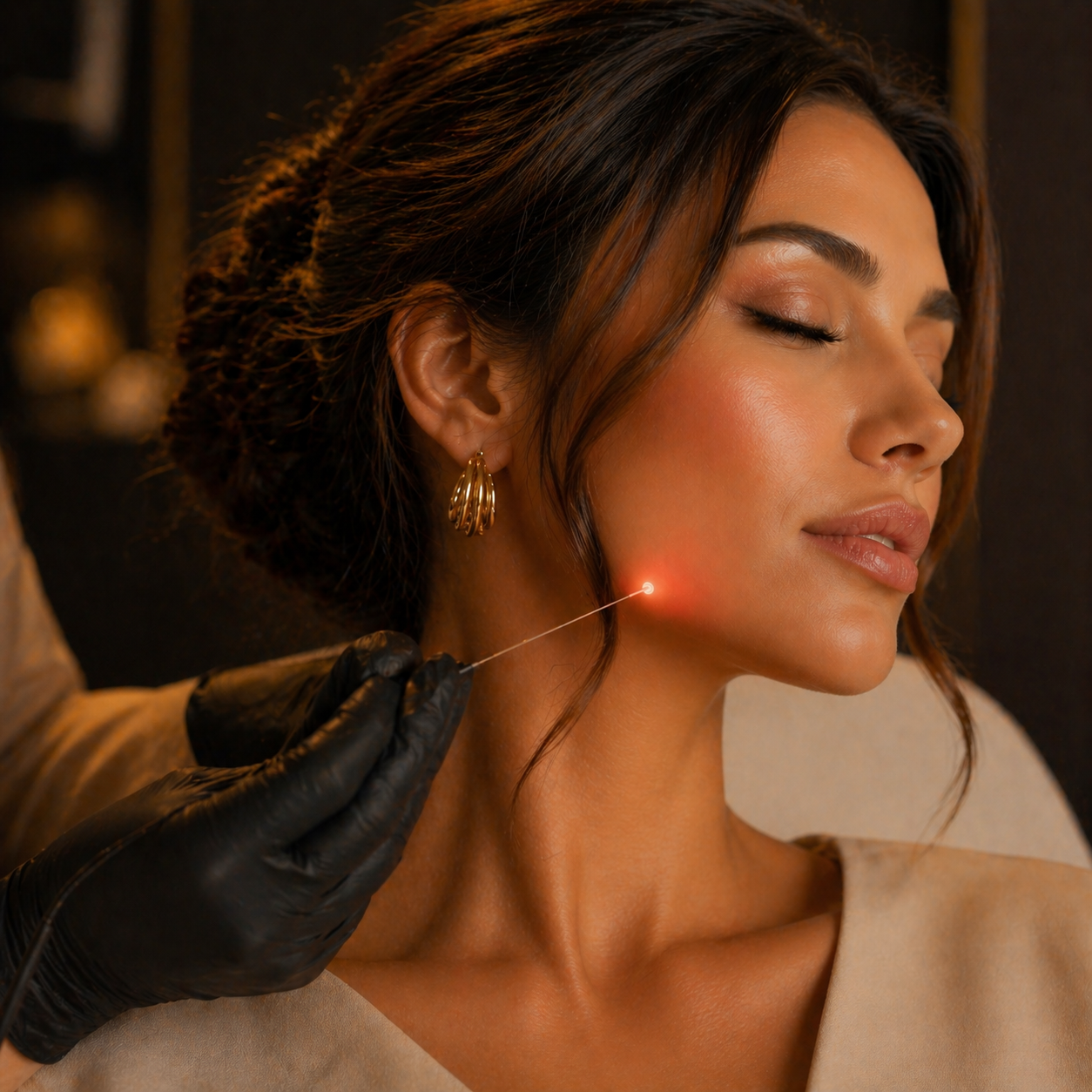

Endolift is a minimally invasive laser treatment that uses a very fine optical fiber to deliver controlled laser energy beneath the skin. The procedure is designed to support skin tightening, collagen remodeling, and, in selected cases, localized fat reduction. For patients considering إندوليفت في دبي, the treatment process is customized according to the treatment area, skin condition, facial anatomy, and desired outcome. Clinical reviews describe Endolift as an intralesional 1470 nm diode laser technique, although researchers note that more high-quality studies are still needed to standardize treatment parameters.
Initial Consultation and Skin Assessment:
The process begins with a consultation and examination of the area to be treated. The practitioner evaluates skin laxity, tissue quality, facial contours, localized fullness, and the patient's aesthetic concerns.
Medical history, medications, allergies, previous cosmetic treatments, and expectations may also be discussed. Certain conditions, including active infections, some skin diseases, pregnancy, coagulation disorders, and malignancies, may affect suitability.
Treatment Area Preparation:
Before the procedure, the treatment area is cleaned carefully and prepared for the laser treatment. The practitioner may mark specific areas to guide fiber placement and ensure that treatment is delivered to the intended tissues.
Depending on the treatment area and individual sensitivity, local anesthesia or another form of numbing may be used. Published clinical protocols have described the use of local lidocaine before inserting the fiber.
Inserting the Fine Optical Fiber:
A very thin optical fiber is introduced beneath the skin through a small entry point. Unlike a traditional facelift, Endolift does not require large surgical incisions.
The fiber allows the practitioner to deliver laser energy directly to the targeted tissue. The depth and direction of the fiber are carefully controlled according to the treatment area and the patient's anatomy.
Delivering Controlled Laser Energy:
Once the fiber is positioned, laser energy is delivered beneath the skin. The 1470 nm diode laser interacts with water-rich tissues and produces controlled photothermal effects that can support collagen restructuring and, when appropriate, lipolysis.
The practitioner moves the fiber through the planned treatment zones while controlling energy delivery. This allows the treatment to focus on areas requiring tightening or contour improvement.
Treating Skin Laxity:
One of the main purposes of Endolift is to improve mild to moderate skin laxity. The controlled thermal effect can encourage tissue contraction and stimulate collagen remodeling.
Over time, newly remodeled collagen can contribute to improved firmness and skin quality. Results do not necessarily appear all at once because collagen-related changes develop progressively.
Addressing Localized Fullness:
Endolift may also be used for selected areas of localized fat, such as the jowl or under-chin region. Research has investigated its use for jawline and jowl fat reduction, with reported improvements in skin thickness, density, and elasticity in small clinical studies.
It is important to understand that Endolift is not a general weight-loss procedure. Its role is focused on localized aesthetic contouring in appropriately selected patients.
Carefully Moving the Fiber:
The practitioner moves the fiber through the treatment area using a controlled technique. Recent procedural guidance describes careful superficial placement and controlled retrograde movement to distribute energy while limiting excessive heating of surrounding tissues.
Sensitive anatomical areas require particular attention because nerves, blood vessels, and other structures may be located close to the treatment zone.
Removing the Fiber:
After the planned laser energy has been delivered, the optical fiber is removed. The small entry point is then assessed by the practitioner.
Because Endolift uses a very fine fiber rather than large surgical incisions, the procedure does not involve the extensive wound management associated with traditional facelift surgery.
What Does Endolift Feel Like?
Patients may experience warmth, pressure, mild pulling, or movement beneath the skin during treatment. The level of sensation varies according to individual sensitivity, treatment area, and the use of local anesthesia.
Temporary tenderness, swelling, redness, bruising, or sensitivity can occur after treatment. A systematic review of published studies reported that adverse effects were generally mild and self-limiting, although the researchers also noted limitations in the quality and consistency of available evidence.
What Happens Immediately After the Procedure?
After Endolift, the practitioner examines the treated area and provides aftercare instructions. Patients may notice temporary redness, swelling, bruising, or tenderness.
Aftercare can include guidance about skincare, sun exposure, exercise, heat, and other activities during the early recovery period. Individual instructions should always take priority because recovery varies between patients.
How Long Does Endolift Take?
The treatment duration depends on the number and size of areas being treated. A focused treatment of a small area may take less time than treatment involving several areas, such as the chin, jawline, lower face, and neck.
The complete appointment can also include consultation, preparation, numbing, treatment, and post-procedure instructions.
When Do Endolift Results Develop?
Some changes in firmness or contour may be noticed relatively soon after treatment, but the full effect develops gradually. Collagen remodeling continues after the procedure, so skin quality and firmness may improve over the following weeks and months.
Individual results depend on age, skin quality, degree of laxity, treatment area, technique, and the body's healing response.
Is Endolift Completely Risk-Free?
No. Endolift is minimally invasive but should not be considered completely risk-free. Potential complications can include burns, infection, pigmentation changes, contour irregularities, swelling, bruising, and temporary nerve-related symptoms. Recent literature emphasizes careful patient selection, appropriate treatment parameters, sterile technique, and knowledge of anatomical danger zones.
Choosing an appropriately qualified practitioner is therefore an important part of the treatment process.
Frequently Asked Questions:
Is Endolift a Surgical Procedure?
No. Endolift is a minimally invasive laser procedure that uses a fine optical fiber beneath the skin rather than the larger incisions associated with traditional facial surgery.
Does Endolift Require General Anesthesia?
Endolift is generally performed with local or topical numbing according to the treatment area and clinical approach. The appropriate anesthesia method should be determined by the treating practitioner.
Can Endolift Treat the Jawline?
Yes. Endolift may be used for selected patients seeking improvement in jawline definition, mild skin laxity, or localized jowl fullness.
Is There Downtime After Endolift?
Downtime is generally limited compared with surgical facelift procedures, although temporary swelling, bruising, redness, and tenderness may occur.
Conclusion:
During an Endolift procedure, a fine optical fiber is introduced beneath the skin and used to deliver controlled laser energy to selected tissues. The treatment can support skin tightening, collagen remodeling, and localized contouring in appropriate patients. Careful assessment, appropriate laser settings, knowledge of anatomy, sterile technique, and individualized aftercare are important components of a well-planned procedure.
