

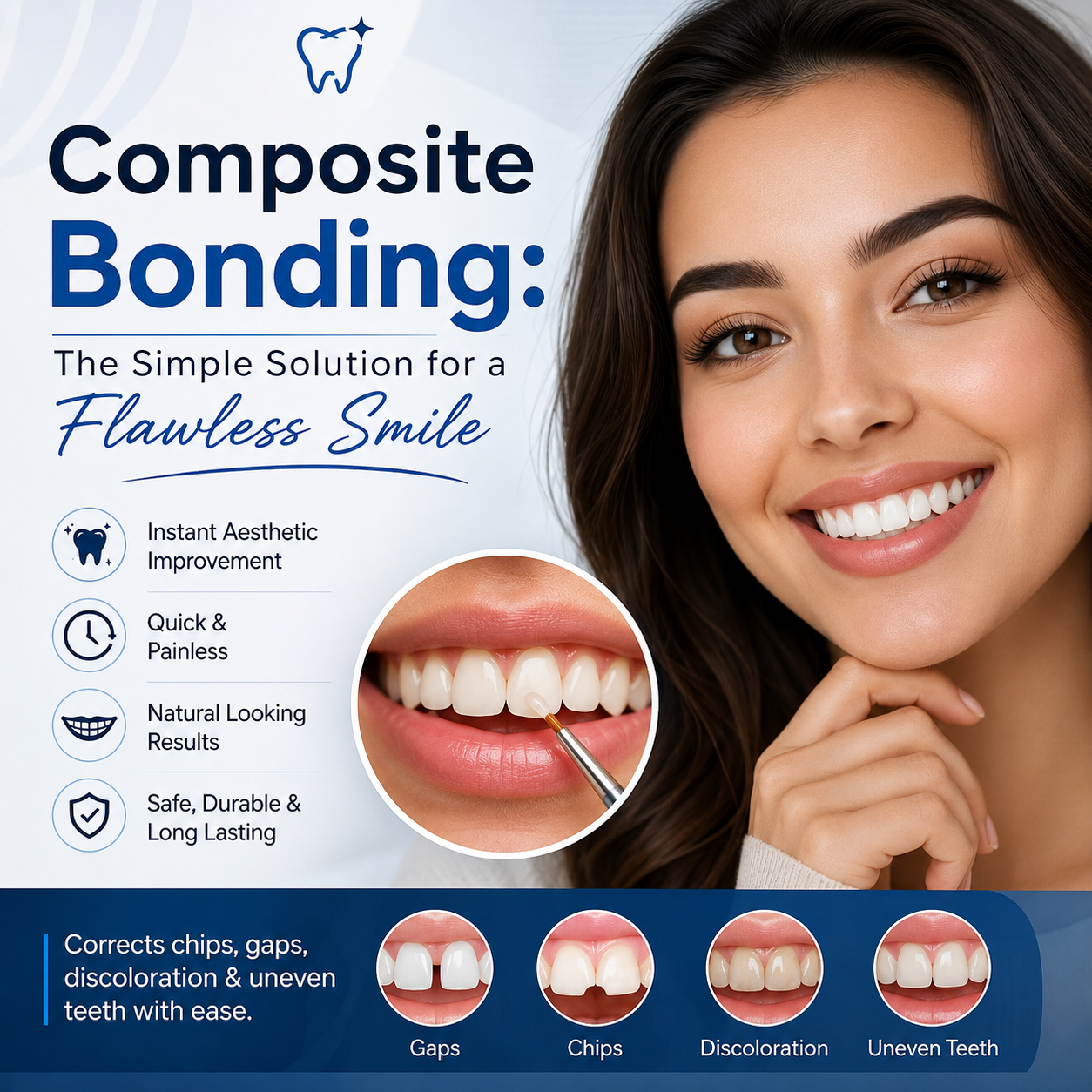

A confident smile can make a lasting impression, yet many people hesitate to smile freely due to minor dental imperfections. Whether it's a chipped tooth from an accident, an unwanted gap, or slight misalignment, these concerns often feel more noticeable than they actually are. Fortunately, composite bonding offers a quick, affordable, and minimally invasive way to correct these issues and restore a natural, radiant smile.
Unlike more extensive dental procedures, composite bonding requires little to no removal of natural tooth structure, making it one of the most conservative cosmetic dental treatments available today. It's a popular choice for patients seeking noticeable improvements without the time commitment or cost associated with veneers or orthodontic treatment.
What Is Composite Bonding?
Composite bonding involves applying a tooth colored resin material directly to the surface of the tooth. The dentist carefully shapes and sculpts the material to correct imperfections, then hardens it using a special curing light. Once polished, the bonded area blends seamlessly with the surrounding natural teeth, making the treatment virtually undetectable.
This versatile procedure can typically be completed in a single visit, offering an efficient solution for patients who want fast, visible results without multiple appointments or lengthy recovery periods.
Composite Bonding for Chipped Teeth
A chipped tooth can happen unexpectedly, whether from biting down on something hard, a minor accident, or general wear over time. Even small chips can affect the overall symmetry of your smile and, in some cases, cause sensitivity or further damage if left untreated.
Composite bonding for chipped teeth is one of the most common and effective applications of this treatment. The dentist applies resin to rebuild the missing portion of the tooth, restoring both its natural shape and function. Because the material is color matched to your existing teeth, the repair blends in seamlessly, leaving no visible sign that damage ever occurred.
This approach is particularly beneficial because it preserves the maximum amount of natural tooth structure while still delivering a durable, aesthetically pleasing result. Many patients are surprised at how quickly a chipped tooth can be restored, often within a single, comfortable appointment.
Composite Bonding for Gaps Between Teeth
Gaps between teeth, medically known as diastema, are a common cosmetic concern. While some people embrace this feature as part of their unique smile, others prefer a more uniform appearance. Traditionally, closing gaps required orthodontic treatment, which can take months or even years to complete.
Composite bonding for gaps between teeth offers a faster, less invasive alternative. The dentist applies resin along the edges of the teeth bordering the gap, gradually building up the surface until the space is closed and the teeth appear naturally aligned. This technique is especially effective for smaller to moderate gaps and can dramatically improve the overall symmetry of your smile in a single visit.
For patients who want immediate results without committing to braces or aligners, bonding presents an attractive, budget friendly solution.
Composite Bonding for Crooked Teeth
Mild dental misalignment doesn't always require orthodontic intervention. For patients with slightly crooked or uneven teeth, composite bonding for crooked teeth can create the illusion of straighter alignment by reshaping the visible surface of the teeth.
While bonding cannot correct significant structural misalignment the way braces or clear aligners can, it's highly effective for minor irregularities, such as a slightly rotated tooth or uneven edges that disrupt the smile's overall symmetry. The dentist strategically adds or reshapes composite material to visually balance the smile line, creating a straighter looking appearance without moving the teeth themselves.
This makes bonding an excellent option for patients seeking a faster, less invasive alternative to long term orthodontic treatment, particularly when the misalignment is cosmetic rather than functional.
The Composite Bonding Procedure: What to Expect
Understanding the treatment process can help ease any uncertainty about undergoing composite bonding. Here's a general overview of what typically happens during your appointment:
-
Consultation and Assessment – Your dentist evaluates your teeth and discusses your aesthetic goals to determine if bonding is the right solution for your needs.
-
Shade Matching – The composite resin is carefully matched to the natural color of your teeth for a seamless blend.
-
Surface Preparation – The tooth surface is gently roughened to help the resin adhere properly, requiring minimal to no removal of natural enamel.
-
Application and Shaping – The resin is applied in layers and expertly sculpted to achieve the desired shape and contour.
-
Curing – A specialized light hardens each layer of resin, securing it firmly in place.
-
Polishing – The bonded area is polished to match the natural shine of your surrounding teeth, completing a smooth, natural looking result.
The entire process is typically completed within thirty minutes to an hour per tooth, depending on the complexity of the correction needed.
Benefits of Choosing Composite Bonding
Composite bonding continues to grow in popularity due to its combination of convenience, affordability, and effectiveness. Key advantages include:
-
Minimally invasive with little to no removal of natural tooth structure
-
Quick treatment time, often completed in a single appointment
-
Cost effective compared to veneers or orthodontic treatment
-
Natural looking results thanks to precise color matching
-
Reversible in most cases, unlike more permanent cosmetic procedures
-
No downtime, allowing patients to return to normal activities immediately
Caring for Your Composite Bonding
While composite bonding is durable, proper care helps extend its lifespan and maintain its appearance. Patients are generally advised to avoid biting down on hard objects, limit consumption of heavily staining foods and beverages, and maintain consistent oral hygiene through regular brushing and flossing. Routine dental checkups also allow your dentist to monitor the bonded areas and address any minor touch ups if needed over time.
Frequently Asked Questions
Q1: How long does composite bonding typically last?
With proper care, composite bonding generally lasts between five and ten years before requiring touch ups or replacement, depending on oral habits and maintenance.
Q2: Is composite bonding painful?
No. Since the procedure typically requires little to no removal of tooth structure, most patients experience minimal to no discomfort, often without the need for anesthesia.
Q3: Can composite bonding stain over time?
Composite resin can be more susceptible to staining than natural enamel, particularly with frequent consumption of coffee, tea, or red wine. Maintaining good oral hygiene helps minimize this effect.
Q4: Is composite bonding a good alternative to veneers?
For minor cosmetic concerns, bonding offers a more affordable and conservative alternative to veneers, though veneers may provide more dramatic or long lasting results for extensive corrections.
Q5: Can composite bonding fix all types of dental gaps or misalignment?
Bonding works best for minor to moderate gaps and cosmetic misalignment. More significant orthodontic issues may still require braces or clear aligners for optimal results.
Final Thoughts
Dental Aesthetics Composite bonding offers an accessible, effective solution for a range of common cosmetic dental concerns, from chipped teeth to gaps and minor misalignment. Its combination of speed, affordability, and natural looking results makes it an appealing choice for patients seeking a quick smile transformation without the commitment of more invasive procedures. If you're considering composite bonding for chipped teeth, gaps, or crooked teeth, consulting with an experienced dentist is the best first step toward achieving the confident, radiant smile you've been looking for.
