


The Future of Sight: Key Trends in the AI Camera Market
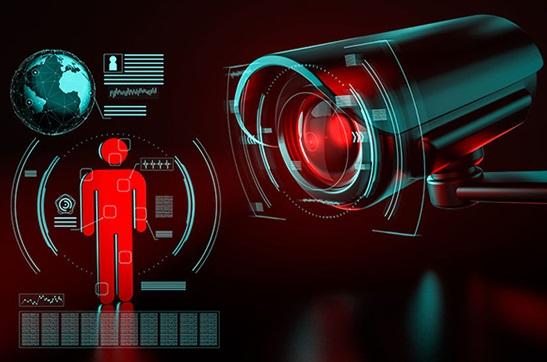
The AI camera market is one of the most dynamic and rapidly innovating sectors in all of technology, with new capabilities and applications emerging at a breathtaking pace. The technology is evolving far beyond simple object detection and is becoming a more sophisticated, multi-modal, and proactive sensor for understanding the physical world. A close analysis of the key AI Camera Market Trends reveals a clear trajectory towards more powerful on-device processing, the fusion of multiple sensor types, and the rise of a robust application ecosystem that runs on the camera itself. The dominant trend is the continuous improvement in edge AI processors, enabling more complex and more accurate AI models to run directly on the device. Concurrently, there is a strong push to combine video with other data sources, like audio and thermal imaging, to create a richer and more context-aware understanding of events. Finally, the camera is transforming into an open platform, much like a smartphone, where third-party developers can create and deploy specialized AI applications. These trends are collectively pushing the AI camera from a closed, single-purpose device into an open, intelligent sensing platform for the future.
The Relentless March of Edge AI and On-Device Learning
The most fundamental trend driving the market is the relentless improvement in the power and efficiency of edge AI processors. Moore's Law is in full effect in the world of AI accelerators, with each new generation of chips offering significantly more processing power (measured in TOPS) within the same or a smaller power budget. This continuous advancement is enabling a new level of sophistication in the AI models that can be run directly on the camera. Early AI cameras could only run relatively simple models for basic object detection. The latest generation can run multiple, complex models simultaneously, allowing for a combination of facial recognition, license plate recognition, and behavioral analysis all on the same device. An even more cutting-edge trend is the move towards "on-device learning" or "federated learning." In this model, the AI model on the camera can be fine-tuned or updated using data that is captured locally, without ever having to send the raw, sensitive video data to the cloud. This allows the camera's performance to continuously improve based on its own unique environment while preserving privacy, a trend that will be critical for many future applications.
Sensor Fusion: Combining Vision with Other Senses
Another powerful trend is the move away from single-mode visual sensing towards "sensor fusion," where the AI camera combines data from its primary visual sensor with data from other types of sensors to create a more complete and accurate understanding of a scene. This is leading to the development of multi-modal AI cameras. For example, many new AI cameras are now incorporating a built-in microphone. The AI can then fuse the audio and video streams to provide "sound analytics," such as detecting the sound of breaking glass, a gunshot, or verbal aggression (shouting), and correlating it with the video to provide a much richer and more reliable alert. Another common fusion is with thermal imaging. A dual-lens camera that combines a standard visual sensor with a thermal sensor can provide robust detection capabilities even in complete darkness, fog, or smoke. Thermal data can also be used for applications like fever screening or detecting overheating machinery in an industrial setting. By giving the AI more than one "sense," sensor fusion dramatically improves the accuracy and reliability of detection and reduces false alarms, making the camera a much more powerful and versatile sensor.
The "App Store" Model for AI Cameras
A third, and strategically significant, trend is the evolution of the AI camera from a closed, fixed-function device to an open platform, akin to a smartphone. The leading camera and chipset manufacturers are now creating "app stores" or open platform ecosystems for their devices. In this model, the camera's hardware and its underlying operating system are opened up to third-party software developers, who can then build and sell their own specialized AI applications that run on the camera. For example, a security system integrator could purchase a standard AI camera from a major manufacturer and then download and install a specialized AI app for license plate recognition from one developer, an app for retail analytics from another developer, and an app for detecting falls in an elderly care facility from a third. This trend is a game-changer. It fosters a vibrant ecosystem of innovation, allowing a multitude of specialized software companies to develop highly targeted solutions without having to build their own camera hardware. For customers, it provides a much greater choice and flexibility, allowing them to tailor the functionality of their cameras to their specific needs by simply installing new apps.
➤ In-Depth Market Studies by Market Research Future:

 Bangla