


Tennis Practice Gear: Build a Better Home Tennis Training Routine
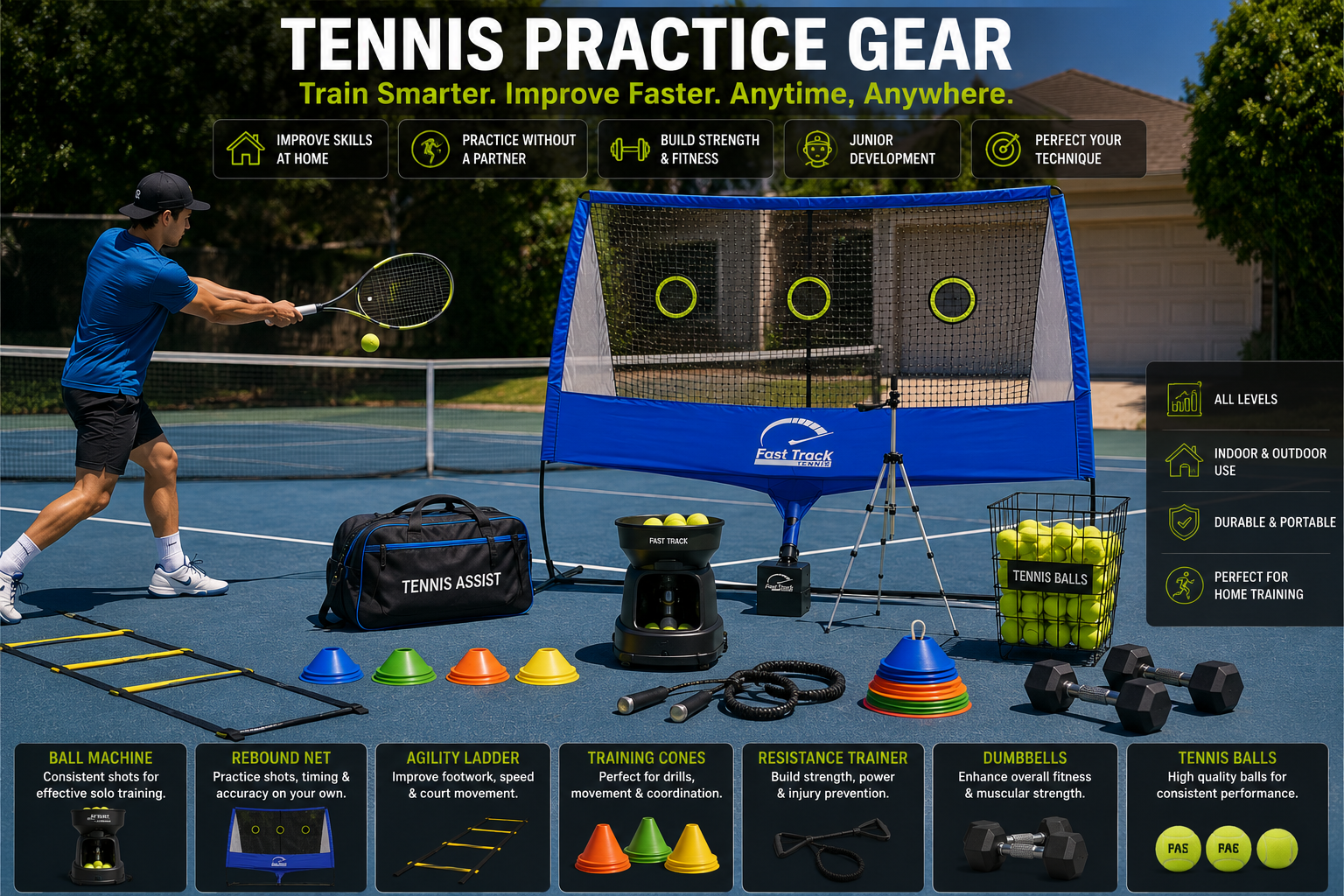
Good tennis practice gear can make training at home more organised and purposeful. Players do not always need a full court or a training partner to work on important areas of their game. With the right equipment, you can practise footwork, coordination, ball control, movement, and tennis-specific fitness in a suitable space.
The most useful equipment depends on your playing level, available space, and training goals. Rather than buying everything at once, choose equipment that helps you work on a specific weakness and can be used regularly.
For Australian players, Tennis Assist offers tennis training and sports-support equipment that can be incorporated into different practice routines.
Why Tennis Practice Gear Matters
Training equipment can give players more ways to repeat specific movements and skills. Regular repetition is particularly useful when court time is limited.
Useful equipment can help with:
-
Footwork and agility
-
Stroke preparation
-
Ball control
-
Hand-eye coordination
-
Reaction speed
-
Movement patterns
-
Fitness
-
Solo practice
-
Technical repetition
The equipment itself does not improve a player's game automatically. The value comes from using it correctly and combining it with a clear training plan.
Improve Tennis Skills at Home
Players can improve tennis skills at home by separating their training into small, manageable activities.
A 30-minute session could look like this:
5 minutes: Warm-up and mobility
10 minutes: Footwork and movement
10 minutes: Ball or racket drills
5 minutes: Recovery and stretching
Players with enough outdoor space can add rebound training, portable-net exercises, or ball-feeding drills.
For indoor areas, focus on activities that do not require hitting a ball at high speed. Shadow swings, balance exercises, coordination drills, and controlled footwork can still contribute to tennis development.
Best at Home Tennis Training Equipment
The best at home tennis training equipment is equipment that matches your goals and available space.
Rebound Training Equipment
A rebound trainer can allow players to practise repeated shots without needing another person to return every ball. It can be useful for working on timing, racket control, and consistency.
Practice Balls
Having suitable practice balls makes it easier to perform repeated drills. Players can use them for controlled feeds, target exercises, coordination activities, and technical practice.
Agility Equipment
Cones and agility markers can be used to practise lateral movement, acceleration, deceleration, and recovery positioning.
Portable Nets
A portable net can turn an appropriate driveway, backyard, or other private space into a more flexible practice area.
Fitness Equipment
Tennis requires more than stroke technique. Suitable fitness equipment can support strength, balance, mobility, and conditioning work.
Tennis Practice With Ball Machine
Tennis practice with ball machine equipment can provide repeated feeds for players who want to practise independently.
A ball machine can be used for:
-
Forehand repetition
-
Backhand repetition
-
Alternating strokes
-
Movement drills
-
Recovery positioning
-
Timing
-
Reaction practice
-
Shot placement
Start with manageable feeds. If the player struggles to maintain technique, reduce the speed, frequency, or difficulty.
A good session should not simply involve hitting as many balls as possible. Set a goal before starting.
For example:
Goal: Improve forehand consistency
Feed: Comfortable forehand feed
Focus: Preparation and balance
Progression: Add lateral movement
Next step: Increase feed difficulty
This turns simple repetition into purposeful training.
Fast Track Tennis Australia Training Ideas
Players searching for fast track tennis australia training solutions can build a structured routine around repetition and feedback.
A simple training cycle is:
Practise → Review → Adjust → Repeat
For example, a player may notice that they are reaching the ball late during a movement drill. Instead of changing the entire stroke, they can focus on earlier preparation during the next set.
This approach helps players understand what they are practising and why.
Training equipment can support this process, but technique should remain the priority.
Best Driveway Tennis Net for Home Practice
A best driveway tennis net setup should suit the available space and the type of practice being performed.
Before using a driveway for tennis activities, make sure:
-
Vehicles are removed
-
The surface is clear
-
There are no trip hazards
-
There is sufficient room around the player
-
Other people are kept away from the practice area
-
The net is positioned securely
A portable net can be useful for mini-tennis, controlled rally exercises, target games, and junior training.
However, a driveway should only be used when it provides a suitable and safe environment for the planned activity.
Junior Tennis Training Equipment
Junior tennis training equipment should match the child's age, size, skill level, and physical development.
Useful activities can include:
-
Cone movement games
-
Balance exercises
-
Reaction games
-
Coordination drills
-
Shadow swings
-
Short rally exercises
-
Target games
-
Basic agility work
Junior training should not be based entirely on repetition. Children benefit from variety and activities that keep them interested.
Short sessions with clear instructions are often easier for young players to follow than long, demanding workouts.
Tennis Training Products for Different Goals
Different tennis training products can address different parts of player development.
|
Training Goal |
Suitable Equipment |
|
Footwork |
Cones and agility markers |
|
Ball control |
Practice balls |
|
Solo hitting |
Rebound equipment |
|
Repeated feeds |
Ball machine |
|
Short-court practice |
Portable net |
|
Accuracy |
Target markers |
|
Fitness |
Conditioning equipment |
|
Coordination |
Reaction and movement tools |
Before purchasing equipment, consider whether it will be used regularly.
A simple setup that is used several times per week can be more useful than a large collection of products that remains in storage.
How to Create a Home Tennis Training Station
A dedicated training area can make practice easier.
Start by identifying a safe space with enough room for your planned exercises. Keep the equipment organised so that the session can begin quickly.
A basic training station could include:
-
Racket
-
Practice balls
-
Cones
-
Rebound equipment
-
Portable net where appropriate
-
Water
-
Training mat
-
Suitable fitness equipment
Keep the area free of unnecessary objects. This is especially important when children are practising.
Combine Tennis Practice Gear With Fitness
Tennis players need movement skills as well as racket skills.
A balanced routine can include:
Agility
Use short cone patterns to practise changes of direction.
Balance
Simple balance exercises can help players develop better body control.
Lower-Body Strength
Age-appropriate squats, lunges, and other controlled movements can support general tennis conditioning.
Core Control
Controlled core exercises can complement movement and balance training.
Mobility
Include suitable mobility work before and after training.
Training intensity should be appropriate for the player's age, experience, and fitness level.
Practice Without a Partner
One of the biggest advantages of having suitable tennis equipment is the ability to practice without a partner.
Solo practice can include:
-
Shadow tennis
-
Footwork drills
-
Rebound exercises
-
Ball-machine training
-
Target practice
-
Coordination games
-
Fitness drills
Solo sessions are especially useful between coaching or court sessions. They can help maintain regular practice without depending on another person's availability.
Common Mistakes When Buying Tennis Equipment
Players sometimes purchase equipment based only on appearance or the number of features available.
Instead, ask:
-
What skill does this equipment help me practise?
-
Do I have enough space to use it?
-
Is it appropriate for my playing level?
-
Will I use it regularly?
-
Can it be safely stored?
-
Can it be used as my training progresses?
These questions can help you choose more practical equipment.
Building a Weekly Training Routine
A simple schedule can combine different types of practice.
|
Day |
Training Focus |
|
Monday |
Footwork and agility |
|
Tuesday |
Stroke and coordination drills |
|
Wednesday |
Light mobility and recovery |
|
Thursday |
Solo tennis practice |
|
Friday |
Ball-machine or rebound training |
|
Saturday |
Court or match practice |
|
Sunday |
Rest |
The routine can be adjusted according to court availability, coaching, age, fitness, and recovery.
Safety During Home Tennis Training
Safety should always come before training intensity.
Check the practice area before every session. Avoid hitting balls toward windows, vehicles, roads, or other people. Use equipment according to its instructions and make sure children are supervised when necessary.
If an exercise causes significant or unusual pain, stop the activity rather than trying to train through it.
Conclusion
Choosing the right tennis practice gear can make home training more convenient and varied. Players can combine practice balls, rebound equipment, portable nets, agility tools, fitness equipment, and ball-machine training according to their individual goals.
The best at home tennis training equipment is not necessarily the most expensive option. It is equipment that fits your space, supports a specific training objective, and gets used consistently.
By combining structured practice with tennis practice with ball machine, junior training activities, movement drills, and suitable tennis training products, players can create a practical routine that complements their regular court sessions.
The main goal should always be quality practice. Choose one skill, practise it with purpose, review your performance, and gradually increase the challenge.
Frequently Asked Questions
What is the most useful tennis practice gear for home training?
Practice balls, cones, rebound equipment, portable nets, and suitable fitness or coordination equipment can all be useful. The right choice depends on your available space and training goals.
Can I improve tennis skills at home?
Yes. Footwork, coordination, shadow swings, ball control, movement, and selected tennis drills can be practised at home when the area is safe and suitable.
Is tennis practice with a ball machine useful?
Yes. A ball machine can provide repeated feeds for practising strokes, timing, movement, recovery, and shot placement without requiring a partner.
What is the best at home tennis training equipment for beginners?
Beginners can start with simple equipment such as practice balls, cones, a suitable rebound trainer, and basic coordination equipment. More advanced equipment can be added as their skills develop.
Is a portable net suitable for driveway practice?
A portable net can be useful when the driveway is private, clear, stable, and large enough for the planned activity. Always remove vehicles and other hazards before training.
What should I consider when buying junior tennis training equipment?
Consider the child's age, size, skill level, physical development, and available practice space. Equipment should be easy to use and suitable for age-appropriate activities.
Can tennis training products replace coaching?
No. Training products can support independent practice, but coaching, match experience, and regular court training remain important for overall tennis development.
How often should I use tennis practice gear?
Frequency depends on the player's age, training schedule, fitness, and recovery. Consistent shorter sessions can be effective when combined with proper rest and regular court practice.

 Bangla