

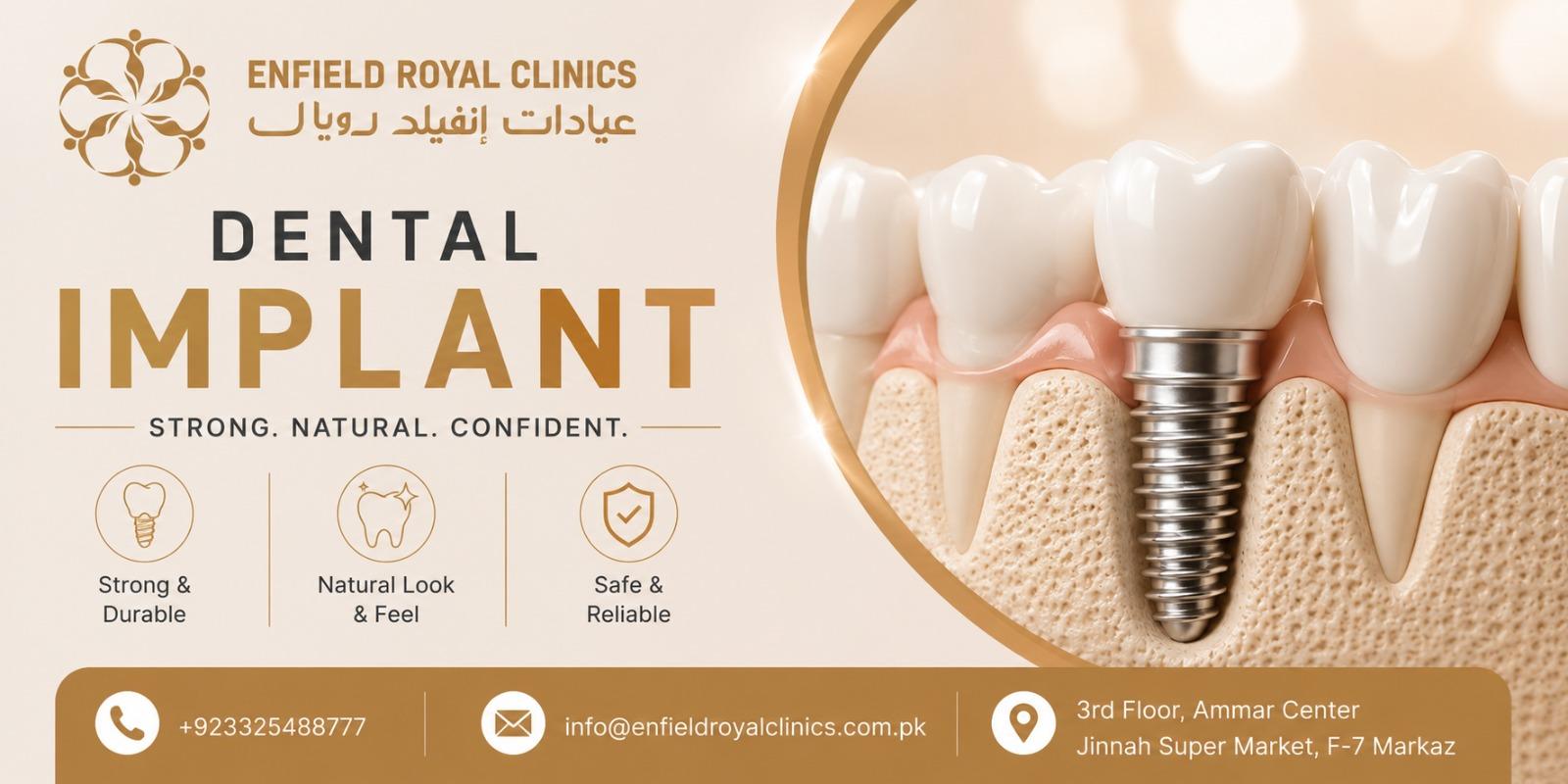

A healthy jawbone provides essential support for the teeth and helps maintain the natural shape of the face. When a tooth is lost, however, the changes do not stop at the visible gap. The bone surrounding the missing tooth can gradually lose volume because the natural tooth root is no longer present to provide normal stimulation.
Dental Implants offer a unique solution because they replace not only the visible tooth but also the function of its root. An implant is placed into the jawbone, where it can integrate with the surrounding bone and provide a stable foundation for a replacement tooth.
Why Does the Jawbone Lose Volume After Tooth Loss?
Natural teeth are connected to the jaw through their roots. Everyday activities such as biting and chewing create forces that stimulate the surrounding bone. This stimulation helps the jawbone maintain its structure.
When a tooth is removed or lost, the root is no longer there. The area that once supported the tooth receives less functional stimulation, and the body may gradually remodel and resorb the bone.
The extent of bone loss can vary from person to person. Factors such as the location of the missing tooth, gum health, age, oral hygiene, and overall health can influence changes in the jaw.
How Do Dental Implants Support the Jawbone?
One of the main features of Dental Implants is that they are placed directly into the jawbone. The implant acts as an artificial tooth root rather than simply sitting on top of the gums.
After placement, the implant can gradually become integrated with the surrounding bone. This biological process is known as osseointegration.
Once the implant has healed sufficiently, it can support a dental crown, bridge, or other restoration. Functional forces generated during chewing can then be transferred through the implant to the surrounding bone.
What Is Osseointegration?
Osseointegration is an important part of implant treatment. During this process, bone grows closely around the implant surface and creates a stable connection.
This connection allows the implant to function as a foundation for a replacement tooth. Because the implant is anchored within the jaw, it can provide functional stimulation to the surrounding bone.
The success of osseointegration depends on factors such as implant placement, bone quality, healing, oral hygiene, and the patient's individual circumstances.
Can Dental Implants Help Preserve Bone After Extraction?
In suitable cases, placing an implant after tooth extraction may help preserve the bone in the area. However, treatment timing must be determined by a dental professional.
Some extraction sites may have infection, insufficient bone, or other conditions that make immediate implant placement unsuitable. In such situations, the dentist may recommend allowing the area to heal or using a bone-preservation procedure before implant placement.
Early assessment after tooth loss can help determine the most appropriate treatment approach.
How Does Bone Loss Affect Facial Appearance?
The jawbone provides structural support for the lips, cheeks, and lower face. Significant bone loss following multiple tooth loss can contribute to changes in facial proportions over time.
By providing an artificial root within the jaw, Dental Implants may help maintain bone volume in the treated area. This can provide continued structural support for the surrounding tissues.
However, implants cannot reverse every type of facial aging or guarantee that bone loss will be completely prevented. Results depend on individual anatomy and treatment conditions.
Can Implants Protect the Bone Around Neighboring Teeth?
A missing tooth can affect more than the immediate space. Changes in the bite and movement of nearby teeth may occur when a gap remains untreated.
Replacing the missing tooth with an implant-supported restoration can help restore the space and chewing function. This may help maintain a more balanced bite and reduce unwanted changes associated with an untreated gap.
The dentist will evaluate neighboring teeth and the overall bite when planning treatment.
What If There Is Already Jawbone Loss?
Existing bone loss does not necessarily prevent a person from receiving implants. However, the available bone must be carefully evaluated before treatment.
If there is not enough bone to safely place an implant, additional procedures may be considered. Depending on the location and amount of bone deficiency, options may include bone grafting or other techniques designed to improve the implant site.
Three-dimensional dental imaging can help the dental team evaluate bone dimensions and plan treatment more accurately.
Who Can Benefit From Implant-Supported Tooth Replacement?
Patients who have lost one or more teeth may be potential candidates for implant treatment. However, suitability varies from person to person.
A dental professional may assess:
- Jawbone volume and quality
- Gum and periodontal health
- Location of the missing tooth
- Condition of surrounding teeth
- Bite and chewing forces
- Oral hygiene
- Healing capacity
- Overall dental health
Treating active gum disease or other oral problems may be recommended before implant placement.
How Can You Maintain Jawbone and Implant Health?
Good maintenance is essential after receiving an implant. Patients should brush regularly and clean around the implant according to their dentist's instructions.
Regular dental appointments are also important. During these visits, the dentist can evaluate the implant, restoration, gums, bite, and surrounding bone.
Maintaining healthy gums is particularly important because inflammation around an implant can affect the tissues supporting it.
Are Dental Implants Better for Bone Preservation Than Dentures?
Dentures can replace the visible portion of missing teeth, but conventional dentures do not function as artificial tooth roots within the jawbone.
Dental Implants, in contrast, are anchored into the bone and can provide functional stimulation around the implant site. This is one of the reasons implant treatment is often considered when long-term bone preservation is an important treatment goal.
Still, dentures and bridges can be appropriate options for many patients. The best choice depends on individual needs, oral health, preferences, and treatment circumstances.
Final Thoughts
So, how do Dental Implants protect the jawbone? They replace the missing tooth root with a structure that is anchored inside the jaw. Once integrated with the surrounding bone, the implant can transfer functional forces during chewing and provide stimulation to the bone around it.
Although implants cannot guarantee complete prevention of bone loss, they can help maintain the bone surrounding the implant and provide a stable foundation for replacement teeth. Proper planning, healthy gums, good oral hygiene, and regular dental care are important for achieving and maintaining a successful result.
For more information visit Enfield royal clinic in islamabad
