

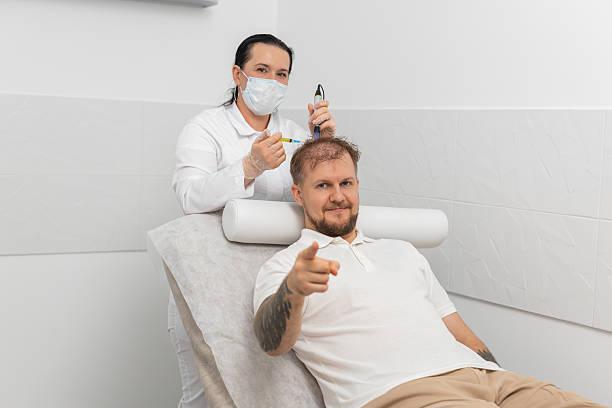

When considering Exosome Hair in Dubai, safety should begin before the first scalp injection. The quality of the product, sterility, delivery technique, medical assessment, and management of potential reactions all influence the safety profile of an exosome-based hair treatment. Current research is promising but still developing, while regulatory authorities have warned consumers about unapproved exosome products and unsupported treatment claims.
Why Scalp Injection Safety Matters
Exosome-based hair procedures are often described as regenerative treatments because exosomes are extracellular vesicles involved in cell-to-cell communication. Research suggests that their biological contents may influence pathways associated with follicular activity, inflammation, and tissue signaling.
However, the word “regenerative” should not be interpreted as meaning risk-free. Any procedure involving scalp preparation, topical products, microneedling, or injections introduces considerations related to sterility, tissue irritation, inflammation, and individual medical history.
A safe treatment therefore requires more than choosing a procedure with an attractive name. It requires assessing both the biological product and the clinical process used to deliver it.
The Product Is Part of the Safety Assessment
One of the most important questions is what is actually being used.
The term “exosome” does not by itself describe a standardized product. Research has investigated exosomes from different biological sources, with different preparation methods, concentrations, formulations, and delivery approaches. A 2025 systematic review found that clinical studies varied substantially in exosome sources, preparation methods, protocols, and follow-up periods.
This variation matters because results from one formulation cannot automatically be applied to another.
A professional consultation should therefore address the identity and source of the product rather than relying solely on the word “exosome.”
Questions worth asking about the product
Before treatment, a patient can reasonably ask:
- What is the product called?
- What is its biological source?
- How is it manufactured or prepared?
- How is it stored and handled?
- What documentation is available?
- Is the product intended for clinical use?
- What evidence supports its proposed use?
- What regulatory status applies in the relevant jurisdiction?
Clear answers help separate a medically structured treatment from vague regenerative marketing.
Sterility and Handling Are Fundamental
Scalp injections create a direct route through the skin barrier. That makes sterile technique an important component of procedural safety.
The clinical environment should have appropriate infection-control procedures, clean preparation areas, sterile equipment, and proper handling of the product and injection materials.
This is particularly important when treatments involve multiple injection points across a relatively large scalp area.
A sterile procedure does not eliminate every possibility of infection, but appropriate infection-control practices can reduce preventable procedural risks.
Medical Assessment Should Come Before Injection
Not every type of hair shedding has the same underlying cause.
Temporary shedding, androgenetic alopecia, inflammatory scalp disorders, nutritional deficiencies, medication-related shedding, hormonal changes, and other conditions can present with overlapping symptoms.
For that reason, an exosome scalp treatment should not replace a proper assessment of why hair is changing.
A consultation may consider the pattern of thinning, duration of shedding, scalp condition, medical history, medications, previous treatments, family history, and other relevant factors.
When the cause of hair loss is uncertain, establishing the diagnosis may be more important than selecting a regenerative procedure.
Injection Technique Can Affect the Procedure
The scalp contains numerous follicles, blood vessels, nerves, and connective tissue structures. Injection technique therefore matters independently of the product being administered.
Factors that may influence procedural safety include injection depth, spacing, treatment area, needle selection, preparation of the scalp, practitioner experience, and the amount of product delivered.
A carefully planned treatment should avoid treating every scalp as if it has the same anatomy and hair-loss pattern.
The treatment area should correspond to the clinical objective rather than simply maximizing the number of injection points.
Common Short-Term Reactions
Local reactions can occur after scalp procedures.
Depending on the technique and individual response, temporary effects may include:
- Mild redness
- Local tenderness
- Swelling
- Small injection-site marks
- Temporary sensitivity
- Minor bruising
- Short-lived scalp discomfort
These reactions do not automatically indicate that a treatment has failed or that a serious complication has occurred.
However, patients should receive clear instructions about what is expected and what requires clinical review.
When a Reaction Needs Medical Review
A responsible treatment plan should explain warning signs rather than focusing exclusively on expected benefits.
Increasing rather than improving pain, significant swelling, spreading redness, drainage, fever, marked skin changes, or other unusual symptoms warrant professional assessment.
Patients should also know whom to contact if they develop concerns after leaving the clinic.
The availability of post-treatment communication is an important part of procedural safety because complications are not always apparent immediately after treatment.
Regulatory Claims Require Careful Interpretation
Regulatory language deserves particular attention when evaluating exosome treatments.
The U.S. Food and Drug Administration states that there are currently no FDA-approved exosome products and has warned about unapproved exosome products marketed with unsupported claims.
This does not mean that every investigation into exosomes is scientifically invalid. It means consumers should distinguish between experimental or emerging evidence and claims of established regulatory approval.
A clinic or product marketer should not use phrases such as “FDA-approved exosome treatment” without verifiable regulatory documentation.
For patients considering exosome hair in Dubai, the relevant regulatory framework may differ from that of the United States. Even so, the principle remains useful: regulatory claims should be specific, verifiable, and relevant to the exact product and intended use.
Evidence for Hair Regeneration Is Promising but Still Developing
The scientific literature has expanded considerably.
A 2025 systematic review identified 11 clinical studies involving exosome-based interventions for alopecia. The reviewed studies reported improvements in at least one hair parameter, but the authors also highlighted small sample sizes, heterogeneous protocols, different exosome sources, and varying follow-up periods.
A 2026 systematic review focusing on androgenetic alopecia similarly found encouraging early findings but noted limitations including small clinical samples, retrospective study designs, inconsistent outcome measures, and a lack of standardized manufacturing and treatment protocols.
This distinction is important.
Promising evidence supports continued clinical investigation. It does not justify guaranteeing a specific degree of regrowth for every patient.
Safety Depends on More Than the Injection
A useful way to evaluate an exosome scalp procedure is to consider the complete treatment pathway.
| Safety factor | Why it matters |
|---|---|
| Medical assessment | Helps identify the likely cause and pattern of hair loss |
| Product identity | Establishes what is actually being administered |
| Product handling | Supports appropriate storage and preparation |
| Sterile technique | Reduces avoidable procedural contamination risks |
| Injection method | Influences local tissue trauma and treatment consistency |
| Patient history | Identifies factors that may affect treatment suitability |
| Aftercare instructions | Helps manage expected recovery and identify problems |
| Follow-up | Provides an opportunity to evaluate healing and response |
Looking at these factors together gives a more realistic picture than judging safety from the treatment name alone.
Dubai-Specific Considerations for Scalp Recovery
Dubai's environmental conditions can make scalp management particularly relevant after a procedure.
High temperatures, intense sunlight, perspiration, frequent air-conditioning, swimming, and an active outdoor lifestyle can all influence how patients manage their scalp after treatment.
That does not mean Dubai automatically makes exosome procedures unsafe. Instead, treatment planning should account for the patient's normal activities and recovery requirements.
For example, someone who spends substantial time outdoors or regularly exercises may need different scheduling considerations from someone whose daily routine is primarily indoors.
Heat and sweating
Excessive sweating immediately after a scalp procedure may be uncomfortable and can complicate post-treatment hygiene.
Patients should follow the specific instructions provided by their treating professional regarding exercise, washing, and scalp products.
Sun exposure
Freshly treated skin may be more sensitive. Practical sun-protection measures can therefore be relevant during recovery, particularly in Dubai's strong sunlight.
Swimming
Pools, beaches, and other aquatic environments may need to be avoided temporarily depending on the procedure and clinical instructions.
The exact restriction should come from the treating professional rather than a generic online timetable.
A Safer Consultation Checklist
Before proceeding with an exosome-based hair procedure, consider asking:
- What type of hair loss am I experiencing?
- Why is this treatment being recommended for my situation?
- What exact product will be used?
- Where does the product come from?
- What documentation is available about its composition and handling?
- What injection or delivery method will be used?
- What are the known and uncertain risks?
- Which reactions are considered normal after treatment?
- Which symptoms require urgent medical assessment?
- What aftercare restrictions should I follow?
- How will my response be monitored?
- What alternatives are available if this approach is unsuitable?
These questions encourage a clinical discussion rather than a sales-focused conversation.
Safety Should Come Before Regenerative Claims
Exosome research has created legitimate interest in new approaches to hair regeneration, but the clinical field is still evolving. Recent reviews support further investigation while repeatedly identifying the need for standardized protocols, larger studies, consistent outcome measures, and stronger clinical evidence.
That makes realistic communication especially important.
A responsible provider should be able to explain what is known, what remains uncertain, what product is being used, and what safety measures surround the procedure.
For anyone researching exosome hair in Dubai, those answers can be more meaningful than a promotional promise of dramatic regrowth.
Making Safety Part of the Treatment Decision
Choosing a regenerative hair procedure should involve more than comparing treatment names or expected results. Product transparency, medical assessment, sterile technique, practitioner experience, realistic evidence, and appropriate follow-up all contribute to a more responsible treatment pathway.
Patients exploring hair restoration and regenerative options can review the broader hair and aesthetic treatment options in Dubai at Tajmeels Clinic, where treatment decisions can be considered within a wider clinical context.
The strongest approach is one that treats safety as a central part of the treatment itself—not as an afterthought once the injections are finished.
