

Laser tattoo removal is widely used to reduce unwanted tattoo ink, but its safety depends on factors such as skin tone, tattoo pigment, laser wavelength, and treatment settings. For people considering Tattoo Removal dubai, understanding how different skin types respond to laser energy is important. Dynamic Clinic in Dubai provides access to laser-based tattoo removal approaches designed around individual skin and tattoo characteristics.
Is Laser Tattoo Removal Safe for All Skin Types?
Laser tattoo removal can be performed on many different skin types when appropriate technology and carefully selected settings are used. However, darker skin tones generally require greater caution because the skin contains more melanin, which can absorb some of the laser energy intended for tattoo pigment.
A qualified practitioner assesses the skin before treatment and selects an appropriate wavelength, energy level, pulse duration, and treatment interval. This individualized approach helps reduce unnecessary heating of the surrounding skin while allowing the laser to target tattoo ink.
Why Does Skin Tone Matter During Laser Treatment?
Laser energy interacts with both tattoo pigment and natural skin pigment. When the laser is absorbed excessively by melanin, there may be a greater possibility of temporary or persistent changes in skin pigmentation.
People with lighter skin may have a lower risk of certain pigment-related complications, while medium and darker skin tones require more careful parameter selection. This does not automatically make laser tattoo removal unsuitable for darker skin.
Important considerations include:
- Natural skin pigmentation
- Recent sun exposure or tanning
- Tattoo location
- Tattoo age and depth
- Ink colours and composition
- Previous reactions to laser treatments
- Existing skin irritation or inflammation
How Are Different Skin Types Treated?
Lighter Skin
Lighter skin generally contains less melanin, allowing certain laser wavelengths to distinguish tattoo pigment from surrounding tissue more easily. Treatment settings can still vary depending on the tattoo and its colour.
Medium Skin
Medium skin tones may respond well to laser tattoo removal, but practitioners need to consider the amount of melanin present. Avoiding excessive laser energy can help limit unwanted pigment changes.
Darker Skin
Darker skin can be treated, but treatment planning becomes particularly important. Lasers and settings that minimize absorption by melanin may be preferred, depending on the tattoo pigment and the individual's skin characteristics.
Which Laser Technology Is Used?
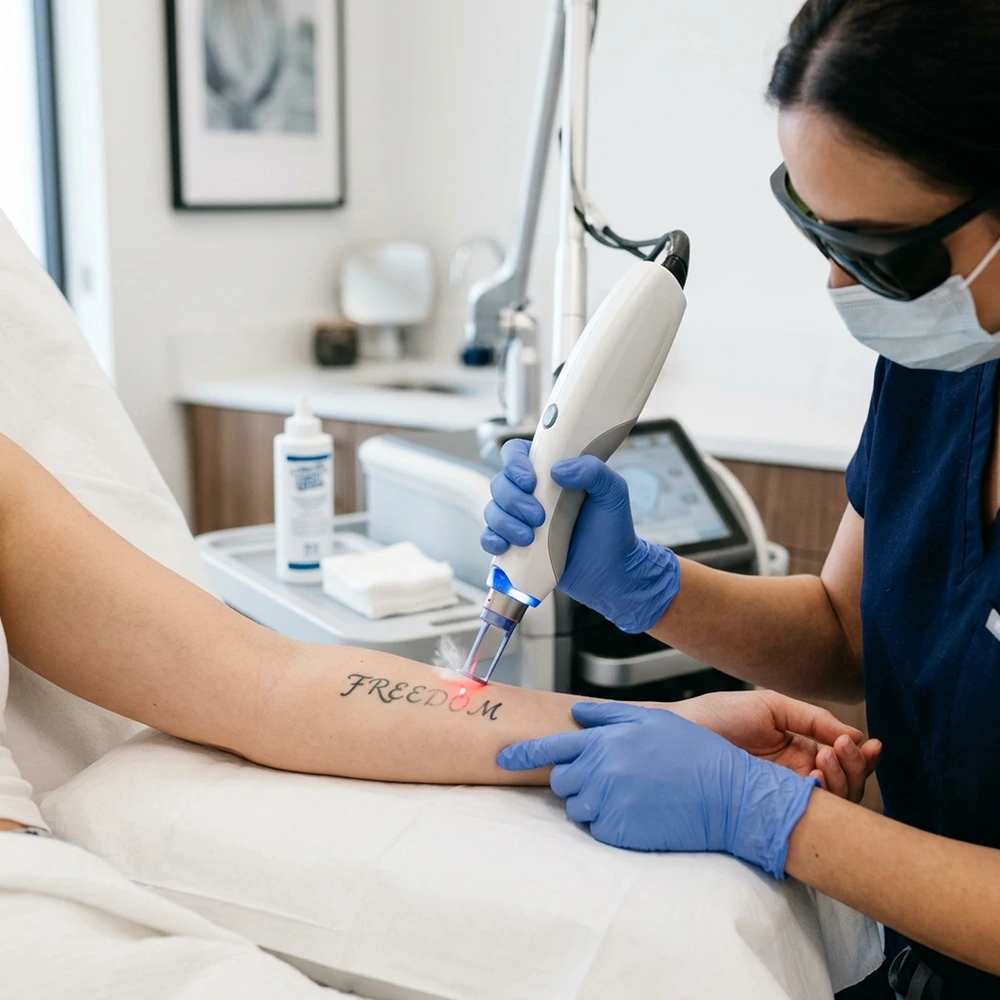
Different tattoo colours absorb different wavelengths of laser energy. Q-switched and picosecond laser technologies are commonly used for tattoo removal, with specific wavelengths selected according to the ink being treated.
The laser delivers short pulses of energy that break tattoo pigment into smaller particles. The body's natural processes then gradually clear these fragmented particles.
The choice of technology is not based on skin tone alone. Tattoo colour, pigment depth, density, location, and previous treatment history can all influence the treatment plan.
What Skin Reactions Can Occur?
Temporary skin reactions can occur after laser tattoo removal. Common responses may include redness, mild swelling, tenderness, or temporary changes in pigmentation.
Some people may experience temporary hyperpigmentation or hypopigmentation, particularly when the skin has higher melanin content. Blistering or crusting can also occur after treatment and should be managed according to professional aftercare instructions.
Unusual or prolonged reactions should be assessed by a qualified medical professional rather than treated independently.
How Can Treatment Risks Be Reduced?
Safety depends not only on the laser itself but also on appropriate assessment and aftercare. Before treatment, patients should disclose relevant information about their skin, previous laser procedures, medications, and history of abnormal scarring or pigmentation changes.
Practical precautions include:
- Avoiding unnecessary sun exposure before and after treatment.
- Following the recommended treatment interval.
- Keeping the treated area clean and protected.
- Avoiding picking or scratching treated skin.
- Following specific aftercare instructions provided by the treating professional.
- Reporting unexpected or persistent skin changes promptly.
Sun protection is particularly important because ultraviolet exposure can increase the likelihood of pigmentation changes during the treatment process.
Does Tattoo Colour Affect Safety?
Yes. Tattoo ink colour can influence which laser wavelength is appropriate. Black and dark pigments often respond differently from colours such as green, blue, red, or yellow.
Some colours can be more challenging to treat because their pigments respond differently to available laser wavelengths. Multicoloured tattoos may therefore require different settings or wavelengths during separate stages of treatment.
What Should You Discuss Before Treatment?
A consultation should involve more than simply identifying the tattoo. The practitioner should examine the surrounding skin, determine the tattoo's characteristics, review relevant medical and treatment history, and consider factors that could affect healing or pigmentation.
Questions worth discussing include:
- Which laser wavelength is appropriate for the tattoo?
- How will the treatment settings be adapted to the skin tone?
- What reactions are expected after treatment?
- What signs require medical attention?
- How should the skin be protected between sessions?
Conclusion
Laser tattoo removal can be suitable for a wide range of skin types when treatment is properly individualized. Skin tone, tattoo pigment, laser wavelength, energy settings, sun exposure, and healing response all influence safety. People with darker skin may need additional precautions because melanin can absorb laser energy, making careful treatment planning especially important.
