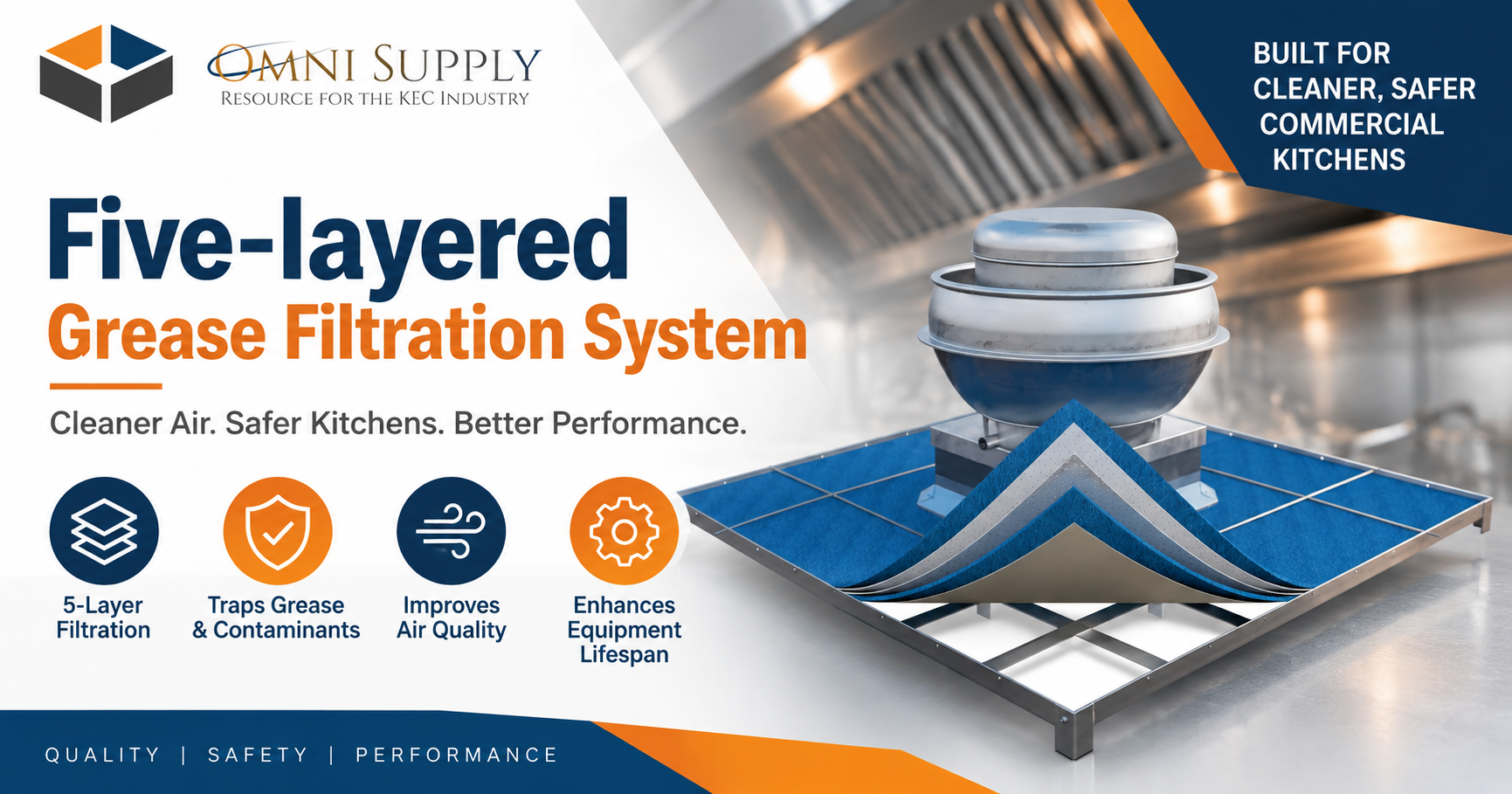
A commercial kitchen exhaust system works continuously to remove heat, smoke, cooking odors, and airborne grease. Because grease filters are exposed to these contaminants every day, regular maintenance is essential for keeping the ventilation system operating properly. A Five-layered Grease Filtration System can provide effective multi-stage grease capture, but even a quality filtration system needs consistent cleaning and inspection.
Why Grease Filter Maintenance Matters
During cooking, grease particles travel through the air toward the exhaust hood. The filtration system captures these particles before they can move further into the ventilation ductwork.
As grease accumulates on the filters, airflow may become restricted. Dirty filters can also make the kitchen exhaust system harder to maintain. Establishing a regular cleaning routine helps prevent excessive accumulation and supports consistent filtration performance. For restaurants with high cooking volumes, inspections may need to occur more frequently than in lower-volume kitchens.
Inspect Filters Regularly
The first step in maintaining a Five-layered Grease Filtration System is regular visual inspection. Kitchen staff or maintenance personnel should check filters for excessive grease buildup, physical damage, corrosion, or other signs of wear. Filters that appear heavily contaminated should be cleaned according to the manufacturer's recommendations. Damaged components should be evaluated and replaced when necessary. Regular inspections can help identify problems before they affect the overall ventilation system.
Follow the Correct Cleaning Procedure
Cleaning methods should always follow the manufacturer's instructions. Depending on the filter construction, filters may require specific cleaning products or procedures.
Before cleaning, filters should be removed safely from the hood. Accumulated grease should be handled appropriately, and cleaned filters should be completely dry before being returned to service.
Using unsuitable chemicals or aggressive cleaning methods can potentially damage filter components, so restaurant operators should avoid unapproved cleaning techniques.
Keep the Surrounding Hood Clean
Maintaining the filters alone is not enough. Grease can also accumulate around the exhaust hood, filter housing, collection areas, and other accessible components.
These areas should be included in the restaurant's regular cleaning schedule. Keeping the hood and surrounding components clean can complement the performance of the filtration system. A clean hood also makes it easier for staff to identify leaks, damage, or other maintenance concerns.
Schedule Professional Exhaust Cleaning
A Five-layered Grease Filtration System helps capture grease, but it cannot prevent every particle from entering the exhaust system. Some grease may still move beyond the filtration stage.
For this reason, commercial kitchens should maintain appropriate professional cleaning schedules for exhaust hoods, ducts, fans, and related components. Professional cleaning can address grease deposits in areas that are difficult for kitchen staff to access. The required frequency depends on cooking operations, equipment, usage, and applicable requirements.
Replace Damaged Filters
Cleaning cannot restore every filter. Filters that are bent, damaged, heavily corroded, or otherwise unable to function properly may need replacement. Using damaged filtration components can affect the overall performance of the exhaust system. Restaurant operators should inspect filters after cleaning and replace components when required. Omni Supply can help commercial kitchens explore suitable equipment and filtration solutions based on their operational requirements.
Create a Maintenance Schedule
One of the easiest ways to maintain filtration equipment is to create a written maintenance schedule. The schedule can include filter inspections, cleaning dates, hood cleaning, professional exhaust cleaning, and replacement checks.
Consistent maintenance helps prevent tasks from being overlooked and provides restaurant managers with a clear record of routine servicing.
Conclusion
Maintaining a Five-layered Grease Filtration System is essential for supporting effective commercial kitchen ventilation. Regular inspections, proper cleaning, timely replacement of damaged components, and professional exhaust maintenance can help keep the system functioning effectively. Restaurants should always follow manufacturer instructions and applicable maintenance requirements. With appropriate equipment and a consistent maintenance program, Omni Supply can help businesses support cleaner and more reliable commercial kitchen operations.
FAQs
1. How often should a Five-layered Grease Filtration System be cleaned?
The frequency depends on cooking volume, equipment type, and grease production. High-volume kitchens generally require more frequent cleaning.
2. Can I use any cleaning chemical on grease filters?
No. Always follow the manufacturer's recommended cleaning procedure and use approved cleaning products.
3. Should the exhaust hood also be cleaned?
Yes. The hood, filter housing, and other accessible components should be included in the kitchen's regular cleaning routine.
4. When should a grease filter be replaced?
A filter may need replacement if it is damaged, heavily corroded, distorted, or no longer suitable for effective operation.
5. Does filtration eliminate the need for duct cleaning?
No. A filtration system reduces grease entering the ductwork but does not eliminate the need for appropriate professional exhaust-system cleaning.