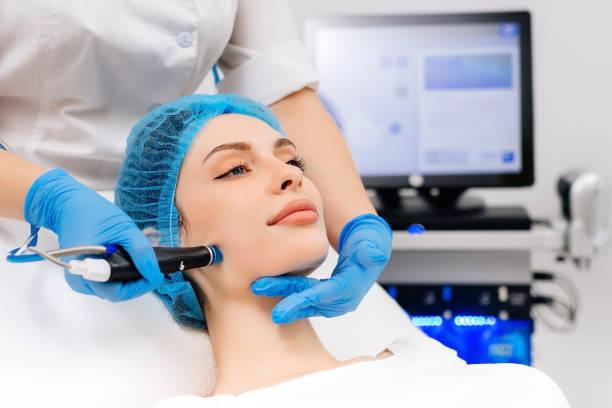
When it comes to professional skincare treatments, the Hydrafacial and chemical peels are two of the most popular options. Hydrafacial in Riyadh Both can transform your complexion, but they work in different ways and are suited to different skin concerns and goals. For those considering a Hydrafacial in Riyadh, understanding the differences between these treatments can help you choose the one that best aligns with your skin's needs.
What Is a Hydrafacial?
The Hydrafacial Experience
A Hydrafacial is a multi-step treatment that cleanses, exfoliates, extracts, and hydrates the skin in one session. It uses patented vortex technology to gently remove impurities and infuse the skin with nourishing serums.
Key Benefits
-
Immediate, visible glow with no downtime
-
Deep hydration and nourishment
-
Gentle exfoliation suitable for most skin types
-
Customisable for specific concerns
What Is a Chemical Peel?
The Chemical Peel Experience
A chemical peel uses a solution of acids to exfoliate the outer layers of the skin. This triggers cell turnover and reveals fresher, more evenly toned skin. Chemical peels come in varying strengths, from superficial to deep.
Key Benefits
-
Effective for pigmentation, fine lines, and acne scars
-
Stimulates collagen production
-
Can address deeper skin concerns
-
Results can be long-lasting
Key Differences
Which Treatment Is Right for You?
Choose a Hydrafacial If:
-
You want immediate results with no downtime
-
You have sensitive or reactive skin
-
Your primary concerns are hydration, dullness, or mild congestion
-
You are looking for a relaxing, gentle treatment
Choose a Chemical Peel If:
-
You are addressing pigmentation, fine lines, or acne scarring
-
You want deeper exfoliation and skin renewal
-
You are prepared for some downtime, depending on the peel strength
-
You have specific concerns that require a more intensive approach
Can You Combine Them?
Yes, many skincare professionals recommend combining a Hydrafacial with a chemical peel as part of a comprehensive skincare plan. The Hydrafacial can be used to prepare the skin or to maintain results between peels. However, it is important to space the treatments appropriately and follow professional guidance.
The Bottom Line
Both the Hydrafacial and chemical peels are effective treatments, but they serve different purposes. A Hydrafacial is ideal for gentle, hydrating, and immediate results, while a chemical peel is better suited for deeper exfoliation and addressing specific concerns. For those seeking a Hydrafacial in Riyadh, a consultation with a skincare professional can help determine the best approach for your unique skin.
For those seeking expert guidance and customized aesthetic care, you can book an appointment consultation at the Enfield Royal Clinic.
Frequently Asked Questions
Which is better, a Hydrafacial or a chemical peel?
It depends on your skin concerns. A Hydrafacial is gentler and more hydrating, while a chemical peel is more exfoliating and corrective.
Can I get both a Hydrafacial and a chemical peel?
Yes, but they should be spaced appropriately and guided by a skincare professional.
Is a Hydrafacial less painful than a chemical peel?
Yes, a Hydrafacial is generally a relaxing, painless experience, while a chemical peel can cause tingling or stinging.
How often should I get a Hydrafacial?
Monthly treatments are recommended for maintaining healthy, glowing skin.
Which treatment is better for sensitive skin?
A Hydrafacial is usually better for sensitive skin due to its gentle, customisable nature.