

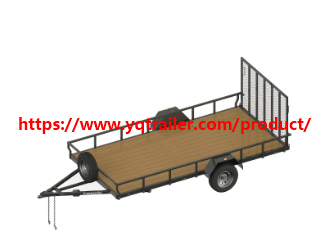

Flatbed trailers are valued for their open loading arrangement and flexible approach to transporting different types of cargo, and businesses working with a Flatbed Trailer Supplier often need to consider much more than the available loading surface. Material selection, purchasing priorities, functional engineering, manufacturing technology, user experience, maintenance, and visual design all influence how naturally a trailer fits into a complete transport workflow.
Material selection creates the foundation of flatbed trailer development. A typical trailer can bring together a chassis, deck structure, side elements, coupling components, support assemblies, ramps, guards, securing points, and other mechanical parts. Manufacturers can consider strength, toughness, corrosion behavior, wear resistance, surface condition, and compatibility between materials when developing these elements as a coordinated structure.
The loading surface deserves particular attention because it directly interacts with the cargo. Different goods may have metal edges, wooden surfaces, wheels, packaging, machinery attachments, or other contact areas. Engineers can consider how materials and surface treatments influence handling, cleaning, friction, and protection during loading and unloading. A practical deck should support the transport routine without creating unnecessary complications for operators.
Environmental exposure can also affect material planning. Flatbed trailers may be used at farms, construction sites, warehouses, logistics yards, workshops, and outdoor project locations. Rain, mud, dust, gravel, grease, vegetation, and general road residue can become part of everyday operation. Materials and finishes that are easier to inspect and care for can contribute to a more manageable ownership experience.
Purchasing decisions should begin with the cargo and the transport process. Buyers may use flatbed trailers for machinery, building materials, landscaping equipment, agricultural products, tools, packaged goods, or other transport tasks. Rather than focusing only on the trailer category, businesses can consider loading methods, cargo access, securing arrangements, towing compatibility, storage, cleaning, parking, and routine maintenance.
Cargo diversity is one of the main reasons many users choose an open trailer concept. Some loads may be easier to approach from the side, while others may require rear access or specialized loading equipment. Buyers can review the relationship between the deck, access areas, ramps, and securing points to determine whether the trailer supports the way their teams actually handle cargo.
Supplier evaluation is another important part of procurement. Businesses can examine manufacturing experience, engineering communication, material knowledge, production organization, quality management, customization capability, and customer responsiveness. A supplier with practical knowledge of transport applications can provide more useful guidance during product selection and development. Jinhua Yongqiang Vehicles Factory applies manufacturing experience to trailer development while considering different cargo and transportation requirements.
Functional engineering determines how the trailer performs within the broader towing system. Designers can coordinate the chassis, deck, suspension, coupling structure, support elements, access systems, and cargo-securing areas as one product. The relationship between these components can influence stability, handling, loading convenience, and service access during routine use.
Cargo securing deserves careful consideration because an open deck depends heavily on organized load management. Engineers can consider attachment points, edge structures, removable supports, and other practical features according to the intended application. These elements should remain understandable and accessible so operators can prepare different types of cargo without unnecessary complexity.
Access design can also influence daily workflow. Ramps, steps, openings, and usable deck edges can affect how people approach the trailer and interact with transported goods. Designers can examine these relationships from the operator's perspective, considering loading, unloading, inspection, cleaning, and routine service as connected activities.
Manufacturing technology supports the transition from design ideas to physical trailers. Digital modelling allows engineers to review chassis structures, deck layouts, ramp arrangements, support elements, attachment locations, clearances, and accessory interfaces before production begins. Depending on the product, fabrication may involve cutting, forming, welding, machining, coating, assembly, electrical integration, and inspection.
Production feedback can help refine future trailer designs. Fabrication teams may identify opportunities to simplify assembly or improve access to difficult areas, while inspection personnel can provide useful observations about surface treatment and structural consistency. Customers and operators can contribute practical feedback about cargo handling, securing, cleaning, storage, and towing. Combining these perspectives can make future development more responsive.
User experience extends beyond the driver. Loading personnel, warehouse workers, mechanics, fleet managers, and distributors may all interact with a flatbed trailer during its lifecycle. Clear working areas, accessible attachment points, practical handles, and logical component placement can make everyday tasks easier to understand and manage.
Maintenance should be considered during the initial design stage. Outdoor trailers can collect mud, dust, grease, water, plant residue, and road debris across the deck and chassis. Accessible surfaces, organized service areas, practical connection structures, and suitable finishes can support routine cleaning and inspection while helping users keep the trailer ready for future transport tasks.
Storage and transportation of the trailer itself can influence convenience. Between projects, a trailer may remain in a yard, warehouse, workshop, or farm environment. Practical support arrangements, organized accessories, protected surfaces, and sensible storage concepts can help businesses manage the equipment more efficiently when it is not in active use.
Design and appearance contribute to the overall identity of a flatbed trailer. Open deck structures, frame contours, ramp placement, protective elements, surface finishes, visible hardware, and accessory arrangements all influence how the trailer appears in commercial, agricultural, industrial, or recreational environments. A clean and purposeful appearance can also make functional areas easier to recognize.
Customization provides flexibility for logistics businesses, agricultural operators, construction companies, equipment distributors, rental businesses, contractors, and private-label brands. Different projects may require alternative deck arrangements, access systems, support structures, securing concepts, storage areas, protective elements, or exterior finishes. Flexible product development allows manufacturers to adapt trailer concepts while keeping engineering and production coordinated.
Sustainability can also influence modern trailer development. Efficient material utilization, reduced fabrication waste, repair-friendly construction, reusable packaging, durable components, refurbishment, and longer product lifecycles can all support more responsible resource management. These considerations can be integrated into product planning alongside cargo handling and maintenance requirements.
Quality management connects material preparation, engineering review, fabrication, welding, machining, surface treatment, assembly, inspection, packaging, and customer feedback. Consistent procedures help manufacturers monitor production and identify opportunities for refinement. Feedback from operators, mechanics, distributors, fleet managers, and cargo-handling teams can provide practical insight into loading, securing, towing, cleaning, storage, and everyday use.
Jinhua Yongqiang Vehicles Factory continues developing trailer and vehicle solutions through practical manufacturing knowledge, coordinated engineering, flexible product development, and attention to different transport applications. Its approach connects material selection, deck construction, cargo access, securing arrangements, manufacturing technology, maintenance, user experience, customization, and visual design throughout product development. More information about its products and manufacturing capabilities is available at https://www.yqtrailer.com/.

