

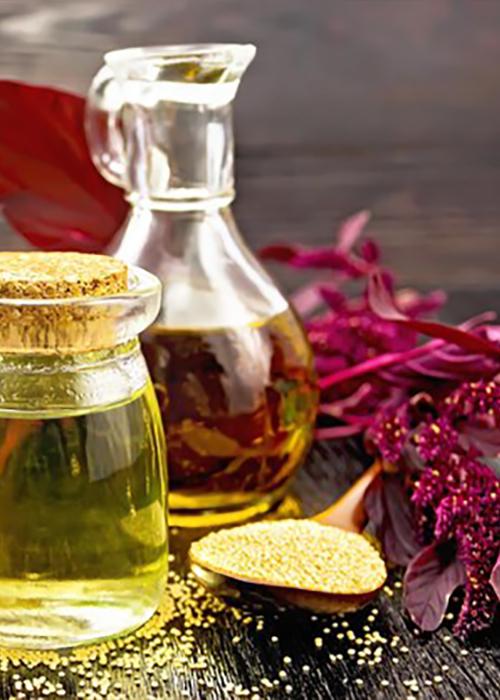

Amaranth Oil Market is gaining momentum alongside significant changes in the global beauty and personal care industry. Consumers are increasingly exploring products positioned around botanical ingredients, specialized care, and premium experiences. This shift is encouraging manufacturers to expand beyond widely used ingredients and investigate specialty oils that can provide a distinctive identity. Amaranth oil has attracted attention because it can be considered across skincare, haircare, cosmetics, and selected wellness applications. As beauty brands compete through ingredient innovation and differentiated product concepts, specialty botanical oils are becoming increasingly relevant to modern formulation strategies.
The expansion of botanical skincare ingredients is influencing how brands approach product development and ingredient selection. Manufacturers are increasingly studying botanical materials based on their formulation characteristics, sourcing, processing requirements, and suitability for specific applications. Amaranth oil can be explored within this environment as a specialty ingredient for products designed around plant-based positioning. Product developers are also focusing on ingredient compatibility and stability because premium formulations require reliable performance throughout their intended shelf life. These considerations are encouraging closer collaboration between ingredient suppliers, formulators, and beauty brands.
Facial skincare continues to provide an important platform for botanical ingredient innovation. Consumers are increasingly interested in serums, facial oils, moisturizers, masks, and targeted treatments designed for different skincare routines. Brands are responding by introducing formulations with distinctive ingredient combinations and premium positioning. Amaranth oil may be incorporated into selected products where its characteristics are compatible with the formulation objectives. The ingredient can also contribute to a product's botanical identity when accurately communicated. As consumers become more knowledgeable about skincare ingredients, companies may increasingly use specialized oils to differentiate products in a highly competitive beauty market.
Premium beauty is another factor supporting opportunities for specialty oils. Consumers who purchase premium skincare and cosmetics often pay close attention to formulation stories, ingredient sourcing, packaging, brand philosophy, and product experience. This creates opportunities for less-common botanical ingredients that can help brands develop distinctive identities. Amaranth oil may be attractive to manufacturers seeking to introduce specialized plant-derived components into premium formulations. However, successful adoption requires more than ingredient novelty. Consistent quality, appropriate processing, reliable supply, and evidence-based product communication remain important to maintaining credibility and supporting long-term customer relationships.
The haircare industry is also becoming increasingly specialized. Consumers can now choose from products designed for different hair types, textures, styling needs, scalp concerns, and maintenance routines. This segmentation encourages manufacturers to experiment with botanical oils and customized ingredient combinations. Amaranth oil can be evaluated for hair oils, conditioning products, masks, serums, and other specialty formulations. Its potential role depends on the specific product design and technical requirements. As brands continue moving toward personalized and targeted beauty solutions, specialty oils could benefit from the increasing demand for differentiated ingredients that fit particular product concepts.
Technological innovation is helping manufacturers improve the development of botanical oil products. Advances in extraction, filtration, purification, storage, formulation, and quality testing can improve ingredient consistency and enable more controlled product development. These capabilities are especially important when working with specialty oils because manufacturers need dependable specifications for large-scale production. Suppliers can strengthen their position by providing technical documentation, quality assurance, formulation support, and consistent ingredient supply. Continued investment in processing technology may also help broaden the range of applications where amaranth oil can be incorporated effectively.
Regional beauty trends will continue to shape the market's development. North American consumers show strong interest in clean beauty and premium personal care, while European markets emphasize product quality, ingredient transparency, and regulatory compliance. Asia-Pacific offers substantial opportunities due to its expanding beauty industry, growing middle-class consumer base, and strong interest in skincare innovation. Online beauty retail is further connecting consumers with specialty brands and botanical products. Companies seeking international expansion will need to adapt product communication and distribution strategies to local consumer preferences, regulations, and purchasing behaviors.
The outlook for the Amaranth Oil Market remains closely tied to innovation in beauty, wellness, and botanical formulations. Continued consumer interest in specialized ingredients may encourage brands to experiment with amaranth oil across new product categories. Research into extraction quality, formulation performance, stability, sourcing, and application suitability could further support adoption. Ingredient suppliers can benefit by developing strong technical capabilities and reliable supply networks while maintaining transparent sourcing practices. As the beauty industry increasingly rewards distinctive formulations and meaningful ingredient stories, amaranth oil may gain additional opportunities among brands seeking to create differentiated natural-oriented products.
FAQs
1. How are beauty trends affecting the Amaranth Oil Market?
Growing interest in botanical ingredients, premium skincare, specialized haircare, and clean beauty is encouraging manufacturers to explore specialty plant oils.
2. What beauty products can contain amaranth oil?
Potential applications include facial oils, serums, creams, hair oils, conditioners, masks, body-care products, and selected cosmetic formulations.
3. Why is consistent quality important for botanical oils?
Consistent quality helps formulators maintain predictable product characteristics and supports reliable manufacturing across different production batches.
