

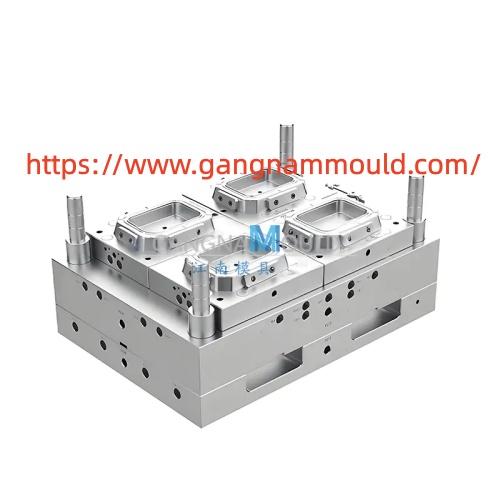

Buck Basket Injection Mould requires steady attention so plant lines can keep cycles predictable and deliver uniform storage containers. Treating the equipment as a precision asset helps teams avoid interruptions and maintain even output over long runs.
Cleaning after every sequence forms the basic practice. Wipe residual material from open cavities edges and vents with lint free cloths and mild solvents that leave no residue. Soft brass or nylon brushes reach deep ribs and handle areas safely while harder tools risk marks that later collect debris. Cooling channels need occasional flushing to clear scale that limits flow and creates temperature gaps. Open channels allow balanced cooling and help finished pieces exit with matching dimensions and strength.
Moving components receive equal focus. Sliders ejector pins and guide rods perform better with a thin high temperature grease layer applied at intervals based on shot counts. Excess grease can reach forming surfaces so apply only the quantity needed to reduce friction. Confirm that the two halves meet evenly before each restart. Uneven contact increases wear along contact lines and may create excess material that needs later removal.
Checks based on actual cycles work better than fixed dates. Every fifty thousand shots inspect vents for buildup and review pin surfaces for scoring. At one hundred thousand shots flush the complete coolant system and match flow rates against the starting baseline. Record results in a simple log so patterns appear clearly. Early detection of surface changes permits limited polishing instead of larger part exchanges.
Storage habits protect the unit during extended pauses. Dry all surfaces then apply a light film that evaporates cleanly on the next use. Rest the closed assembly on padded supports away from humidity sources and note the latest cycle count. These actions limit oxidation that would otherwise require extra preparation before restart.
Gangnammould designs its production equipment with accessible cooling paths and standard lubrication points so plant teams complete routine care without complex disassembly. The same practical layout appears in the finished cavities and cores allowing quick visual reviews during normal shifts.
Teams that follow these habits experience fewer unplanned stops and longer intervals between major interventions. Consistency across cleaning lubrication and inspection turns ordinary attention into quiet support for line efficiency. Training new staff on the same sequence builds a shared standard that continues through shift changes. Over months the combined effect shows in reduced scrap and more stable machine availability.
Extra steps such as confirming clamp force after any component change or verifying sensor accuracy further safeguard the investment. When every element receives brief regular care the full system stays matched to production targets.
Visit https://www.gangnammould.com/product/ to review available options that support consistent operations.
