

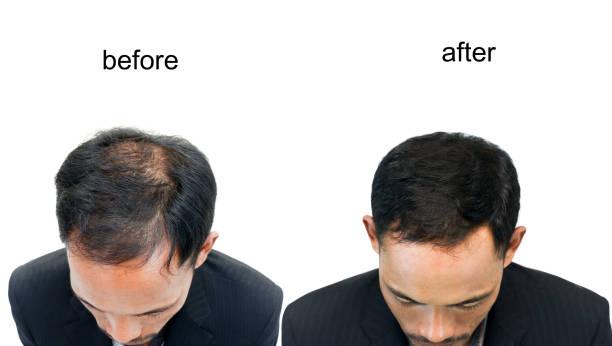

Hair that seems to stop growing can be an early sign of a changing hair cycle, but it does not always mean follicles have stopped producing hair. Hair Loss Treatment in Dubai may be appropriate when slower apparent growth is accompanied by reduced density, progressive thinning, increased breakage, or changes in follicle calibre.
Why Hair Can Seem to Grow More Slowly
Healthy scalp hair does not grow continuously at the same rate. Each follicle moves through a repeating biological cycle involving active growth, transition, resting, and shedding phases.
When more follicles spend less time in active growth, the overall appearance of the hair can change. A person may notice that their ponytail feels smaller, the ends seem thinner, or the scalp becomes easier to see even though obvious shedding has not increased.
There is another important distinction: sometimes the follicle is still growing hair normally, but the visible hair shaft repeatedly breaks before reaching its previous length.
This is particularly relevant for people who regularly use chemical straightening, colouring, high-temperature styling tools, tight hairstyles, or frequent blow-drying.
The clinical objective is therefore not simply to ask, “How fast is the hair growing?” The more useful question is whether the problem originates at the follicle, along the hair shaft, or from a combination of both.
Hair Loss Treatment in Dubai Depends on Where the Problem Starts
A detailed assessment separates follicular growth problems from mechanical damage. These can look surprisingly similar when someone evaluates their hair only by looking at its length.
| What the patient notices | Possible underlying pattern | What assessment should examine |
|---|---|---|
| Hair remains the same length for months | Repeated shaft breakage | Split ends, fracture points and hair calibre |
| New hairs appear shorter and finer | Follicular miniaturization | Follicle calibre and density |
| Ponytail gradually becomes smaller | Reduced effective density | Distribution across the scalp |
| Hairline looks less dense | Localized follicular change | Hairline architecture and follicle openings |
| Ends become sparse while roots look normal | Shaft damage | Hair-fibre condition and styling history |
| Hair seems slower after a major physiological event | Altered growth cycling | Timing of shedding and regrowth |
| Scalp becomes progressively more visible | Reduced density or calibre | Scalp examination and photographic comparison |
This distinction matters because a follicle-based problem cannot be corrected simply by trimming damaged ends, while shaft breakage will not automatically improve because a patient receives a follicle-stimulating procedure.
An appropriate treatment plan should therefore follow the biology of the problem rather than the visual symptom alone.
The Growth-Length Trap
Hair length is an imperfect measure of follicular health.
Suppose someone previously gained approximately one centimetre of visible length over a month but now appears to gain very little. It is tempting to conclude that the scalp has stopped producing hair.
However, if newly produced shafts are becoming fragile, the patient may be losing length at the ends at approximately the same time that new hair is being produced at the roots.
This creates a misleading impression of stagnant growth.
A clinician may therefore look for several clues:
- Are the roots becoming finer?
- Is the density at the scalp changing?
- Are the ends breaking?
- Are shorter hairs distributed throughout the scalp?
- Is there a change in the width or fullness of the ponytail?
- Has the patient recently changed styling, colouring, diet, medication, or hair-care practices?
- Did the perceived slowdown develop suddenly or gradually?
The answers can change the treatment pathway substantially.
Hair Loss Treatment in Dubai for Patients With a Changing Hair Cycle
The scalp contains thousands of follicles operating on partially independent cycles. They do not all enter or leave the growth phase simultaneously.
That biological arrangement is why a temporary disturbance can sometimes cause a noticeable change in overall hair density without producing an immediately obvious bald patch.
For some patients, the main issue is an increased proportion of follicles entering the resting phase. For others, the concern is progressive miniaturization, where individual follicles continue producing hair but the resulting fibres become progressively finer.
These situations should not be treated as interchangeable.
A patient with temporary cycle disruption may require observation and correction of an identifiable trigger, whereas progressive follicular miniaturization may justify an active hair-restoration strategy.
The timing also matters. Hair changes can become visible weeks or months after the biological event that contributed to them, making the patient's history an important part of the assessment.
What a Clinical Assessment Can Reveal
A useful consultation should go beyond counting loose hairs in a shower or on a pillow.
The clinician may combine visual examination with magnification, scalp assessment, medical history, photographs, and, where appropriate, laboratory investigation.
Particular attention is paid to whether individual follicles are producing similarly thick fibres or whether there is increasing variation in hair calibre.
That variation can be clinically meaningful because progressive differences in shaft diameter may indicate that some follicles are producing weaker, finer hair.
Photographic documentation is also valuable. A patient may not recognize a small change from one week to another, but standardized images taken under consistent conditions can reveal whether density, part width, hairline shape, or crown visibility is changing over time.
When Hair-Length Problems Need More Than Hair-Care Changes
Improving hair handling is sensible when breakage is contributing to the appearance of slow growth.
Practical measures can include reducing excessive heat exposure, avoiding aggressive brushing when hair is wet, limiting repeated chemical processing, and addressing hairstyles that create sustained traction.
But persistent reduction in density requires a different level of evaluation.
If the roots are visibly becoming finer, the scalp is progressively more apparent, or the overall volume continues to decline despite improved hair care, focusing exclusively on the hair shaft may delay appropriate treatment.
This is where individualized Hair Loss Treatment in Dubai becomes more relevant.
Depending on the diagnosis and degree of follicular impairment, a clinician may consider non-surgical approaches such as PRP, exosome-based protocols, stem-cell-based therapies, G-Cell procedures, or other regenerative options available through an individualized treatment plan. Hair transplantation may be considered when follicles in specific areas are no longer capable of producing sufficient hair and the patient has an appropriate donor supply.
The choice should be based on follicular status rather than the simple complaint that “my hair is growing slowly.”
How Dubai Lifestyle Factors Can Complicate the Picture
Dubai's combination of strong sunlight, heat, air-conditioned indoor environments, frequent styling, swimming, and an active lifestyle can create additional stress for the hair shaft.
These factors do not automatically cause follicular hair loss, but they can make breakage and dryness more noticeable.
Someone who moves repeatedly between hot outdoor conditions and heavily air-conditioned interiors may also change their washing, drying, and styling habits. Frequent heat exposure from dryers or styling tools can compound the problem.
This makes it especially important to distinguish cosmetic hair-fibre damage from genuine reduction in follicular density.
For broader information about available aesthetic and hair-restoration services, the hair restoration and aesthetic care team in Dubai can help patients understand which treatment category is appropriate after assessment.
When Slower Growth Becomes a Clinical Concern
Not every change in hair length requires medical intervention. A temporary period of slower-looking growth can occur without permanent follicular damage.
A consultation becomes more useful when several signs appear together, particularly:
- Hair density is visibly decreasing.
- Individual hairs appear progressively finer.
- The scalp is becoming easier to see.
- Hairline or crown coverage is changing.
- Breakage continues despite improved hair care.
- The change persists rather than resolving.
- There is a noticeable difference between previous and current hair volume.
The combination of these findings provides more useful information than hair length alone.
Matching Treatment to the Biological Problem
Different treatments serve different clinical purposes.
PRP, for example, is commonly considered when follicles remain viable but require stimulation and support. Regenerative approaches may be discussed when the objective is to improve the scalp environment and follicular function.
A transplant is fundamentally different. It redistributes viable donor follicles into areas where greater coverage is required and is therefore not simply a faster version of a non-surgical hair-growth treatment.
This distinction is important for expectations.
Someone whose main problem is shaft breakage may need hair-care correction rather than a follicular procedure. Someone with progressive follicular miniaturization may benefit from earlier intervention before density becomes substantially compromised.
What Patients Should Track Before Their Appointment
Keeping a simple record can make the consultation more informative.
Patients can photograph the front, temples, crown, and parting under similar lighting every few weeks. It is also useful to note significant changes in diet, medication, illness, stress, hair colouring, chemical treatments, or styling routines.
Avoid obsessively counting individual hairs. Daily shedding varies naturally, and isolated counts rarely explain the entire picture.
Instead, focus on trends in density, calibre, coverage, breakage, and hairline shape.
That information gives the clinician a more reliable starting point for determining whether the perceived reduction in growth is primarily a shaft problem, a follicular problem, or both.
The Strategic Investment
When hair appears to grow more slowly, the most valuable first step is identifying what has changed biologically rather than immediately selecting a procedure.
For some patients, the answer is hair breakage and fibre damage. For others, reduced follicular activity or progressive miniaturization is responsible for the change in appearance. The earlier these patterns are distinguished, the easier it becomes to build a treatment strategy around the patient's actual needs.
For patients seeking a medically guided approach, Tajmeels Clinic provides hair-restoration and aesthetic treatment options in Dubai with individualized assessment at the center of treatment planning.
