

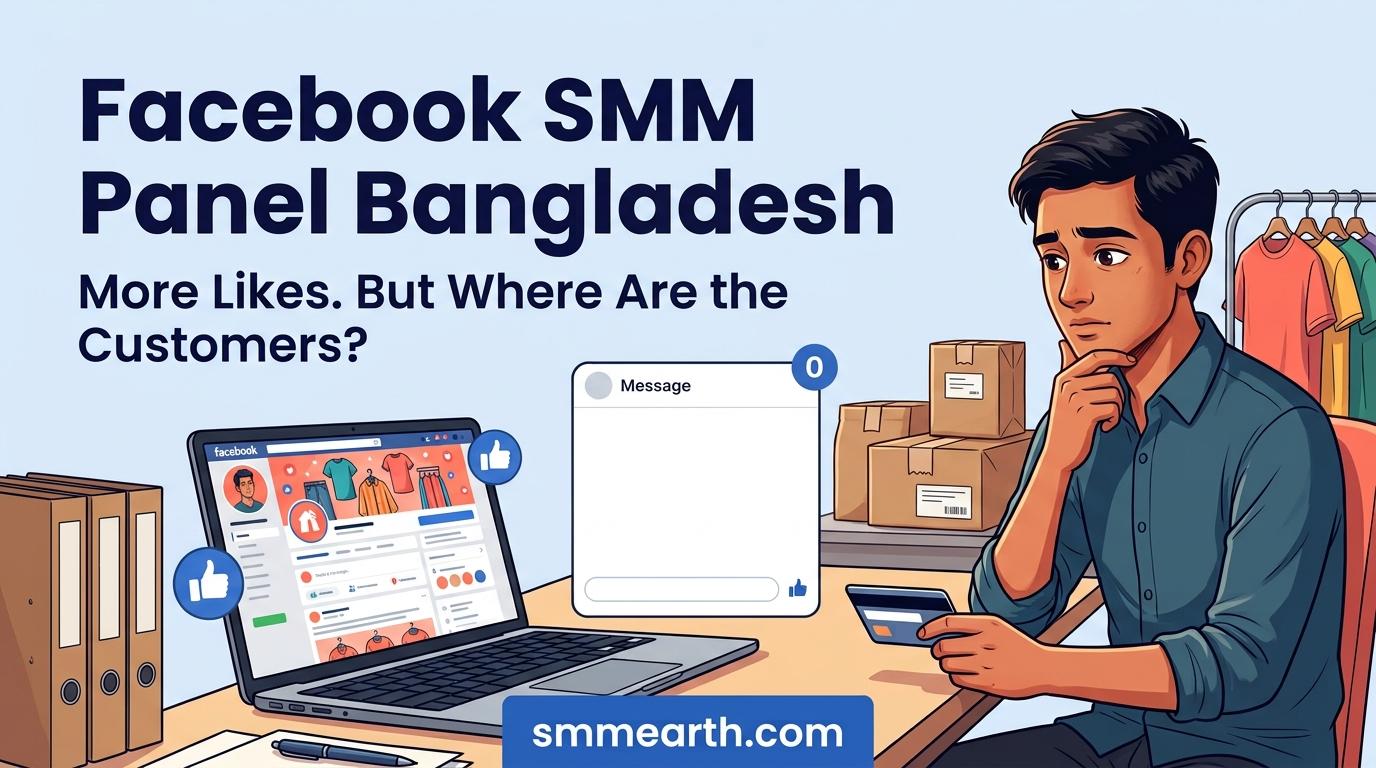

Building an active Facebook presence takes more than publishing posts regularly. Whether you manage a business page, personal brand, online store, community, or marketing campaign, getting people to notice and interact with your content can be one of the biggest challenges.
This is where a facebook likes panel can become part of a broader social media promotion strategy. These platforms typically allow users to purchase engagement services for Facebook posts or pages through a dashboard, making it easier to organize campaigns without managing every promotional activity manually.
However, the value of a likes service should not be judged by numbers alone. A strong Facebook strategy still depends on relevant content, audience interest, consistency, and genuine interaction. Purchased engagement may provide additional visibility or social proof, but it should support—not replace—the work required to build a real audience.
Why Facebook Likes Still Matter
Likes are one of the most visible forms of interaction on Facebook.
When someone encounters a post with very little engagement, they may be less inclined to stop, read, or investigate further. A post that already has visible interaction can create an initial impression that other people have found the content interesting.
This is commonly known as social proof.
For businesses, social proof can be particularly useful. A potential customer discovering a product, service, announcement, or educational post may naturally look at the level of activity around it before deciding whether to engage.
However, likes should be considered one signal rather than proof that a business is trustworthy.
A page with thousands of likes but no meaningful comments, shares, conversations, or useful content may still struggle to convert visitors into customers.
What Is a Facebook Likes Panel?
A Facebook likes panel is generally an online platform where users can order social media engagement services.
Instead of contacting a provider manually for every campaign, users can usually select a service, enter the required post or page information, choose a quantity, and monitor the order through a dashboard.
The exact services vary from provider to provider. Some may focus on post likes, while others offer additional Facebook engagement options.
The main advantage is convenience.
For marketers managing multiple pages or campaigns, having services organized in one place can make campaign management easier. It can also help users compare pricing, delivery options, and service descriptions before deciding what fits their needs.
Facebook Post Likes vs. Page Likes
One important distinction is the difference between likes on a post and likes on a Facebook page.
Post likes are connected to individual pieces of content. They can be useful when a particular product announcement, image, video, article, or promotional message needs additional visibility.
Page likes relate to the broader Facebook presence. They can contribute to the visible size of an audience and may make a page appear more established.
These two objectives should not be confused.
If you are promoting a new product announcement, post-level engagement may be more relevant. If you are trying to establish a new brand presence, building an interested page audience may be the longer-term objective.
The best campaign depends on what you are trying to accomplish.
Social Proof Can Influence First Impressions
Imagine two similar business posts.
The first has almost no visible engagement. The second has a noticeable number of likes and other interactions.
A new visitor may naturally pay more attention to the second post because the activity suggests that other people have already noticed it.
This does not mean engagement automatically creates trust. Instead, it can influence the first impression.
That distinction is important for anyone using a Facebook likes service. Purchased engagement should never be used to make misleading claims about customer satisfaction, product quality, or popularity.
It is better to treat engagement as a visibility tool while continuing to earn authentic interactions through useful content.
Content Quality Comes First
No likes panel can turn poor content into an effective marketing campaign.
If a post is confusing, irrelevant, poorly designed, or aimed at the wrong audience, increasing its like count does not solve the underlying problem.
Before promoting a post, consider whether it has a clear purpose.
Ask yourself:
-
Does the post address a specific audience?
-
Is the message easy to understand?
-
Does the image or video attract attention?
-
Is the information useful?
-
Does the post encourage a natural response?
-
Does it support the overall brand?
A strong content foundation makes promotional activity much more meaningful.
How a Facebook Likes Panel Can Fit Into a Campaign
A practical campaign can begin with content creation.
Suppose an online store publishes a product post. Instead of immediately promoting every post, the marketing team can identify content that already performs reasonably well and then decide which posts deserve additional exposure.
The process might look like this:
Step 1: Create useful content.
Publish posts that provide information, demonstrate products, answer questions, or communicate something relevant to the audience.
Step 2: Identify important posts.
Not every post needs the same promotional budget or attention.
Step 3: Choose an appropriate service.
If using a likes panel, review the provider's service details and understand exactly what is being offered.
Step 4: Monitor the campaign.
Watch how engagement develops instead of focusing only on the final number.
Step 5: Continue organic promotion.
Keep posting, responding to comments, encouraging discussions, and building relationships with real followers.
This creates a more balanced approach than depending entirely on purchased likes.
Why Cheap Isn't Always Better
Price is an important consideration, particularly for smaller businesses and creators. But choosing the cheapest service available can create problems if quality is ignored.
A service promising an unusually large amount of engagement for a very small price may not provide the type of audience or activity a marketer actually wants.
Before ordering, look at the provider's service information, delivery approach, refund or refill policies where applicable, and customer feedback.
It is also wise to avoid services that ask for unnecessary account credentials.
A professional provider should make the ordering process straightforward without requiring access that is unrelated to the service being purchased.
Think About Engagement Beyond Likes
Facebook marketing is much broader than accumulating likes.
Comments can indicate conversation. Shares can expand distribution. Clicks can bring visitors to a website. Messages can create direct customer opportunities.
For this reason, a likes campaign should ideally sit inside a larger social media strategy.
For example, a business could use informative posts to generate organic conversations, short videos to capture attention, product posts to introduce offers, and customer-focused content to answer common questions.
The goal is not simply to make a page look active. The goal is to create a social presence that gives people reasons to return.
Track What Actually Improves
Once a campaign is running, look at the bigger picture.
Compare posts before and after promotion. Which topics attract the most attention? Which formats encourage comments? Which posts generate website visits? Which content receives shares from genuine users?
These questions provide more useful information than simply asking whether the number of likes increased.
Facebook's native analytics and professional tools can also provide valuable information about audience activity and content performance. Use those insights to decide what type of content deserves more investment.
If a particular topic consistently receives genuine engagement, create more content around it.
If another type of post attracts little attention despite promotion, reconsider its format, topic, or audience.
Avoid Depending on Purchased Engagement
One of the biggest mistakes marketers can make is treating purchased likes as the foundation of their entire Facebook strategy.
A healthy page should continue to develop organically.
Respond to comments. Encourage customers to share their experiences. Publish consistently. Test different content formats. Use Facebook advertising when appropriate. Make your posts useful enough that people have a reason to interact naturally.
Purchased engagement can be considered an additional promotional resource, but authentic audience development should remain the long-term objective.
Final Thoughts
A facebook likes panel can offer a convenient way to organize Facebook engagement campaigns, particularly for marketers who want to give selected posts or pages additional visibility.
But the strongest results come when likes are combined with valuable content, consistent publishing, genuine community interaction, and careful performance tracking.
Instead of asking only how many likes a campaign can deliver, ask a more useful question: Does this campaign support the larger goal of building a stronger Facebook presence?
When the answer is yes, a likes service can become one small part of a much broader marketing system. The numbers may attract initial attention, but useful content and genuine audience relationships are what can turn that attention into sustainable social media growth.
