


Individuals with severe or resistant acne may find themselves asking, “How long does isotretinoin take to work?” The answer is that it takes time. Isotretinoin is a potent prescription medication that slowly lowers the amount of oil produced by glands, unclogs pores, kills acne-causing bacteria, and decreases swelling. Since it targets multiple contributing factors for acne, improvement is expected to appear over the course of several weeks.
Isotretinoin is prescribed in the U.S. for the treatment of nodular acne that has failed to respond to other treatment options. It is a treatment that is carefully monitored due to the serious side effects and safety measures associated with its use.
When Does Isotretinoin Take Effect?
Individuals should not expect to see clear skin within the first several weeks of taking the medication. On the contrary, acne is likely to worsen within the first month or two before improving.
A generic timeline would look like this:
- For the first few weeks: You may develop dryness of lips, skin, or any other side effects, but acne might stay active.
- 1-2 months: There can be the beginning of improvement in terms of reduced oiliness and breakouts.
- 2-3 months: Improvement becomes more obvious.
- 3-5 months: Acne keeps getting cleared up.
- After 4-5 months: Usually, a regular course is finished, but there are patients who require either shorter or longer courses.
- After finishing the treatment: Skin may keep improving for some time even after stopping taking isotretinoin.
As everyone responds differently, this timeline is to be seen as a general guideline but not as a guarantee when your skin will be cleared up.
How Does Isotretinoin Treat Acne?
Isotretinoin is a retinoid, an oral vitamin A derivative. This medicine is one of the most effective prescription drugs for treating severe acne, as it influences all of the processes related to acne development.
Isotretinoin helps:
- Reduce sebum production
- Unblock pores
- Decrease acne-related inflammation
- Create unfavorable conditions for acne-causing bacteria
- Prevent formation of new breakouts
It has been reported by the American Academy of Dermatology that isotretinoin tackles all the four leading causes of acne, hence explaining why the medication may result in long-term clearance in most cases.
What is Isotretinoin 40 mg?
Isotretinoin 40 mg is one of the strengths of isotretinoin that are found in the US market. A specific product, like isotretinoin 40 mg, could be prescribed as per the needs of an individual.
But this is not to say that 40 mg will work well with everyone. In fact, dermatologists assess some factors like body weight, acne severity, patient's response to the medication, side effects, and more to come up with a suitable regimen.
In addition, according to the FDA labeling of ABSORICA, 40 mg is one of the capsule strengths found in the market.
So, when looking for isotretinoin 40 mg price, it should not be done on basis of capsule strengths or costs alone. The drug should always be purchased through proper evaluation and prescription.
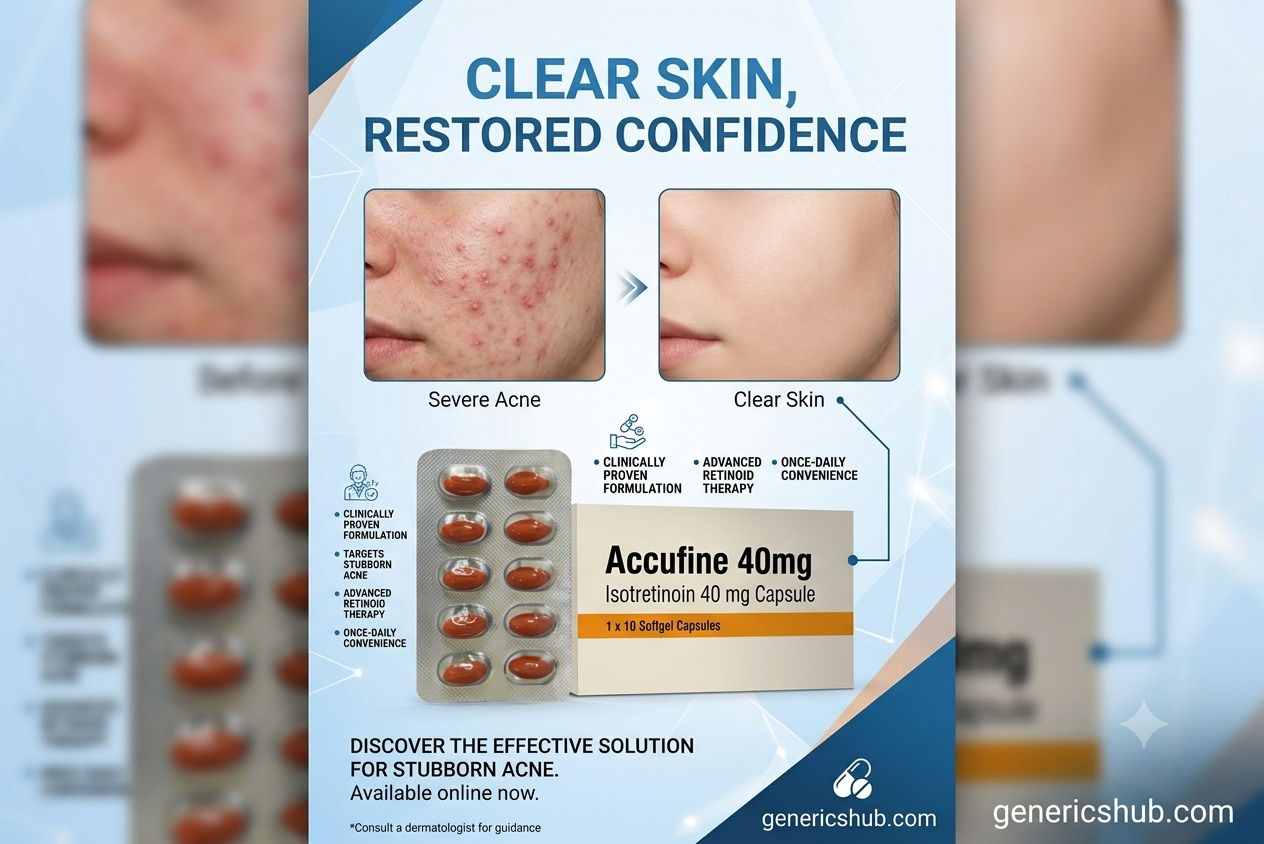
What about Accufine 40mg?
Accufine, Accufine 40mg, and Accufine 40mg softgel capsule are additional names you may come across while looking for information on isotretinoin.
Remember that it is essential to focus on the active ingredient, dosage, formulation, and information on the prescription to avoid confusion with similar-sounding brands. When your dermatologist prescribes you isotretinoin 40 mg, make sure to ask your pharmacist about a specific product and its use.
There are several isotretinoin brand names registered by the American Academy of Dermatology, such as Absorica, Amnesteem, Claravis, Myorisan, and Zenatane. The brand-name Accutane is not available anymore in the United States, but people tend to call isotretinoin this way.
Why does the skin become worse before it improves?
The hardest thing about isotretinoin for acne is that the appearance of your skin will become even more awful before it gets any better.
It happens to some patients, and the American Academy of Dermatology refers to this condition as an initial flare, which takes place during the first month or two. You should notify your dermatologist in case your acne worsens.
Don’t increase your dosage or stop taking isotretinoin on your own because of an initial flare.
What Should You Expect During Isotretinoin 40 mg Capsule Therapy?
When your dermatologist will prescribe you an isotretinoin 40 mg capsule, you should expect to see improvements gradually.
You will probably see things like:
- Decreased oiliness of the skin
- Reduced number of new inflamed pimples
- Smaller and less painful blemishes
- Reduced number of serious acne lesions
- Improvement in overall skin clearance
On the other hand, dryness of the lips and skin is also extremely common. Your doctor may give you advice regarding proper skin care in order to deal with those side effects.
Do not vigorously cleanse your skin and use several strong acne products without consulting your dermatologist, since isotretinoin can make your skin more sensitive.
Important Information Regarding the USA Market
Absorica is not just an OTC product that you can purchase without any special requirements. It requires medical monitoring.
The first warning is associated with pregnancy. According to the FDA labeling, isotretinoin-containing drugs like ABSORICA are contraindicated during pregnancy because exposure to the drug can lead to severe birth defects that are potentially fatal. This drug is provided in the restricted iPLEDGE REMS program in the USA.
Medical observation of patients is also required depending on the situation during the treatment process. Monitoring includes checking lab tests results, side effects, psychological well-being, and any risks that may arise in the future.
Isotretinoin interacts with certain medications. The FDA advises against using tetracycline antibiotic together with isotretinoin due to the risk of developing increased intracranial pressure.
Inform your dermatologist about all the medications, including over-the-counter, vitamins, and supplements that you are taking.
Is Isotretinoin the Permanent Solution for Acne?
Isotretinoin can provide lasting results with patients staying clear after one round of isotretinoin. However, it cannot be used as the definite solution as the result cannot be guaranteed for everyone.
According to the American Academy of Dermatology, the therapy provides long-term clearance, while some patients might require second course of treatment.
Your dermatologist will decide whether treatment has provided the sufficient effect and further treatment will be needed.
What If Isotretinoin Doesn't Work?
Even if after few weeks your acne has not cleared, it does not mean that the drug does not work.
The effectiveness depends on:
- Your prescribed dosage
- Duration of treatment
- Severity of your acne
- Your personal response to the drug
- The presence of side effects that necessitate any adjustments to the dose
- Consistency in taking your medicine
- Other medicines or diseases
If your acne condition gets much worse or you are concerned about it becoming painful, it is better to consult your dermatologist rather than adjusting your dose.
FAQs
1. How fast will isotretinoin start working?
It can take a few weeks for many people before they start seeing improvement. You may notice your acne condition become even worse during the first month or two; however, clearer skin will come later. Your treatment may last about four to five months on average.
2. Will a higher dosage of isotretinoin work faster?
No, it might not. A higher dose is not always equal to the increased effectiveness of the medication. The appropriate dose is chosen by your dermatologist depending on various factors.
3. Is 40 mg of isotretinoin okay for mild acne?
It is normally used for severe cases where other treatment methods have failed. The suitability will depend on your specific condition.
4. Why is the acne more severe now that I am using Accufine/isotretinoin?
There is usually a temporary increase of severity within the first one to two months. A significant worsening of symptoms must be discussed with the doctor.
5. How long does the treatment period usually last with isotretinoin?
According to the American Academy of Dermatology, the treatment normally takes four to five months to complete, but it may take longer or shorter.
6. Is the isotretinoin 40 mg capsule okay?
Isotretinoin works well but it poses some risks. It should only be taken under proper medical supervision and cannot be taken during pregnancy.
7. Does isotretinoin work even after the medication period?
Yes. The acne may continue clearing even after discontinuing the medication, which is why the doctors don’t view early acne recurrence as a failure.
Conclusion
Now, what about the period when isotretinoin starts to show its effect? The period takes several weeks up to several months, but not days. Some people have a pre-flare phase, and clear skin starts appearing gradually during treatment. On average, the whole course takes from four to five months, but your dermatologist can give another period.
If you search for information about isotretinoin, isotretinoin 40 mg, isotretinoin 40 mg capsule, Accufine, or Accufine 40 mg softgel capsule, then the key issue in all cases is safe and individual treatment. In America, isotretinoin has specific safety rules, especially regarding pregnancy, and needs to be taken according to prescriptions.
