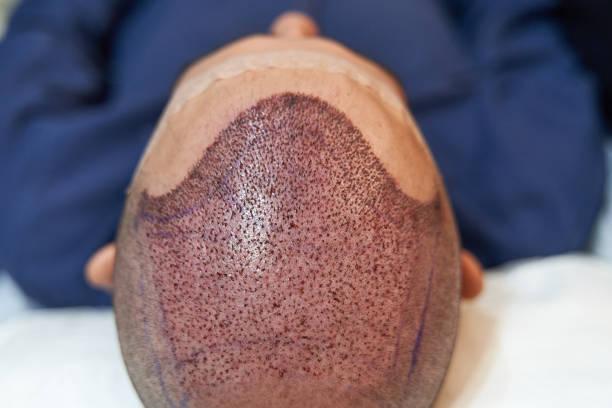
Graft mapping creates a structured plan for where follicular units should be harvested and where they should ultimately contribute to coverage. Robotic Hair Transplant in Dubai can benefit from this approach because donor distribution, graft characteristics, recipient density, and long-term hair-loss patterns need to be considered together rather than treating every graft as interchangeable.
What Graft Mapping Means in Hair Restoration
Graft mapping is essentially a treatment-planning framework that connects the donor supply with the areas requiring restoration.
Instead of deciding on graft placement only during surgery, the clinician can evaluate the scalp beforehand and establish priorities for extraction and implantation.
Mapping the Donor Zone
The donor area is assessed for the distribution and quality of available follicular units.
Important variables can include:
- Follicular-unit density
- Hair caliber
- Number of hairs per unit
- Existing extraction sites
- Donor-zone stability
- Areas of miniaturization
- Scalp characteristics
- Potential future donor availability
This information helps establish how much harvesting may be appropriate.
Mapping the Recipient Areas
The recipient scalp is assessed separately.
The frontal hairline, temples, mid-scalp, crown, and transitional areas can have different density requirements and directional patterns.
A graft that is appropriate for one region may not be the ideal choice for another.
Why Graft Mapping Matters for Robotic Hair Transplantation
Robotic technology can assist with follicular-unit extraction, but technology does not determine the entire treatment strategy.
A mapping plan gives the procedure a clinical framework.
Extraction Should Follow the Donor Pattern
The donor area should not be approached as a uniform field.
Follicular units can vary in density and composition across different sections. A structured map helps guide where harvesting can occur while limiting unnecessary concentration in one area.
Recipient Placement Needs a Separate Map
The destination of each graft matters just as much as its extraction.
A frontal hairline may require fine single-hair units, while a central thinning area may benefit more from stronger multi-hair units when appropriate.
The mapping process helps connect graft characteristics with recipient needs.
Mapping Follicular-Unit Characteristics
Not all grafts provide the same visual effect.
A follicular unit may contain one, two, three, or more hairs, and individual shafts can vary in thickness.
Single-Hair Grafts
Single-hair units can be particularly useful along the leading edge of a hairline.
Their smaller visual footprint can create a gradual transition from forehead to denser hair.
Multi-Hair Grafts
Stronger follicular units can contribute more visual coverage behind the frontal transition.
Their placement needs to respect the recipient area's anatomy and the surrounding hair direction.
Fine Versus Coarse Hair
Hair caliber also affects the apparent density of a graft.
Two grafts containing the same number of hairs may not create the same visual coverage if the shaft thickness differs.
Mapping the Hairline
The frontal zone often receives considerable attention because small placement errors can remain visible.
Establishing the Frontal Boundary
The planned hairline should reflect facial proportions, age, existing recession, and future hair-loss expectations.
The objective is not necessarily to restore the lowest possible hairline.
Creating a Density Gradient
The frontal transition can move gradually from finer, more widely distributed grafts toward stronger density behind the edge.
This avoids creating an abrupt line of transplanted hair.
Mapping the Temples
The temples should be incorporated into the overall plan.
Their angle, width, and transition toward the side hair can influence how natural the frontal restoration appears.
Mapping the Mid-Scalp
The mid-scalp often acts as a visual bridge between the frontal region and crown.
If it is overlooked, a patient may achieve a stronger frontal hairline while retaining a noticeable density gap behind it.
Existing Hair Changes the Plan
The presence of native hair can reduce the amount of transplantation needed in a partially thinned region.
The map should identify where native follicles remain functional and where additional density would provide the greatest visual benefit.
Miniaturization Needs Attention
Hair that is still present but progressively miniaturizing may require a different long-term strategy from permanently stable terminal hair.
The treatment plan should account for the possibility that some existing density may decline.
Mapping the Crown
The crown requires its own directional strategy because hair grows around a whorl.
The Whorl Determines Direction
Grafts should follow the changing orientation of the crown rather than being placed in a simple linear pattern.
Incorrect direction can make the transplanted area more noticeable even when graft density is adequate.
Crown Grafts Need Strategic Allocation
The crown can consume a substantial number of grafts.
For patients with limited donor supply, mapping helps determine whether the crown should receive extensive coverage or whether frontal restoration should take priority.
Graft Mapping and Donor Preservation
A finite donor supply makes planning especially important.
Using too many grafts in one session can reduce the ability to address future hair loss.
Avoiding Concentrated Extraction
A mapped donor strategy can distribute harvesting across appropriate regions instead of repeatedly targeting the same area.
The aim is to maintain a visually acceptable donor appearance while obtaining useful grafts.
Planning for Future Procedures
Some patients may eventually require another procedure.
A graft map can therefore be viewed as a long-term resource plan rather than a single-session extraction chart.
Mapping Grafts After Previous Hair Transplantation
Previous transplantation adds another layer of complexity.
The donor zone may already contain extraction sites, while the recipient area may contain transplanted follicles that have successfully grown.
Identify Existing Grafts
Before adding new grafts, the treatment team needs to understand where transplanted hair already exists and how effectively it is contributing to coverage.
Preserve Useful Existing Density
Healthy existing grafts may not need to be replaced.
Additional grafts can instead be targeted toward areas where density remains visually weak.
Revision Mapping Requires More Precision
The available donor reserve may be smaller after previous surgery.
A detailed map can help avoid wasting limited grafts on areas that could be improved through more selective correction.
Graft Mapping for Uneven Hair Loss
Hair loss is not always symmetrical.
One temple may be more recessed, one side of the frontal region may have lower density, or the crown may be affected differently from the mid-scalp.
Unequal Graft Distribution Can Be Appropriate
A mapping plan does not need to divide grafts equally between left and right sides.
The allocation should reflect the actual pattern of loss and the desired overall appearance.
Visual Balance Matters More Than Equal Numbers
The goal is not to make each region mathematically identical.
A smaller number of grafts can sometimes create the required visual improvement in an area where substantial native hair remains.
Mapping for Different Hair Calibers
Fine, medium, and coarse hair can produce different optical effects.
Fine Hair Requires Density Awareness
Fine hair allows more scalp visibility, particularly under strong lighting.
Mapping should therefore consider where additional density will have the greatest visual impact without exceeding recipient limitations.
Coarse Hair Can Provide Greater Coverage
Coarser shafts may create stronger optical density.
This can influence how many grafts are required to achieve a comparable visual effect.
How Mapping Supports Surgical Precision
A mapped plan can improve consistency between diagnosis and procedure.
It provides a reference for extraction priorities, recipient-zone allocation, and graft characteristics.
Technology Supports the Plan
Robotic assistance may contribute to controlled follicular-unit extraction, but the technology operates within the clinical strategy established for the patient.
The surgeon remains responsible for determining appropriate donor and recipient decisions.
Mapping Does Not Replace Clinical Judgment
Scalp anatomy can vary significantly.
If findings during the procedure differ from the initial assessment, the treatment plan may need to be adjusted to protect donor tissue and recipient safety.
Dubai-Specific Graft Planning Considerations
Dubai patients may have demanding professional schedules, frequent outdoor exposure, and regular movement between hot outdoor environments and heavily air-conditioned interiors.
These factors do not fundamentally change graft biology, but they can influence postoperative planning.
Scheduling the Recovery Period
Patients should allow adequate time for the scalp to settle before returning to strenuous activities, intense outdoor exposure, or situations involving significant sweating.
The treating surgeon's specific recovery instructions should take priority.
Sun and Environmental Exposure
Strong sunlight can be particularly relevant during early scalp healing.
Patients should follow clinical guidance on protecting the treated areas and limiting direct exposure during the appropriate recovery period.
Questions About Graft Mapping
Is graft mapping necessary for every hair transplant?
Detailed planning is valuable for most transplantation procedures, although the complexity of the map varies according to the patient's hair-loss pattern and donor characteristics.
Does graft mapping determine the exact number of grafts?
It helps estimate requirements, but the final number depends on clinical findings, donor quality, recipient needs, and what can be safely harvested.
Can graft mapping improve naturalness?
It can support naturalness by coordinating graft characteristics, density, direction, and placement across different scalp regions.
Does robotic technology perform the entire graft map automatically?
No. Robotic assistance can support certain parts of extraction, but comprehensive donor and recipient planning requires clinical assessment and surgeon oversight.
Can mapping help preserve donor hair?
Yes. A structured extraction strategy can help identify suitable donor areas and reduce unnecessary concentration of harvesting.
Is graft mapping useful for a second transplant?
Yes. Revision cases often benefit substantially from mapping because previous extraction and existing transplanted hair change the available resources.
Turning Graft Supply Into a Long-Term Restoration Plan
Graft mapping is not simply a diagram of where hair will be placed. It is a strategy for using limited follicular resources intelligently.
By connecting donor characteristics with recipient priorities, the plan can account for hairline design, density transitions, crown direction, native hair, future progression, and donor preservation.
For patients considering Robotic Hair Transplant in Dubai, this structured approach can help ensure that available grafts are allocated where they provide the most meaningful visual improvement. An individualized consultation with Tajmeels Clinic can determine how graft characteristics and scalp anatomy should shape the restoration plan.