

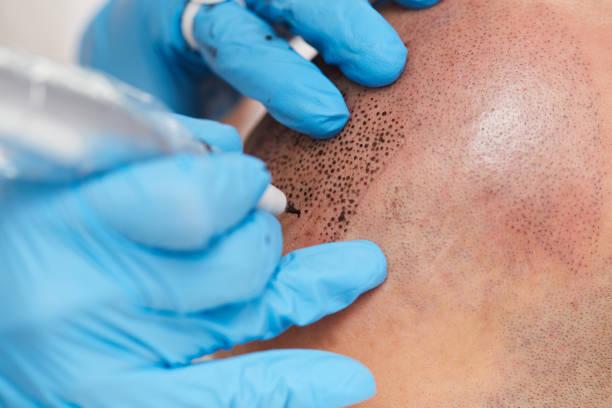

Scalp Micropigmentation in Dubai can address isolated temple gaps by placing carefully controlled pigment impressions where natural-looking follicle points would visually restore the side framing of the hairline. Unlike treating broad recession, temple-focused SMP requires conservative placement that follows the existing lateral hair direction and preserves the natural shape of the temporal region.
Understanding Temple Gaps Before SMP
A temple gap is not always the same as active hairline recession. Some people naturally have concave spaces between the frontal hairline and the temporal hair-bearing area, while others develop localized gaps after gradual thinning, styling changes, or previous hair restoration.
The distinction matters because SMP is primarily a visual camouflage technique. It does not regenerate follicles inside an empty temple area. Instead, precisely positioned pigment points can reduce the visible contrast between the scalp and surrounding hair.
Temple Gap Versus Temple Recession
An isolated temple gap may remain relatively stable while the surrounding hairline retains good density. Active recession usually involves progressive movement of the temporal hairline and changes in the density or caliber of nearby hairs.
A professional assessment should therefore examine the existing hair pattern rather than simply extending pigment into every visible scalp space.
Why Small Temple Gaps Need Precision
The temple is one of the most visible transition zones of the scalp. It connects the frontal hairline, lateral scalp and sideburn region, so an overly dense or geometrically uniform pigment pattern can look artificial.
Small gaps often benefit from a lighter pigment density and gradual transition. The objective is to make the scalp less visually prominent without creating a solid artificial border.
How Temple Anatomy Shapes SMP Planning
The temporal region has a different visual structure from the central frontal hairline. Natural follicles change direction as they move laterally, and the density gradually transitions toward the side of the head.
For this reason, SMP planning should account for:
- Existing frontal hair density
- Direction of nearby native follicles
- Width and depth of the temple hollow
- Skin tone and undertone
- Natural hair color
- Hair length and preferred hairstyle
- Facial proportions
- Density transition toward the sideburn
- Whether the gap is stable or associated with ongoing thinning
Pigment placement should follow the visual rhythm of the surrounding follicles rather than forming a uniform filled patch.
Temple Gap Patterns and SMP Planning
| Temple gap pattern | Main visual issue | SMP planning focus | Intended effect |
|---|---|---|---|
| Small triangular gap | Exposed scalp beside the frontal hairline | Sparse peripheral impressions | Softer temple transition |
| Concave temple hollow | Wider visible scalp area | Graduated density toward the center | Reduced scalp contrast |
| Isolated lateral gap | Localized break in apparent density | Match surrounding follicle spacing | More continuous appearance |
| Post-treatment gap | Uneven visual transition | Blend pigment with existing restoration | Improved visual continuity |
| Bilateral temple spaces | Open side framing | Conservative placement on both sides | More balanced facial framing |
The table highlights why temple SMP should be planned around the individual pattern rather than using a standard template.
SMP Treatment for Temple Gaps
Fine-Needle Pigment Placement
During SMP, a specialized device creates tiny pigment impressions within the superficial scalp tissue. The placement, spacing and pigment concentration are adjusted according to the surrounding hair pattern.
The temple requires particular control because individual impressions may be visible when the hair is cropped short. Smaller visual changes can therefore have a significant effect on the finished appearance.
Graduated Temple Density
A natural temple rarely has identical density from the frontal hairline to the lateral scalp. A suitable treatment plan can use a gradual density transition rather than filling the entire gap at one intensity.
This approach helps maintain separation between the frontal hairline and the sideburn area while reducing the visual prominence of the hollow.
Matching Hair and Skin Contrast
Dark hair against lighter scalp skin can make small temple spaces appear more pronounced. SMP can reduce this contrast by introducing follicle-like pigment points that visually resemble closely cropped hair.
Pigment selection should consider the patient's natural hair color and skin characteristics rather than simply choosing the darkest available shade.
Facial Framing and Temple Definition
Temple spaces influence how the upper face is visually framed. Filling a small gap can change the apparent continuity of the hairline without requiring a dramatic alteration to its overall position.
The aim should be subtle integration. A temple treatment that extends too far forward, too low, or too laterally can create a hairline shape that does not correspond with the person's existing anatomy.
This is where individualized hair restoration care in Dubai becomes relevant: treatment planning should consider the scalp pattern, facial structure, hair characteristics and the desired hairstyle together rather than treating the temple as an isolated blank area.
Choosing a Conservative Temple Design
A conservative approach is particularly important when the underlying hair-loss pattern may continue to change. Creating an excessively low or heavily pigmented temple edge can become visually disconnected if native hair later recedes.
Several factors should be reviewed before treatment:
- Whether the temple gap has remained stable.
- Whether nearby hair shows signs of miniaturization.
- How much of the gap is actually visible at the patient's usual hair length.
- Whether the preferred hairstyle exposes the temporal region.
- How the temple shape interacts with the existing frontal hairline.
- Whether a subtle reduction in scalp contrast is sufficient.
The goal is not to erase every millimeter of visible scalp. Natural temple architecture contains variation, and preserving some openness can produce a more believable result.
Dubai-Specific Considerations for Temple SMP
Dubai's strong sunlight can make scalp contrast more noticeable, particularly when the head is exposed outdoors. UV exposure can also affect the appearance and longevity of cosmetic pigmentation over time.
Indoor air conditioning creates another practical consideration. Frequent exposure to dry conditioned environments can contribute to scalp dryness, making appropriate post-treatment skin care important.
Patients who regularly move between outdoor heat, air-conditioned workplaces and social settings may also prefer a low-maintenance cosmetic approach that remains visually consistent with short hairstyles.
Sun protection should be incorporated into long-term scalp care, particularly after the treatment area has fully healed.
When Temple SMP May Be Considered
Temple-focused SMP may be appropriate for someone who has:
- Small localized temple gaps
- Stable frontal hair with visible temporal spaces
- Short or closely cropped hairstyles
- Noticeable scalp contrast at the temples
- A preference for a non-surgical cosmetic approach
- Previous hair restoration with residual visual gaps
- Realistic expectations about cosmetic camouflage
It is less appropriate to treat the temple simply because scalp skin is naturally visible. A consultation should establish whether the space represents a cosmetic concern, natural anatomy, or an area affected by ongoing hair loss.
What Happens During a Temple-Focused Session
Treatment begins with assessment of the existing hairline and temple structure. The clinician determines where pigment can be introduced without creating an artificial border or disrupting the natural lateral transition.
The scalp is then prepared and the treatment area is addressed using controlled fine-needle impressions. Pigment density can be adjusted progressively rather than attempting to achieve the complete visual effect in a single pass.
Multiple sessions may be used when gradual density development is preferable. This gives the practitioner an opportunity to assess how the pigment integrates with the surrounding scalp before making further refinements.
After treatment, temporary redness, tenderness, swelling, itching or mild scabbing can occur. Following the recommended aftercare instructions helps protect the treated area while the skin settles.
Maintaining a Natural Temple Appearance
Long-term results depend partly on how the treated scalp is maintained. Direct sun exposure should be managed appropriately, and unnecessary rubbing or irritation should be avoided during the healing period.
As pigment gradually changes over time, a future touch-up may be considered when the visual density no longer matches the surrounding area. The timing is individual and depends on skin characteristics, exposure and pigment retention.
A natural-looking result also depends on keeping expectations realistic. SMP can modify the visual impression of density and framing, but it does not create living hair follicles or stop progressive hair loss.
Strategic Investment in Temple Appearance
Temple gaps can be small anatomically but significant visually because they sit at the junction between the face and hairline. A carefully planned approach to Scalp Micropigmentation in Dubai can reduce unwanted scalp contrast while preserving the natural transition of the temples and surrounding hair.
For people considering a temple-focused solution, a professional assessment can determine whether SMP is appropriate and how pigment density, placement and hairline integration should be approached. A consultation with Tajmeels Clinic can provide individualized planning based on the scalp's existing anatomy, hair characteristics and preferred appearance.
