

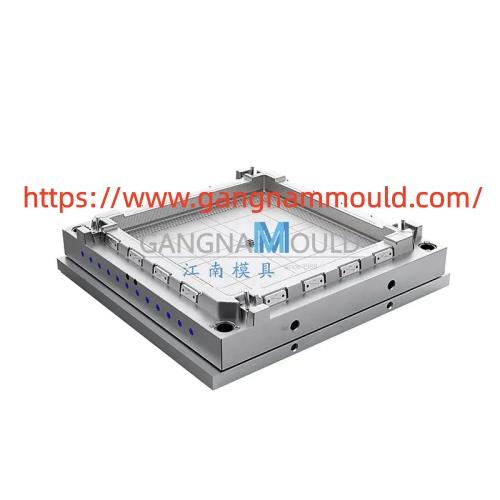
Why Do Gangnammould Daily Necessities Mold Features Matter for Household Manufacturing

Daily Necessities Mold selection should be based on the specific requirements of the household product being manufactured. Plastic items used around the home can vary considerably in size, shape, wall thickness, material, surface appearance, and functional structure. A storage container may require different tooling considerations from a kitchen accessory, bathroom item, or cleaning product. Buyers should therefore review the product drawing, resin type, expected output, machine conditions, and appearance requirements before production begins.
Product geometry is one of the first areas worth reviewing. Household goods can contain curved surfaces, narrow sections, ribs, handles, openings, or decorative details. Each feature can affect material flow and release conditions during injection processing. Engineers need to understand how these elements interact before deciding on the cavity arrangement. Accurate drawings and three dimensional product files can provide useful references and help identify areas that may require additional engineering attention.
Wall thickness is another practical consideration. Some household products are designed with relatively thin sections to reduce material usage, while others require additional thickness around areas exposed to repeated handling. Changes in thickness can influence filling behavior, cooling, shrinkage, and dimensional stability. A balanced product structure can make processing easier to manage, while appropriate technical planning can help reduce unnecessary adjustments during trial production.
Surface requirements can also vary between applications. Certain household items may need smooth visible surfaces, while others may include textures or patterns for functional or visual purposes. The selected finishing approach should correspond with the product design and intended use. Buyers should communicate surface expectations at an early stage so engineers can incorporate suitable details into the tooling plan.
Material selection is closely connected with these decisions. Different thermoplastics have different processing temperatures, shrinkage characteristics, stiffness, impact resistance, and flow behavior. A product intended for frequent handling may require different material considerations from an item designed for occasional household use. Sharing resin information before fabrication allows the tooling team to evaluate relevant technical conditions and coordinate the design accordingly.
Cooling layout can have a significant role in processing stability. Once molten material enters the cavity, controlled heat removal helps the product reach a suitable condition for release. Household items with broad surfaces or varying wall sections may require careful cooling arrangements to manage temperature differences. Properly planned passages can support a more balanced cycle and help manufacturers maintain suitable processing conditions across repeated runs.
The release system is another feature that buyers should discuss. Products with deep sections, internal corners, handles, or reinforcing ribs may require carefully positioned ejector components. The release arrangement should provide enough support while limiting unwanted marks on visible areas. Smooth removal can also reduce manual handling and make the transition to inspection, trimming, assembly, or packaging more convenient.
Machine compatibility should be reviewed before fabrication as well. Tool dimensions, clamping conditions, injection capacity, cooling connections, and release mechanisms need to correspond with the equipment available at the production site. Providing accurate machine information can help engineers plan within actual operating conditions. This is particularly useful for manufacturers producing several household products on different machines.
Gangnammould provides plastic injection tooling solutions for household and industrial applications. Project discussions can include product drawings, resin information, machine specifications, surface requirements, expected production volume, and application conditions. By reviewing these details together, the technical team can develop a tooling plan that corresponds with the intended product rather than applying the same structure to every project.
Maintenance should also be considered during the planning stage. Regular cleaning, inspection, lubrication, and checking of moving components can support reliable operation over repeated production cycles. Buyers may also discuss replaceable components and maintenance access before fabrication. A practical service arrangement can make future inspection easier and help production teams organize routine maintenance work.
For manufacturers developing household plastic goods, the relationship between product function and tooling design is important. Cavity structure, material flow, cooling, release, surface finishing, equipment compatibility, and maintenance all contribute to the overall manufacturing process. Reviewing these factors together can help buyers communicate requirements clearly and establish a practical production plan.
Manufacturers can review available plastic injection tooling solutions at https://www.gangnammould.com/product/
