

Mexico Alcoholic Beverages Market Size, Share, Industry Overview, Growth and Forecast 2026-2034

IMARC Group has recently released a new research study titled "Mexico Alcoholic Beverages Market Size, Share, Trends and Forecast by Category, Alcoholic Content, Flavor, Packaging Type, Distribution Channel, and Region, 2026-2034", offering a detailed analysis of the market drivers, segmentation, growth opportunities, trends, and competitive landscape to understand the current and future market scenarios.
Mexico Alcoholic Beverages Market Size & Share 2026-2034
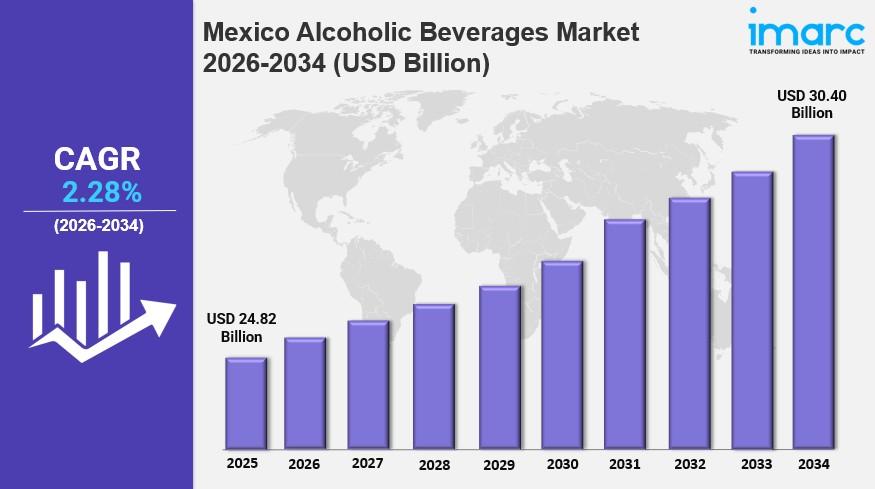
The Mexico alcoholic beverages market size increased from USD 24.82 Billion in 2025 to USD 25.39 Billion in 2026 and is projected to reach USD 30.40 Billion by 2034, growing at a CAGR of 2.28% during 2026-2034. The market stands as one of the most vibrant and culturally significant sectors in Latin America, benefiting from strong domestic production capabilities in iconic spirits like tequila and mezcal while maintaining substantial beer consumption patterns.
Rising disposable incomes, expanding urbanization, and evolving consumer preferences toward premium and craft products continue driving market expansion. Beer dominates the category breakdown at 71%, medium alcoholic content leads at 50%, unflavored products command 76% of the market, glass bottles represent 54% of packaging, on-trade leads distribution at 28%, and Central Mexico holds the largest regional share at 45% in 2025.
Key Market Statistics at a Glance
● Base Year: 2025
● Historical Years: 2020-2025
● Forecast Period: 2026-2034
● Market Size (2025): USD 24.82 Billion
● Market Size (2026): USD 25.39 Billion
● Projected Market Size (2034): USD 30.40 Billion
● Growth Rate: CAGR of 2.28% (2026-2034)
Explore Opportunities in the Mexico Alcoholic Beverages Market: Download the IMARC Sample Report: https://www.imarcgroup.com/mexico-alcoholic-beverages-market/requestsample
Key Growth Drivers and Trends in the Mexico Alcoholic Beverages Market
Growth in the Mexico alcoholic beverages market is being driven by premiumization and the craft spirits revolution, as Mexican consumers increasingly gravitate toward premium and artisanal alcoholic beverages emphasizing quality ingredients, traditional production methods, and authentic craftsmanship. Craft beer production has witnessed substantial expansion, with local microbreweries offering unique flavor profiles, while premium tequila and aged mezcal continue growing rapidly as consumers pay more for artisanal, heritage spirits. Tequila exports from Mexico increased by about 29% in January 2025, with the United States accounting for 86% of shipments, underscoring the strength of international demand for the country's signature spirit.
One of the leading Mexico alcoholic beverages market trends is the rise of ready-to-drink cocktails and convenience culture, emerging as one of the fastest-growing categories driven by convenience-seeking consumers and younger demographics. Mexico's leading tequila-based RTD brand, New Mix, sold over 11 million 9-liter cases in fiscal 2025, reflecting strong consumer demand for convenient, locally flavored pre-mixed beverages featuring traditional Mexican flavors including tamarind, hibiscus, and agave-based spirits.
Another key factor supporting Mexico alcoholic beverages market growth is e-commerce and digital distribution expansion, as digital transformation reshapes alcohol distribution with alcoholic beverages emerging as a top online category in Mexico, with 76% of consumers buying online and 93% planning continued digital purchases. Specialized alcohol delivery applications and direct-to-consumer channels enable smaller craft producers to reach wider audiences, while established brands strengthen their digital presence and customer engagement capabilities.
Speak to an Analyst: https://www.imarcgroup.com/request?type=report&id=31929&flag=C
Mexico Alcoholic Beverages Industry Segmentation Insights
Breakup by Category:
● Beer: Dominates with a 71% share in 2025, reflecting deep cultural integration in Mexican social gatherings, celebrations, and everyday life, anchored by established domestic brands like Corona, Modelo, and Tecate.
● Wine: Includes still light wine and sparkling wine, serving consumers seeking varied beverage options across social and dining occasions.
● Spirits: Includes baijiu, vodka, whiskey, rum, liqueurs, gin, tequila, and others, with tequila commanding strong domestic consumption and growing international recognition and export demand.
Breakup by Alcoholic Content:
● Medium: Leads with a 50% share in 2025, driven by consumer preference for balanced beverages offering enjoyable drinking experiences without excessive intoxication effects.
● High: Serves consumers seeking stronger spirits and traditional high-proof beverages.
● Low: Benefits from growing health consciousness and demand for lighter alcoholic options.
Breakup by Flavor:
● Unflavored: Dominates with a 76% share in 2025, owing to traditional preferences for classic beer, tequila, and mezcal that showcase authentic ingredient profiles and craftsmanship.
● Flavored: Benefits from growing RTD innovation and consumer interest in diverse taste experiences.
Breakup by Packaging Type:
● Glass Bottles: Leads with a 54% share in 2025, benefiting from consumer perception of superior quality preservation, premium positioning, and recyclability supporting sustainability goals.
● Tins: Serves convenient, portable packaging needs across various beverage categories.
● Plastic Bottles: Provides a lightweight, cost-effective packaging alternative.
● Others: Includes additional packaging formats supporting alcoholic beverage distribution.
Breakup by Distribution Channel:
● On-Trade: Leads with a 28% share in 2025, fueled by Mexico's vibrant nightlife culture, expanding hospitality sector, and growing tourism industry driving consumption in bars and restaurants.
● Supermarkets and Hypermarkets: Provides broad retail access for everyday alcoholic beverage purchases.
● Specialist Retailers: Offers curated selections for premium and craft beverage consumers.
● Online: Growing rapidly, reflecting strong e-commerce adoption for alcoholic beverage purchases.
● Convenience Stores: Serves quick, accessible purchase occasions.
● Others: Includes additional retail formats supporting distribution.
Breakup by Region:
● Central Mexico: Dominates with a 45% share in 2025, due to growing urban lifestyles, rising disposable incomes, strong tourism inflows, expanding on-trade channels, and established alcohol distribution infrastructure.
● Northern Mexico: Benefits from higher income levels and strong demand for premium alcoholic beverages.
● Southern Mexico: An emerging region with growing alcoholic beverage consumption as tourism and retail networks expand.
● Others: Comprises smaller regional markets experiencing gradual growth in alcoholic beverage demand.
Key Challenges and Growth Opportunities in the Mexico Alcoholic Beverages Market
The Mexico alcoholic beverages market faces challenges including stringent regulatory frameworks governing production, advertising, and distribution, with excise taxes and special consumption taxes increasing product costs and potentially affecting demand in price-sensitive segments. Growing public health awareness and responsible drinking campaigns are influencing consumer behavior toward moderation, while agave supply constraints affecting tequila and mezcal production, along with climate variability impacting barley and grape inputs, create raw material cost pressures for manufacturers.
Despite these challenges, the market offers considerable growth opportunities driven by rising disposable incomes and urbanization, tourism industry expansion supporting hospitality-driven consumption, and continued product innovation and premiumization trends. Certification programs such as the Agave Responsable Social initiative launched in 2025, supporting sustainable and traditional agave-tequila production, along with expanding RTD innovation and digital distribution, are expected to create substantial opportunities for long-term growth in the Mexico alcoholic beverages market.
Competitive Landscape
The Mexico alcoholic beverages market operates within a highly competitive environment characterized by multinational brewing corporations, traditional Mexican spirits producers, and emerging craft beverage manufacturers. Market leaders including Grupo Modelo and Heineken Mexico, alongside established tequila houses, leverage extensive distribution networks, brand heritage, and significant marketing investments to maintain dominant positions. Grupo Modelo (AB InBev) has planned over US$3.6 billion in investment to modernize plants and bolster infrastructure, while Heineken announced approximately US$2.7 billion in investment through 2028 to expand production capacity. Competition intensifies through premiumization strategies, product innovation, and digital marketing initiatives targeting younger consumer demographics, with the craft segment attracting new entrants offering artisanal products differentiated by quality, authenticity, and regional identity.
Recent Developments in the Mexico Alcoholic Beverages Market
● November 2025: Grupo Modelo and premium chocolatier Turín teamed up to release Negra Modelo Chocolate Turín, a limited-edition lager blending dark malt with semi-bitter cacao notes for the 2025 holiday season in Mexico, targeting festive occasions and gourmet pairings.
Author IMARC Group
IMARC Group is a leading global market research company providing data-driven insights and expert consulting services to businesses seeking to achieve their strategic objectives. With a multidisciplinary team of industry experts, IMARC delivers reliable market intelligence across sectors including Chemicals and Materials, Healthcare, Technology, Agriculture, and Retail.
Contact Us:
IMARC Group
Email: [email protected]
United States: +1-201-971-6302
