

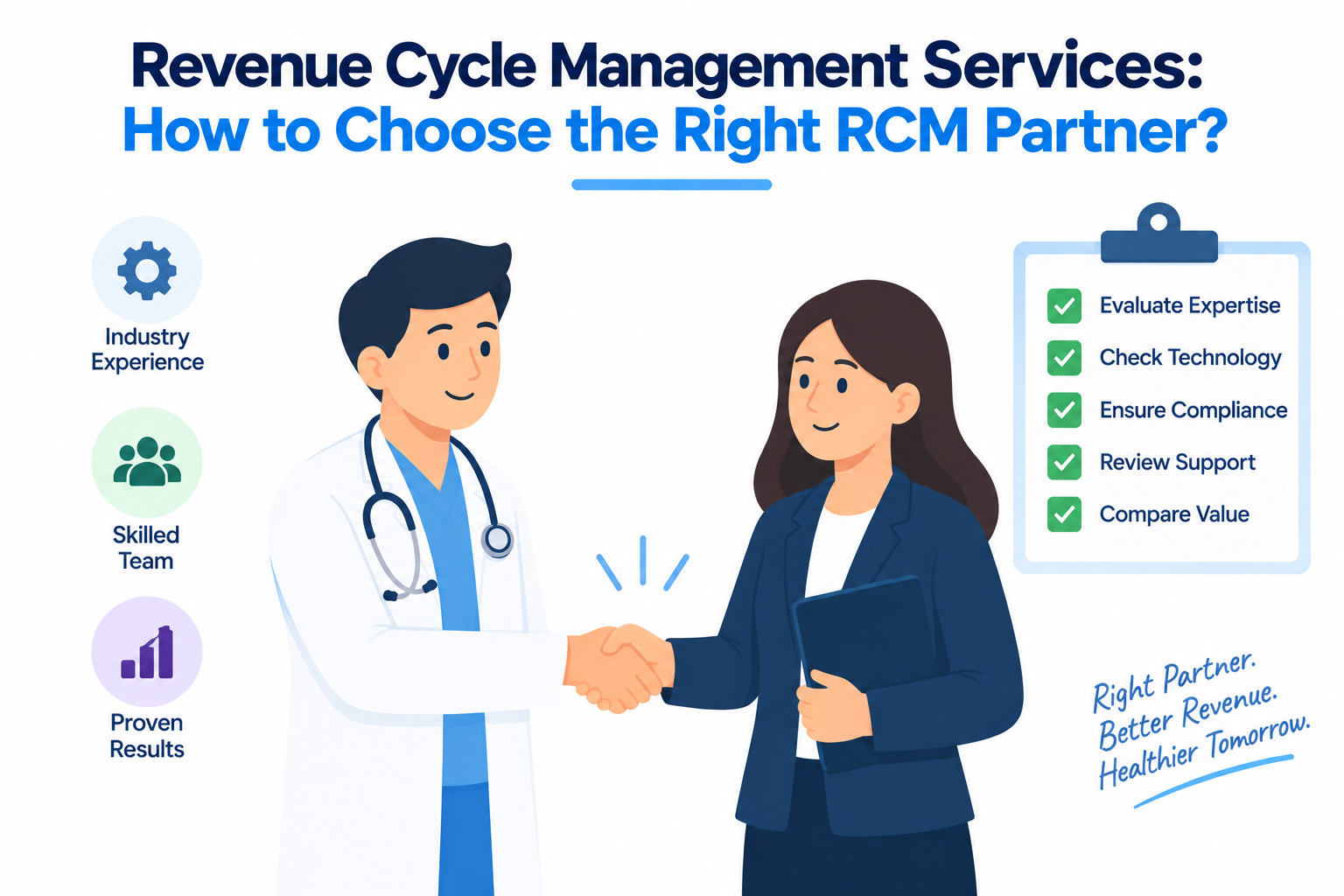

Choosing an RCM partner is an important operational decision for a healthcare provider. Billing, claims, denials, A/R follow-up, and payment collection all need consistent attention, and gaps in one area can affect the work that follows. As practices deal with growing patient volumes, delayed payments, increasing A/R, claim denials, and limited internal resources, Revenue Cycle Management Services can provide additional support. But choosing a provider should involve more than comparing service lists. The right partner should understand your workflow, communicate clearly, provide useful reporting, and support the areas where your organization actually needs help.
Why Choosing the Right RCM Partner Matters
Healthcare revenue cycle management involves several connected processes. A claim that is submitted incorrectly can be rejected or denied, while an unresolved claim can eventually contribute to aging A/R. Repeated denial issues may also create additional work for billing staff.
The American Medical Association identifies claim monitoring, denial management, and accounts receivable as important parts of revenue-cycle management.
An RCM partner should therefore do more than process individual billing tasks. Providers need visibility into what is happening with claims and outstanding balances, along with clear communication about issues that require attention. A well-defined partnership can also give internal teams additional capacity when the existing workload becomes difficult to manage.
What Should You Look for in an RCM Partner?
Healthcare Billing Experience
Start by looking at the provider's healthcare experience. Revenue-cycle workflows are different from general administrative or accounting processes, so relevant healthcare knowledge matters.
Ask whether the company has experience with billing and claims processes similar to yours. Experience with your specialty or organization type can also make onboarding easier because the provider may already understand common workflow requirements.
Claims Management Capabilities
Claims management should extend beyond submission. Ask how the RCM provider monitors claim status, identifies unresolved claims, and handles follow-up.
CMS supports electronic claim-status transactions through the 276/277 process, which allows healthcare organizations to request and receive standardized claim-status information. A prospective RCM partner should be able to explain how technology and staff processes work together to keep claims moving.
Denial Management Process
Denials can create additional administrative work and delay reimbursement. A good RCM partner should have a defined process for reviewing denied claims, determining appropriate next steps, and tracking outcomes.
It is also worth asking whether the provider analyzes recurring denial patterns. If the same types of claims continue to experience problems, simply resubmitting them may not address the underlying process issue.
A/R Management and Follow-Up
A/R follow-up is another area that requires consistency. Ask how the provider monitors outstanding balances, reviews aging A/R, prioritizes accounts, and tracks unresolved claims.
The objective should be a clear and repeatable follow-up process rather than simply producing an aging report. You should also understand how information about unresolved accounts is communicated to your internal team. While RCM focuses on healthcare revenue processes, Outsourced Bookkeeping and Accounting Services can provide broader financial support and help keep accounting records organized alongside these activities.
Technology and RCM Reporting
Technology can make RCM activities easier to monitor, but reporting is equally important. Ask what systems the provider uses and what information you will receive.
Useful reporting can include claim status, denial trends, A/R aging, collection activity, and other agreed-upon performance measures. The reporting format should be understandable enough for management to use when reviewing the revenue cycle.
Data Security and Privacy Practices
Healthcare providers should carefully evaluate how an RCM company handles sensitive information. Ask about access controls, user permissions, data transmission, storage, and security procedures.
It should also be clear which security responsibilities belong to the healthcare organization and which are handled by the RCM provider. Security expectations should be established before implementation rather than addressed after problems occur.
10 Questions to Ask Before Hiring an RCM Company
1. How Much Healthcare RCM Experience Do You Have?
Ask about the company's experience with healthcare revenue-cycle workflows and organizations similar to yours.
2. Do You Have Experience With Our Specialty?
Different specialties can have different operational and billing requirements. Relevant experience may help reduce the learning curve during implementation.
3. How Do You Handle Claim Denials?
Ask the provider to explain its denial review, correction, follow-up, and reporting process.
4. How Is A/R Follow-Up Managed?
Understand how outstanding accounts are prioritized, monitored, and escalated when they remain unresolved.
5. Which RCM Metrics Do You Track?
Ask which measures are included in regular reporting and how performance trends are presented.
6. How Often Will We Receive Reports?
Clarify whether reports are weekly, monthly, or provided according to another agreed schedule.
7. Who Will Be Our Main Point of Contact?
A clear contact structure makes communication easier, particularly when an urgent billing or claims issue needs attention.
8. What Technology Do You Use?
Ask about the systems used for claims, reporting, communication, and workflow management.
9. How Do You Protect Healthcare Data?
Discuss access controls, security procedures, data handling, and responsibilities between both organizations.
10. How Can Your Services Scale With Our Practice?
Find out whether the provider can adjust support as patient volume, billing activity, or operational requirements change.
Key RCM Metrics to Review When Comparing Providers
Clean Claim Rate
This metric can help show how consistently claims move through submission without issues requiring correction. Look for consistent measurement and reporting rather than focusing on one isolated result.
Denial Rate
The denial rate can highlight how frequently claims encounter payment problems. More importantly, review whether the provider identifies recurring denial reasons and tracks them over time.
Days in A/R
Days in A/R provides insight into how long receivables remain outstanding. Reviewing the trend can help identify whether balances are aging or payment timing is changing.
Net Collection Rate
This metric helps providers evaluate how effectively collectible revenue is being collected after relevant adjustments. It should be considered alongside other RCM measures.
First-Pass Resolution Rate
First-pass resolution shows how often claims or billing issues are resolved without additional processing or repeated follow-up. A consistent measurement approach is important when comparing results.
A/R Aging
A/R aging breaks outstanding balances into different age categories. It helps management identify older accounts and understand where additional follow-up may be required.
Red Flags to Watch for When Choosing an RCM Partner
Limited Healthcare Experience
A provider with little relevant healthcare experience may require more time to understand your workflow and requirements.
No Clear Reporting Process
If a company cannot clearly explain what it reports and how often, it may be difficult to maintain visibility after outsourcing.
Poor Communication
Unclear communication channels can make it harder to resolve claim, denial, or A/R issues promptly.
No Defined Denial Workflow
Be cautious if the provider cannot explain how denials are reviewed, followed up, and tracked.
Limited A/R Follow-Up
Ask specific questions about aging balances and account prioritization. General statements about “managing A/R” are not enough.
Lack of Transparency
You should understand what tasks are being handled, how performance is measured, and who is responsible for each activity.
One-Size-Fits-All Approach
Your RCM requirements may differ from those of another healthcare organization. The support model should account for your actual workflow and needs.
Unclear Data Security Practices
If the provider cannot clearly explain how sensitive information is protected, this should be addressed before moving forward.
No Clear Onboarding Process
A defined onboarding process helps both teams understand responsibilities, systems, timelines, and communication procedures from the beginning.
How to Compare RCM Providers
Evaluate Their Experience
Compare relevant healthcare experience, the types of organizations they support, and their familiarity with your operational requirements.
Review Their Process
Ask the provider to walk you through what happens from claim submission through payment, denial handling, and A/R follow-up. This can reveal how much of the process is actually defined.
Check Communication
Understand who you will contact, how issues are escalated, and how regularly teams communicate.
Assess Reporting
Review sample reporting where available. The information should help your management team understand performance rather than simply provide large amounts of data.
Consider Scalability
Your needs may change as your organization grows. Ask how the RCM partner handles increased claim volume or additional operational requirements.
What Does a Good RCM Partnership Look Like?
A productive RCM partnership should have clearly defined responsibilities from the start. Both teams should know which activities are outsourced and which remain with the provider.
Regular communication, transparent reporting, consistent claims and denial follow-up, and organized A/R management are also important. Performance expectations should be measurable, with agreed-upon metrics and regular reviews.
The relationship should not end with onboarding. Ongoing discussions can help identify process gaps, changing workload requirements, and opportunities to improve the way the two teams work together.
How Much RCM Should You Outsource?
Outsource Specific RCM Functions
Some providers may only need support with denials, claims follow-up, A/R, or medical billing. Selective outsourcing can add capacity in a specific area without changing the entire internal workflow.
Use Broader RCM Support
Broader support may be considered when several RCM functions are placing pressure on the internal team. This can be useful when staffing capacity or specialized expertise is limited across multiple areas.
Keep Selected Responsibilities In-House
Providers may retain internal financial oversight, strategic decisions, and patient-facing responsibilities while outsourcing operational RCM activities. The division should be clearly documented so there is no confusion about accountability.
How VBS Global Supports Healthcare Providers
VBS Global provides Revenue Cycle Management Services for healthcare providers across the USA. Our support covers key RCM functions, including medical billing support, claims management, denial management, A/R follow-up, payment collections support, and RCM performance monitoring.
Our team can support workflows involving Medicare, Medicaid, and commercial payers based on the provider's requirements. Dedicated support and ongoing communication help healthcare organizations maintain visibility across their revenue-cycle activities.
For providers evaluating external RCM support, VBS Global's outsourced month-end review services can be structured around the areas where additional operational support is needed.
Final Thoughts
Choosing an RCM partner should involve more than comparing the number of services each company offers. Healthcare providers should look at relevant experience, claims and denial processes, A/R follow-up, reporting, communication, data security, and scalability.
Before signing an agreement, ask specific questions about how the provider works and how performance will be measured. Establish clear responsibilities and measurable expectations from the beginning, then review results regularly after onboarding.
A well-defined RCM partnership should fit the provider's actual workflow and address its operational needs. For healthcare organizations looking for dedicated support across key revenue-cycle functions, VBS Global's Revenue Cycle Management Services provide an option to consider as part of that evaluation.
