

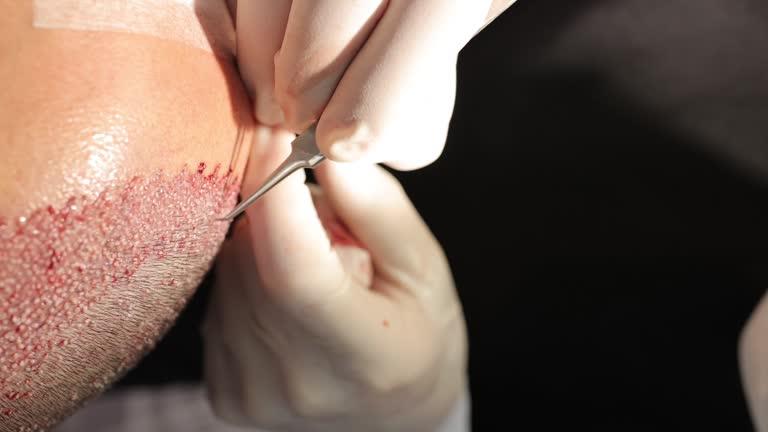

A narrow hairline can make the forehead appear visually wider when the frontal hair coverage does not extend sufficiently toward the temples. FUE Hair Transplant in Dubai can help reshape selected areas of a narrow frontal hairline by adding follicular units where the natural contour needs greater lateral coverage, provided the existing hair pattern and donor supply are suitable.
What Makes a Hairline Look Narrow
Hairline width is influenced by more than the distance between the two temporal points. Forehead shape, temple position, frontal density, hair caliber, and the transition between scalp and facial hair all contribute to the overall appearance.
Frontal Width and Temporal Position
A hairline can look narrow when the temporal points sit relatively close to the center of the forehead. It may also appear narrow when the frontal corners have receded while the central hairline remains comparatively intact.
These patterns require different approaches because simply adding grafts along the entire front may not address the actual structural feature creating the appearance.
Density Can Change Perceived Width
Sparse frontal corners can make a hairline appear narrower than it physically is. Conversely, stronger density near the temporal transition can visually broaden the framed area without requiring a dramatic change in the central hairline.
This is why hairline assessment should include both geometry and density.
When FUE Can Reshape a Narrow Hairline
FUE can be considered when the desired change involves adding follicles to areas with insufficient hair coverage.
Expanding the Frontal Frame
Strategically positioned grafts can extend the visible hairline laterally. The amount of expansion depends on facial proportions, existing temporal anatomy, and the amount of donor hair available.
The objective should be a gradual transition rather than creating a sharply defined new boundary.
Correcting Recessed Corners
If the narrow appearance comes from temporal recession, selective graft placement can reinforce the corners and create a broader visual frame.
The temporal points should be designed individually because left and right sides may not have identical anatomy.
Hairline Width Should Be Planned Around Facial Anatomy
A transplanted hairline should not be designed according to a universal measurement.
Forehead Shape
A broad or prominent forehead may require a different hairline contour from a narrow forehead. The position of the frontal boundary should complement the patient's facial structure.
Facial Proportions
The hairline interacts with the eyebrows, temples, forehead, and upper facial third. Excessive lateral expansion can make the hairline appear artificially wide, while insufficient coverage may leave the original concern unchanged.
The design should therefore consider the face as a whole.
The Difference Between a Narrow Hairline and a High Hairline
These concerns can look similar but require different planning.
High Hairline
A high hairline primarily involves vertical position. The frontal boundary sits farther above the eyebrows or upper facial landmarks.
Narrow Hairline
A narrow hairline primarily involves horizontal coverage. The central area may sit at an appropriate height while the temporal regions fail to extend far enough laterally.
A patient can have one condition without the other, or both simultaneously.
Mapping the Existing Hairline Before FUE
Detailed mapping helps identify where the narrow appearance actually begins.
Identifying the Frontal Transition
The clinician evaluates the central hairline, frontal corners, temporal points, and density gradient. This reveals whether the problem is caused by missing follicles, miniaturized hairs, or naturally positioned temporal anatomy.
Examining Native Hair Behind the Edge
Hair behind the visible boundary should also be assessed for miniaturization. If surrounding native hair is progressively weakening, the restoration needs to account for future changes rather than focusing only on lateral expansion.
Designing the New Lateral Contour
A wider hairline still needs to look natural.
Irregularity at the Leading Edge
The frontal border should generally transition gradually into the forehead rather than appearing as a perfectly drawn line. Fine grafts can help create subtle variation along the new edge.
Gradual Density Increase
The visible transition can begin with finer, more dispersed follicular units and become denser farther behind the leading edge.
This helps the expanded section blend into the existing frontal hair.
Graft Selection for a Wider Frontal Frame
Different areas of the reconstruction may require different follicular units.
Fine Units Near the Forehead
Single-hair units can be useful at the leading edge because they create a softer visual transition.
Multi-Hair Units Behind the Transition
Stronger follicular units can provide additional mass behind the frontal boundary where greater density is appropriate.
Using grafts according to location helps avoid an overly dense frontal edge.
Temporal Angles Need Special Attention
The temporal area does not grow like the center of the frontal scalp. Hair direction changes as it approaches the side of the face.
Following Existing Side Growth
Recipient channels should reproduce the natural directional change through the temporal region. Grafts that are too vertical can appear separate from the surrounding hair.
Creating a Smooth Corner
The transition from frontal growth to temporal growth should be gradual. A sharp directional change can make a newly widened hairline look artificial even when graft density is adequate.
What Happens When the Narrow Hairline Is Natural
Not every narrow hairline represents hair loss.
Naturally Close Temporal Points
Some people naturally have a narrower frontal frame because of their genetics and facial anatomy. In these cases, transplantation is an elective design decision rather than treatment of a disease process.
Stable Hair With Good Density
If the hairline has remained stable and the surrounding follicles are healthy, the potential benefit of transplantation should be weighed against the use of donor follicles.
The consultation should establish whether additional width would create a meaningful improvement.
When Progressive Hair Loss Is Involved
A narrow hairline can also develop as the result of recession.
Early Temporal Miniaturization
Fine hairs around the temples may indicate that the visible recession is part of an evolving pattern. These areas should be assessed before defining a permanent new boundary.
Future Frontal Recession
If native hair behind the proposed restoration continues to recede, an overly aggressive lateral design can eventually become isolated from the remaining hair.
A conservative contour can reduce this risk while preserving donor resources.
Donor Planning for Hairline Widening
Even a relatively small change in hairline width consumes follicles from the donor region.
Efficient Graft Allocation
The goal is to place grafts where they produce the greatest visual improvement. A narrow area does not automatically require dense transplantation across its entire surface.
Preserving Future Options
Patients with active or uncertain hair loss may need donor follicles later. Efficient initial allocation can leave greater flexibility for future restoration.
FUE Extraction and Graft Integrity
The quality of the recipient result begins with appropriate donor extraction.
Follicular Unit Selection
Individual grafts vary in hair count, caliber, and structure. Selecting appropriate units for the frontal transition can improve integration with existing hair.
Careful Donor Distribution
Although FUE avoids a linear strip scar, the donor region still needs disciplined extraction. Concentrating extraction in limited areas can affect the appearance of the donor zone.
Recovery After Narrow Hairline FUE
The early recovery period involves protecting both the newly implanted frontal grafts and the donor sites.
Initial Healing
Temporary redness, crusting, mild swelling, and sensitivity can occur. Patients should avoid unnecessary touching and follow their personalized scalp-care instructions.
Hair Growth Timeline
Transplanted hairs can shed after implantation before entering a new growth cycle. The restored hairline develops progressively rather than reaching its final appearance immediately after the skin heals.
Dubai-Specific Recovery Planning
Dubai's heat and intense sunlight should be considered when scheduling a frontal procedure.
Sun Protection
Direct sunlight and excessive heat exposure should be avoided or controlled according to the treating clinician's instructions during early healing.
Managing Sweating
High temperatures can increase sweating during outdoor activity. Strenuous exercise and activities that create significant scalp perspiration may need to be limited temporarily.
What Patients in Dubai Should Do Next
Patients concerned about a narrow hairline should first determine whether the issue is caused by naturally positioned temples, localized recession, reduced frontal density, or a combination of factors. Assessment should include facial proportions, frontal and temporal anatomy, native hair stability, donor characteristics, and the direction of existing growth.
If FUE is appropriate, the restoration can concentrate on strategically widening the frontal frame instead of unnecessarily changing the entire hairline. Patients seeking personalized FUE hairline planning in Dubai can discuss lateral contour, graft selection, native-hair preservation, and future hair-loss considerations during consultation.
Questions Patients Commonly Ask
Can FUE make a narrow hairline look wider?
Yes. Grafts can be placed selectively along suitable frontal or temporal areas to increase lateral hair coverage.
Is a narrow hairline the same as a high hairline?
No. A narrow hairline primarily concerns horizontal width, while a high hairline concerns vertical position.
Can FUE widen only one side?
Yes. If asymmetry is present, grafts can be concentrated where additional coverage is needed.
Can a naturally narrow hairline be transplanted?
Potentially. The decision depends on the patient's goals, anatomy, donor supply, and whether the existing hair is stable.
Can widening the hairline use many grafts?
The graft requirement varies according to the size of the area, existing density, hair characteristics, and desired degree of change. Planning should focus on efficient placement rather than maximum density.
The Strategic Investment
A narrow hairline requires a different design approach from simply lowering a high frontal boundary. The key considerations are lateral contour, temporal anatomy, native-hair stability, graft selection, and how the expanded frame will age with the rest of the hair.
A carefully planned FUE procedure can add width while maintaining a natural transition between forehead, frontal scalp, and temples. For patients considering whether their narrow hairline is anatomical or related to recession, Tajmeels Clinic can evaluate the pattern and develop an individualized restoration plan.
