

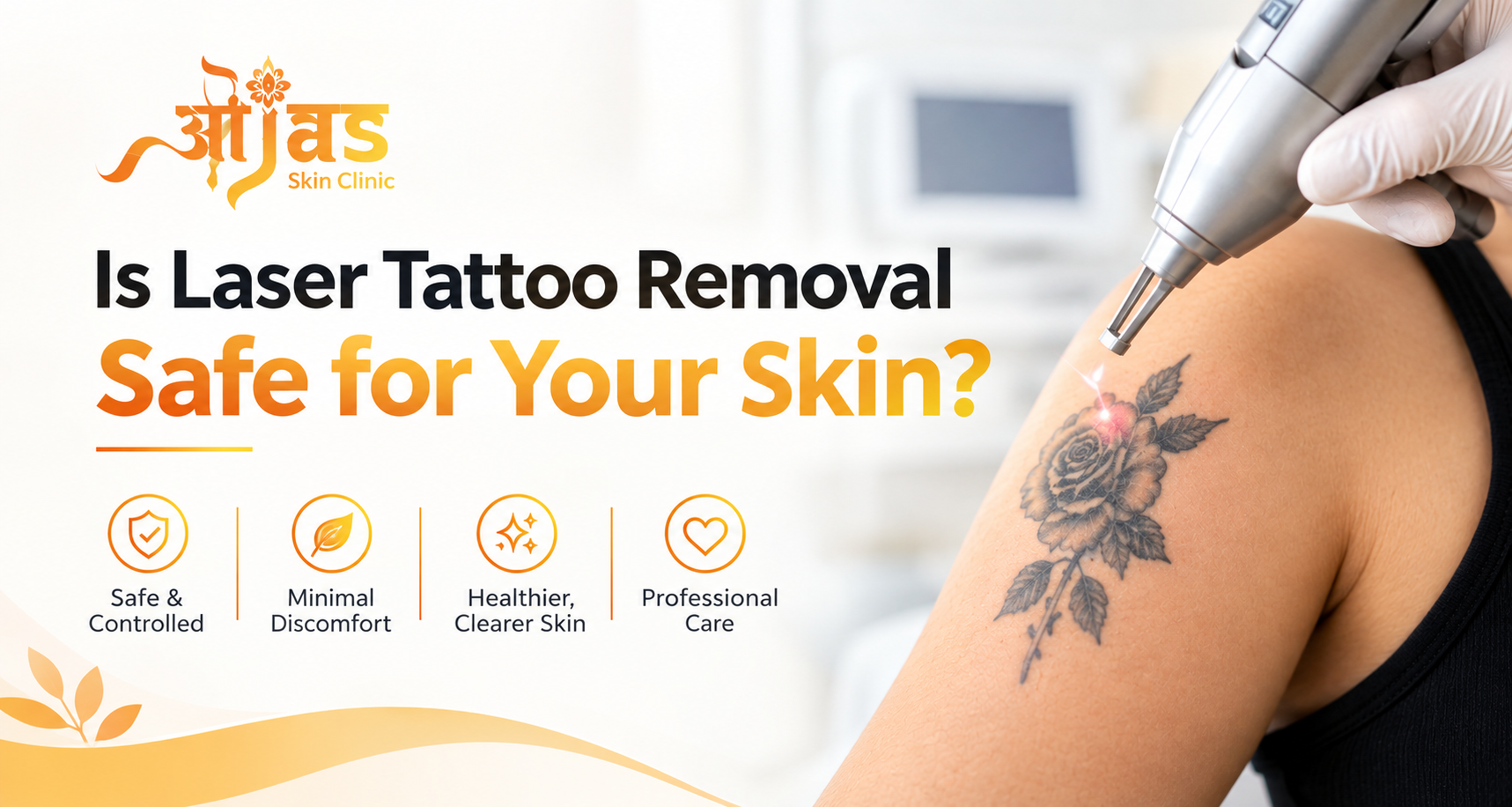

A tattoo may feel meaningful when you get it, but preferences can change over time. If you now want to remove an unwanted tattoo, laser tattoo removal can be an option to consider. But one question naturally comes first: Is laser tattoo removal safe for your skin?
When performed with suitable technology and under professional supervision, laser tattoo removal is designed to target tattoo pigment while minimizing the impact on surrounding skin. However, treatment should always be planned according to the tattoo and your individual skin characteristics.
How Does Laser Tattoo Removal Work?
Laser tattoo removal uses concentrated light energy to target tattoo pigments. The laser breaks the pigment into smaller particles, which are then gradually cleared by the body's natural processes.
Ojas Skin Care offers Best Tattoo Removal in Noida treatment, a technology used for targeted pigmentation concerns, including tattoos and birthmarks.
Key Points
-
Targets tattoo pigment with focused laser energy
-
Non-surgical treatment
-
No surgical cutting or removal of skin
-
Multiple sessions may be required
-
Treatment depends on tattoo size, colour and depth
The number of sessions cannot be predicted accurately without examining the tattoo. Older tattoos, different ink colours and deeper pigments may respond differently to treatment.
Is Laser Tattoo Removal Safe?
Laser tattoo removal can be safe when performed appropriately by an experienced professional. However, every skin type can respond differently.
Some temporary effects may occur after treatment, including:
-
Mild redness
-
Temporary swelling
-
Skin sensitivity
-
Mild discomfort in the treated area
These effects generally settle with appropriate care. Following the aftercare instructions given by your dermatologist is an important part of the treatment process.
What Determines the Number of Sessions?
There is no single session count that applies to every tattoo. Your treatment plan may depend on:
-
Tattoo size
-
Ink colour
-
Ink density
-
Tattoo depth
-
Tattoo age
-
Treatment area
-
Individual skin characteristics
-
Response to previous sessions
A professional consultation allows the dermatologist to examine the tattoo and discuss realistic expectations before treatment.
What Happens During Tattoo Removal?
Before treatment, the tattoo and surrounding skin are assessed. The laser is then directed specifically toward the tattooed area.
The sensation can vary from person to person. Some people may experience a snapping, tingling or warming sensation during the procedure.
After treatment, temporary redness or swelling can occur.
Aftercare Tips
-
Follow your dermatologist's instructions
-
Keep the treated area clean
-
Avoid unnecessary sun exposure
-
Do not scratch or pick the treated skin
-
Use recommended skincare products
-
Allow the skin to recover between sessions
Proper aftercare can help support the skin's recovery following treatment.
Why Choose Ojas Skin Care?
Choosing a tattoo removal clinic involves more than simply checking whether a laser is available. The experience of the treating professional, technology, hygiene and individualized treatment planning are all important considerations.
Ojas Skin Care is a dermatology and aesthetic centre in Sector 27, Noida, providing skin, hair, laser and aesthetic treatments.
According to the clinic's website, Dr. Soni Nanda (MD, Dermatology) leads the clinic. She is a gold medallist from Maulana Azad Medical College and has 20 years of experience performing laser-based skin surgeries, as stated by Ojas Skin Care.
What Stands Out About Ojas Skin Care?
-
20 years of laser-based skin surgery experience
-
MD Dermatology-led care
-
Fine Beam Q-Switch Laser technology
-
Personalized treatment planning
-
Focus on hygiene and patient safety
-
Skin, hair and aesthetic treatment expertise
-
Clinic located in Sector 27, Noida
For people searching for Best Tattoo Removal in Noida , these factors can be considered when choosing a clinic for consultation and treatment.
Can Every Tattoo Be Removed Completely?
Complete tattoo removal cannot be guaranteed for every person. The final result depends on several factors, including the type and colour of ink, tattoo depth, age of the tattoo and individual skin response.
Laser tattoo removal is generally a gradual process, with sessions spaced apart to allow the skin to recover and the body to clear fragmented pigment.
Therefore, it is better to focus on a personalized treatment plan rather than expecting the tattoo to disappear after one session.
Why Professional Consultation Matters
Tattoo removal should not be treated as a one-size-fits-all procedure. Different tattoos can react differently to laser treatment, and your skin type also needs to be considered.
A professional consultation helps determine:
-
Whether laser treatment is suitable
-
Which treatment approach may be appropriate
-
How many sessions may be needed
-
What results can realistically be expected
-
How to care for the skin after treatment
Ojas Skin Care follows a personalized approach to dermatology and aesthetic treatments, with treatment recommendations based on individual skin concerns.
Final Thoughts
Laser tattoo removal can be an option for people who want to reduce or remove an unwanted tattoo. Modern laser technology is designed to target tattoo pigment while limiting unnecessary exposure to surrounding skin.
However, results and treatment requirements vary from person to person. A dermatologist-led assessment is the best starting point for understanding your options.
If you are considering Best Tattoo Removal in Noida, Ojas Skin Care offers Fine Beam Q-Switch Laser treatment with dermatologist-led care and experience in laser-based skin procedures.
FAQs
1. Is laser tattoo removal safe?
Yes, when appropriately performed and medically supervised.
2. How many sessions are needed?
It varies depending on the tattoo and your skin.
3. Does tattoo removal hurt?
You may feel snapping, tingling or warmth during treatment.
4. Can tattoos be completely removed?
Complete removal is not guaranteed for every tattoo.
5. Does tattoo removal leave scars?
Proper treatment and aftercare can help reduce the risk of complications.
