

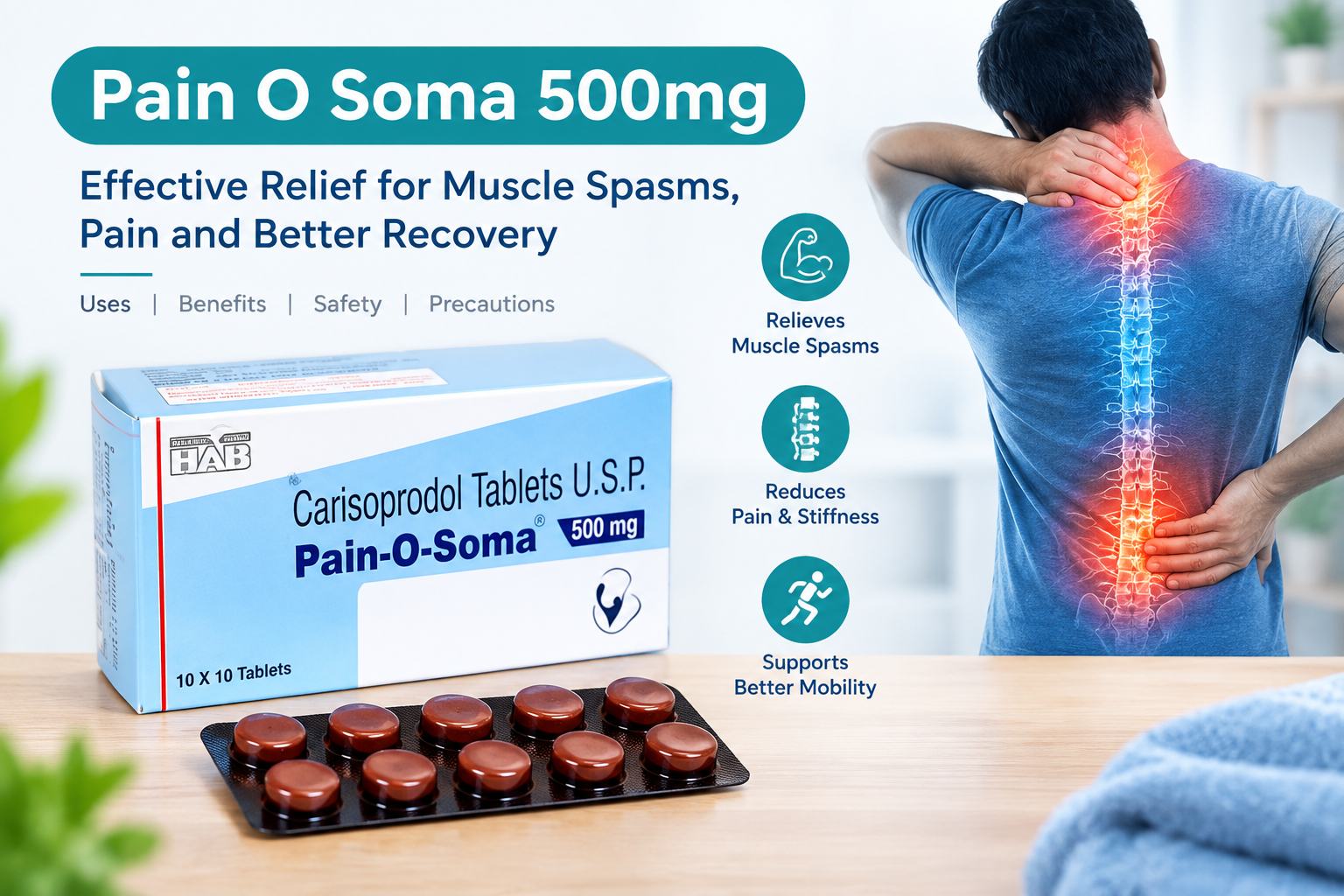

Painful muscle tightness can make ordinary activities such as walking, working, exercising, or sleeping surprisingly difficult. When symptoms persist, doctors usually look beyond the discomfort itself to understand what may be causing the muscles to remain tense. Depending on the condition, treatment may involve rest, gentle movement, physical therapy, lifestyle adjustments, or prescribed medicines. For readers in Australia researching treatment options, Pain O Soma 500 mg Tablets (Carisoprodol 500mg) may be discussed as a prescription option for short-term management of certain painful musculoskeletal conditions, but its suitability depends on an individual medical assessment.
Understanding Muscle Tightness
Muscle tightness describes a feeling of tension, stiffness, or restricted movement in one or more muscles. It can happen after strenuous exercise, repetitive physical activity, prolonged sitting, poor movement patterns, or an acute musculoskeletal injury. Sometimes the affected area may also feel tender when touched or moved.
Doctors first consider how the tightness started and whether it appeared suddenly or developed gradually. They may ask about recent exercise, work activities, injuries, sleep position, previous health problems, and other symptoms. This information helps distinguish ordinary muscular discomfort from conditions that may require further investigation.
What Doctors Look For
A clinical assessment generally focuses on the location, intensity, duration, and pattern of the discomfort. A doctor may examine movement, muscle tenderness, flexibility, strength, and surrounding joints. They may also ask whether the pain travels to another part of the body or is accompanied by numbness, weakness, swelling, fever, or other unusual symptoms.
For uncomplicated muscular problems, imaging may not always be necessary. However, persistent, severe, or unusual symptoms can require additional evaluation. The purpose is to identify the underlying problem rather than simply mask the sensation of tightness.
Common Causes
Muscle tightness has many possible causes. A sudden increase in exercise can leave muscles sore and tense, while repetitive movements can gradually contribute to stiffness. Long periods at a desk may also affect the neck, shoulders, hips, or lower back.
Injuries are another common reason for painful muscle tension. A strain can occur when muscle fibers are overstretched or overloaded. In these situations, doctors may recommend temporary activity modification together with gradual rehabilitation.
Stress and fatigue can also influence how people experience muscular discomfort. Although these factors do not explain every case, improving sleep, taking appropriate breaks, and maintaining regular movement may support recovery.
Starting with Conservative Care
Doctors often begin with conservative measures when there are no warning signs of a serious condition. Depending on the problem, this may include relative rest, gentle mobility exercises, physical therapy, heat or cold applications, and gradual return to normal activity.
The goal is usually not to keep a painful area completely still for an extended period. Appropriate movement can help maintain flexibility and function. A physiotherapist may also teach specific exercises designed around the person's symptoms, occupation, fitness level, and recovery stage.
When Medicines Are Considered
Medicine may be considered when pain or muscle spasm interferes with normal activity despite basic measures. The choice depends on the cause of the symptoms, other medicines being taken, medical history, and potential risks.
Oral Medication Pain O Soma 500mg contains the active ingredient Carisoprodol and is used in some settings for short-term relief of acute, painful musculoskeletal conditions. It is not appropriate for every type of muscle tightness, and treatment should be based on professional advice rather than the name of the symptom alone.
A doctor may consider Pain O Soma 500 mg when muscle discomfort and spasms are part of an acute musculoskeletal problem and when a prescription muscle relaxant is considered appropriate. The intended treatment period is generally limited because longer use can introduce additional concerns.
Understanding the Prescription
Pain O Soma doses 500mg should be taken only according to the directions provided by a qualified healthcare professional. The prescribed amount and duration can vary according to the individual's circumstances. Patients should not increase the dose or continue treatment longer than recommended simply because tightness has not completely disappeared.
Because Carisoprodol oral dose can cause drowsiness and other effects on alertness, patients should discuss activities such as driving or operating machinery with their healthcare professional. Alcohol and other medicines that cause sedation may also create additional concerns.
Choosing the Right Strength
Prescription medicines are available in different strengths and formulations depending on the product and market. Pain O Soma 500 mg is one strength that may be prescribed for appropriate patients, while Pain O Soma 350mg is another variant that may be considered when a healthcare professional determines a different strength is suitable.
The strength should not be selected simply because one option appears stronger or more convenient. Doctors consider the individual's symptoms, medical history, other medicines, response to treatment, and potential risks before deciding what is appropriate.
Using Treatment Alongside Recovery
Pain O Soma tablets 500mg (Carisoprodol tablets) is generally not viewed as a replacement for addressing the physical cause of muscle tightness. When appropriate, medication may be used alongside measures such as physical therapy, controlled stretching, improved movement habits, and a gradual return to activity.
For someone recovering from an episode of back, neck, or other musculoskeletal discomfort, a broader recovery plan can be more useful than relying on medication alone. Once pain becomes manageable, appropriate movement and rehabilitation may help restore normal function.
When to Seek Medical Advice
Not every episode of muscle tightness requires prescription treatment. Mild discomfort following unusual activity may improve with time and sensible self-care. However, medical advice is appropriate when symptoms are severe, persistent, repeatedly returning, or interfering substantially with daily activities.
Pain O Soma pills 500mg (Carisoprodol pills) should not be treated as a general solution for unexplained pain. A medical assessment is particularly important when tightness occurs alongside significant weakness, loss of sensation, major swelling, fever, unexplained weight changes, or symptoms following a serious injury.
Buying Prescription Treatment
People in Australia should obtain prescription medicines through legitimate healthcare and pharmacy channels and follow Australian prescribing and dispensing requirements. When considering Carisoprodol tablet Pain O Soma 500mg, patients should confirm that the medicine is appropriate for their condition and that they understand how it should be used.
For online pharmacy information, Pills4Cure provides access to healthcare-product information and prescription medicine listings. Pain O Soma 500 mg should be purchased and used only where legally permitted and with appropriate professional guidance. Patients should also check local Australian requirements before ordering prescription medicines online.
A Practical Doctor-Led Approach
Pain O Soma tabs 500mg (Carisoprodol tabs) may form one part of a short-term treatment plan when a doctor determines that a prescription muscle relaxant is appropriate. It does not replace an examination, diagnosis, or rehabilitation strategy.
A doctor-led approach begins by identifying why the muscles are tight, checking for warning signs, and considering non-drug measures before deciding whether medication has a role. For suitable patients, Pain O Soma 500 mg pill may help address acute painful musculoskeletal symptoms while other recovery measures are continued.
Ultimately, painful muscle tightness is a symptom rather than a single diagnosis. Understanding the underlying cause allows treatment to be tailored more appropriately. Whether the problem follows exercise, repetitive work, an injury, or another musculoskeletal issue, professional assessment can help determine the safest path toward comfortable movement and recovery.
