


Why Fold Direction Matters in Cardboard Packaging Inserts
Why Fold Direction Matters in Cardboard Packaging Inserts
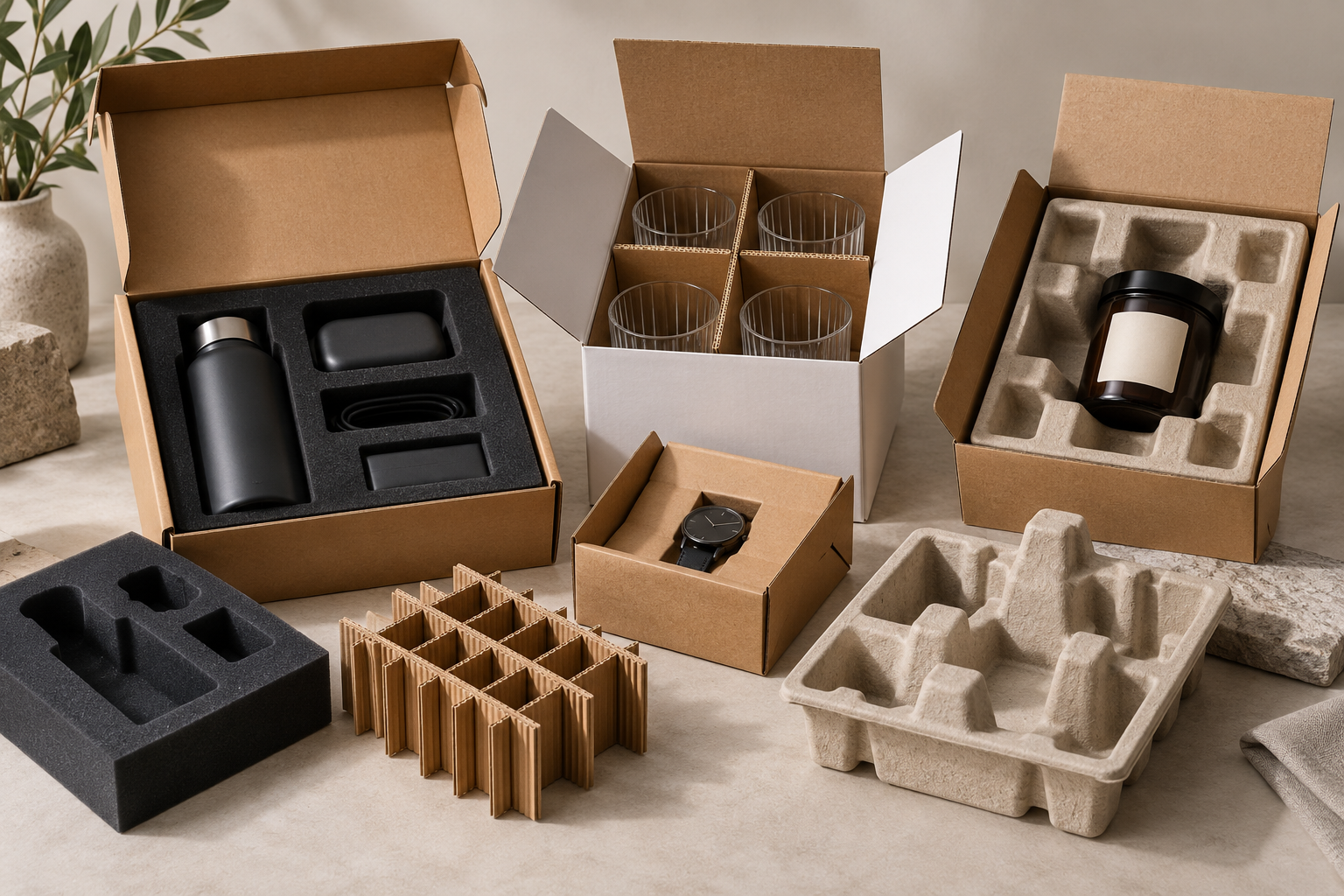
Cardboard packaging inserts often look simple after they have been folded and placed inside a box, but the direction of each fold can influence how the complete structure behaves. Panels, tabs, walls, and support sections need to move in planned directions so the insert can hold its shape. Different cardboard insert structures can be studied through Inserts Hub, where several forms of internal packaging are covered.
Fold direction affects more than assembly. It can influence stiffness, load distribution, panel alignment, internal dimensions, and the way an insert responds when a product is placed inside it. A small change in folding direction may alter the position of an entire support wall.
What Fold Direction Means
A cardboard insert usually begins as a flat sheet that has been cut and creased.
The crease lines indicate where the material should bend. Some panels fold upward, others fold inward, and certain sections may fold underneath another panel to create a raised platform.
These folds work together to turn a two-dimensional sheet into a three-dimensional structure.
The direction of each fold matters because paperboard has physical thickness. When a panel bends inward, it occupies space inside the structure. When it bends outward, the same material may sit in a different position.
This difference becomes more noticeable when several folds are located close together.
Why Crease Position Is Important
A crease creates a controlled location where cardboard is intended to bend.
Without a properly positioned crease, a panel may bend unevenly or create a curved edge instead of a defined corner.
Crease placement also determines the final dimensions of a folded section.
If a crease shifts slightly toward one side, one panel becomes shorter while the adjoining panel becomes longer. In a simple structure, this difference may be minor. In an insert containing several connected walls, the change can affect alignment across the whole layout.
Accurate fold placement is therefore connected directly to the final shape of the insert.
Inward Folds Reduce Internal Space
Every folded layer takes up some room.
When two cardboard panels fold toward each other, their material thickness becomes part of the internal measurement.
This is important in narrow product cavities.
A flat drawing may show enough room for a product, but once the walls are folded inward, the available opening can become slightly smaller.
The effect increases when multiple layers overlap.
For small boxes, even a modest change can affect how easily the item enters or leaves the insert.
This is why flat dimensions and finished dimensions should not always be treated as identical.
Fold Direction and Raised Platforms
Some cardboard inserts use folded sections to raise a product above the bottom of the outer box.
These platforms may contain side walls, bottom supports, and locking tabs.
The direction of the supporting folds determines where the weight of the product travels through the structure.
A platform with correctly positioned folds can spread weight across several panels. If the same sections are folded in an unintended direction, pressure may concentrate on a smaller area.
Heavy products can make this difference more noticeable because the insert remains under load for longer periods.
Locking Tabs Depend on Fold Sequence
Many cardboard inserts are assembled without adhesives.
Instead, they use tabs and slots that hold different sections together.
Fold direction becomes especially important in these structures.
A locking tab may need to pass behind one panel before another wall is folded into position. If the sequence is reversed, the tab can become difficult to insert.
The completed structure may also remain loose if a locking section is facing the wrong direction.
For this reason, fold sequence and fold direction often work together.
The insert may contain all the correct cuts and dimensions but still fail to assemble properly when panels are folded in the wrong order.
Folded Corners Add Material Layers
Corners are common areas where several layers meet.
A simple side wall may contain one layer of cardboard, while a reinforced corner can contain two or three overlapping sections.
These layers increase local thickness.
They can also change the angle at which neighboring panels meet.
In boxes with limited internal space, reinforced corners should therefore be considered when calculating the available room around a product.
This is particularly relevant for rectangular items that sit close to the insert walls.
Grain Direction Can Influence Folding
Paperboard contains fibers that generally have a dominant orientation created during manufacturing.
This orientation is often called grain direction.
Cardboard may fold differently with the grain than across it.
Depending on the material, one direction can produce a smoother bend while another can create more resistance.
Grain direction can also influence stiffness after folding.
For inserts with long walls or narrow panels, the relationship between the crease and the material grain can affect how consistently the structure forms.
This becomes useful when repeated folding is required across a production run.
Fold Direction in Divider Structures
Some inserts use crossing panels to create internal sections.
These panels may contain slots that allow two pieces to interlock.
Although the material appears flat before assembly, the direction in which each panel bends can affect the shape of the compartments.
A divider that leans inward may reduce the space available for one product while creating additional space in another section.
Straight and consistent folds help keep compartments closer to their intended dimensions.
For boxes holding several objects, this consistency becomes increasingly important because one displaced wall can influence neighboring sections.
Product Weight Changes Fold Behavior
Cardboard folds do not behave exactly the same under every load.
A lightweight object may place little pressure on a raised wall or support panel.
A heavier object can push against the same section for extended periods.
If the fold allows the panel to rotate under pressure, the cavity dimensions may gradually change.
Additional folds, support sections, or different panel orientations can be used where more resistance is needed.
The important point is that fold design should reflect how force moves through the insert after the product has been placed inside it.
Assembly Testing Reveals Fold Problems
A flat drawing cannot show every detail of physical folding.
Producing a sample allows the actual fold sequence to be observed.
During assembly, it becomes easier to see whether panels interfere with each other, whether tabs align with slots, and whether corners contain more material than expected.
A sample can also show whether workers can understand the assembly sequence without repeatedly repositioning sections.
After assembly, the actual product can be placed inside to examine wall alignment and platform stability.
Fold Lines Should Work as a System
Each crease may appear to be an individual feature, but all folds are connected within the completed insert.
Moving one fold can change the location of the next wall. Reversing one panel can interfere with a locking section. Adding another folded layer can reduce the available internal space.
For this reason, cardboard insert folds are better understood as parts of one structural system.
The final shape depends on how the flat material transforms during assembly and how the folded sections behave after product weight is added.
Considering fold direction early helps explain why two inserts made from similar cardboard can perform differently even when their overall dimensions appear almost identical.

 Bangla