

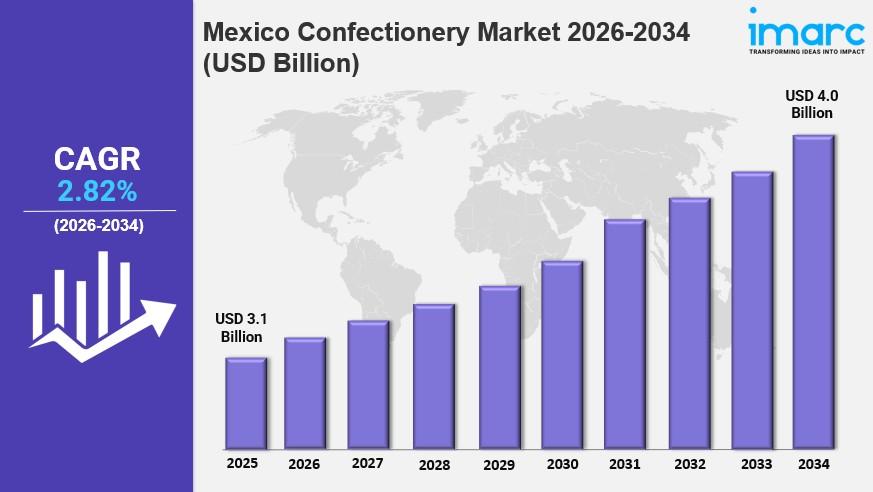
Mexico Confectionery Market Size to Hit USD 4.0 Billion in 2034 | Grow CAGR by 2.82%

IMARC Group has recently released a new research study titled "Mexico Confectionery Market Size, Share, Trends and Forecast by Product Type, Age Group, Price Point, Distribution Channel, and Region, 2026-2034", offering a detailed analysis of the market drivers, segmentation, growth opportunities, trends, and competitive landscape to understand the current and future market scenarios.
Mexico Confectionery Market Size & Share 2026-2034
The Mexico confectionery market size reached USD 3.1 Billion in 2025. Looking forward, IMARC Group expects the market to reach USD 4.0 Billion by 2034, exhibiting a growth rate of CAGR of 2.82% during 2026-2034. The market is growing steadily with a high consumer base, rising urbanization, and a solid cultural predisposition toward sweets.
Steady demand across age groups and distribution channels continues to contribute to the market's sustained performance and favorable long-term prospects across the Mexico confectionery market.
Key Market Statistics at a Glance
- Base Year: 2025
- Historical Years: 2020-2025
- Forecast Period: 2026-2034
- Market Size (2025): USD 3.1 Billion
- Projected Market Size (2034): USD 4.0 Billion
- Growth Rate: CAGR of 2.82% (2026-2034)
Explore Opportunities in the Mexico Confectionery Market: Download the IMARC Sample Report: https://www.imarcgroup.com/mexico-confectionery-market/requestsample
Key Growth Drivers and Trends in the Mexico Confectionery Market
Growth in the Mexico confectionery market is being driven by premiumization and artisanal confectionery development, as consumers increasingly seek sweets that manifest high-end ingredients, refined flavors, and a sense of uniqueness. This phenomenon is highly prominent among middle- and higher-income consumers, with handcrafted confections often incorporating local elements such as indigenous fruits and heritage recipes. In August 2024, La Monarca Bakery extended its packaged Mexican cookies and drinks to all 43 Northgate Markets, increasing retail availability of culturally based products such as Café de Olla and Wedding Cookies.
One of the leading Mexico confectionery market trends is health-oriented reformulation and functional ingredients, with accelerating demand for confections featuring lower sugar, natural sweeteners, and added functional benefits like vitamins, minerals, and plant-based ingredients. The creation of products appropriate for diabetics, along with allergen-free options, reflects the industry's responsiveness to contemporary nutritional needs, with retail environments giving more prominence and availability to health-aware confectionery products.
Another key factor supporting Mexico confectionery market growth is cultural and seasonal innovation in product offerings, with numerous confectionery products specially designed to align with major cultural celebrations like Día de los Muertos, Christmas, and national public holidays. In December 2024, Mexican soda brand Jarritos rolled out a candy line consisting of gummies and lollipops in pineapple, mango, lime, fruit punch, tamarind, and mandarin flavors, while in November 2024, Nestlé launched Choco Trio, a new chocolate portfolio inspired by worldwide culinary traditions.
Speak to an Analyst: https://www.imarcgroup.com/request?type=report&id=32059&flag=C
Mexico Confectionery Industry Segmentation Insights
Breakup by Product Type:
- Hard-boiled Sweets: Represents a traditional confectionery category with steady, broad consumer demand.
- Mints: Serves everyday freshness and breath-care consumption occasions.
- Gums and Jellies: Popular among younger consumers for their chewy texture and flavor variety.
- Chocolate: Represents a major product category benefiting from premiumization and innovative flavor launches.
- Caramels and Toffees: Reflects steady demand for indulgent, classic confectionery formats.
- Medicated Confectionery: Combines functional health benefits with confectionery consumption occasions.
- Fine Bakery Wares: Benefits from rising demand for artisanal and premium baked confectionery items.
- Others: Includes additional confectionery product types serving the market.
Breakup by Age Group:
- Children: Represents a core consumer base for gums, jellies, and flavored confectionery.
- Adult: Reflects demand across premium, functional, and everyday confectionery categories.
- Geriatric: Benefits from health-oriented and medicated confectionery formulations.
Breakup by Price Point:
- Economy: Serves cost-conscious consumers seeking affordable, everyday confectionery products.
- Mid-range: Represents a balance between affordability and quality for mainstream consumers.
- Luxury: Caters to premium and artisanal confectionery demand among higher-income consumers.
Breakup by Distribution Channel:
- Supermarkets and Hypermarkets: Provides broad accessibility and wide product selection for confectionery brands.
- Convenience Stores: Supports quick, everyday purchase needs for confectionery products.
- Pharmaceutical and Drug Stores: Serves as a distribution point for medicated and functional confectionery.
- Online Stores: Growing steadily through expanding e-commerce and digital retail channels.
- Others: Includes additional retail and distribution channels serving the market.
Breakup by Region:
- Northern Mexico: Benefits from a strong industrial and retail base supporting confectionery demand.
- Central Mexico: Holds a significant share supported by dense urban retail and cultural activity.
- Southern Mexico: An emerging region with growing retail investment supporting confectionery demand.
- Others: Comprises smaller regional markets experiencing gradual growth in adoption.
Key Challenges and Growth Opportunities in the Mexico Confectionery Market
The Mexico confectionery market faces challenges including the technical complexity of developing low-sugar and functional formulations that match the taste and indulgence of conventional confectionery, along with the need for continued investment in sustainable sourcing for cacao and other key ingredients.
Despite these challenges, the market offers considerable growth opportunities driven by continued demand for premium and artisanal confectionery, rising adoption of health-oriented reformulations, and growing culturally themed and seasonal product innovation. Continued investment in packaging, storytelling, and heritage-inspired branding is expected to create substantial opportunities for long-term growth in the Mexico confectionery market.
Competitive Landscape
The Mexico confectionery market is competitive, with established manufacturers focusing on product innovation, premiumization, and strategic partnerships to strengthen their market position. Companies are investing in culturally themed product launches and functional reformulations, as seen with the February 2025 introduction of the state-sponsored Chocolate del Bienestar program supporting sustainable cacao sourcing directly from farmers across Mexico.
Author IMARC Group
IMARC Group is a leading global market research company providing data-driven insights and expert consulting services to businesses seeking to achieve their strategic objectives. With a multidisciplinary team of industry experts, IMARC delivers reliable market intelligence across sectors including Chemicals and Materials, Healthcare, Technology, Agriculture, and Retail.
Contact Us:
IMARC Group
Email: [email protected]
United States: +1-201-971-6302
