


Is Scarless Hair Transplant in Dubai Suitable for Small Bald Areas
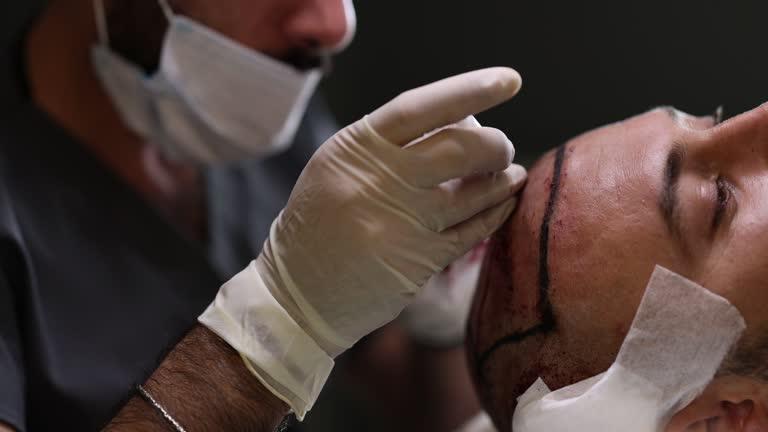
Small bald areas can sometimes be particularly suitable for targeted hair restoration because the treatment zone is clearly defined and may require fewer grafts than extensive scalp loss. For appropriately selected patients, Scarless Hair Transplant in Dubai can restore an isolated area while preserving surrounding native hair and limiting unnecessary donor extraction.
What Counts as a Small Bald Area
A localized bald patch can occur at the hairline, temple, crown, mid-scalp, or another defined region.
Localized Versus Diffuse Loss
A clearly bordered bald patch differs from diffuse thinning, where hair density decreases across a broader region. Localized loss can sometimes make graft placement more straightforward because the recipient area has a defined boundary.
The Cause Still Matters
A small bald area should not automatically be assumed to be ordinary pattern hair loss. Previous injury, surgery, traction, inflammatory conditions, or other causes can produce localized loss.
Identifying the underlying pattern is therefore an important part of determining whether transplantation is appropriate.
How Scarless Hair Transplant in Dubai Can Target Small Areas
A small treatment zone allows the restoration plan to concentrate on precise placement rather than broad scalp coverage.
Matching the Existing Growth Pattern
The transplanted follicles should follow the direction and angle of surrounding native hair. This becomes particularly important when the bald patch is surrounded by dense hair.
Creating a Seamless Transition
The objective is not merely to place follicles inside the bald region. The edge between transplanted and native hair should be designed so the change in density is visually gradual.
Common Small Areas That May Be Restored
| Area | Primary planning consideration |
|---|---|
| Temple | Direction and natural frontotemporal transition |
| Hairline corner | Leading-edge softness and facial proportion |
| Small crown patch | Circular growth pattern and density |
| Mid-scalp spot | Integration with surrounding native hair |
| Post-injury area | Scar tissue quality and blood supply |
| Isolated thinning zone | Preservation of existing follicles |
Each location has different anatomical requirements, so the same graft-placement pattern should not be applied universally.
Why Small Areas Require Precise Graft Placement
The smaller the recipient zone, the more noticeable an isolated irregularity can become.
Avoiding an Artificial Patch
A concentrated group of grafts that grows at a different angle from the surrounding hair can remain visible even after the hair becomes longer.
The placement should therefore replicate the direction and emergence pattern of the neighboring follicles as closely as practical.
Preserving Existing Hair
If native follicles are already growing around the bald area, unnecessary removal or disturbance should be avoided. The transplanted follicles should complement rather than replace viable surrounding hair.
Small Bald Areas and Donor Conservation
A localized procedure may require relatively limited donor harvesting, but donor planning still matters.
Using Only What Is Needed
The treatment objective should be achieved without unnecessary extraction. This is particularly relevant for patients who may experience additional hair loss elsewhere in the future.
Maintaining Donor Appearance
Even a small procedure should preserve the visual uniformity of the donor region. Extraction should therefore be appropriately distributed rather than concentrated in a small visible section.
When a Small Bald Area May Need Further Evaluation
A localized bald spot is not automatically suitable for transplantation.
Unstable Hair Loss
If the surrounding hair is rapidly thinning, filling one patch may not address the broader progression.
Inflammatory or Active Conditions
A clinician may need to determine whether an underlying scalp condition is active before considering surgical restoration.
Scar Tissue
Hair loss caused by injury or previous surgery can involve altered skin characteristics. The quality of the recipient tissue may influence whether transplantation is appropriate.
What Results Can Patients Expect
The goal for a small bald area is usually integration rather than simply increasing the number of visible hairs.
Natural Integration
When grafts are appropriately selected and placed, the restored area can blend with surrounding hair as growth develops.
Gradual Growth
The result develops over time rather than immediately. Tajmeels notes that natural growth commonly starts around three to four months, with fuller maturation developing over approximately six to twelve months.
Dubai Lifestyle and Recovery Planning
Patients in Dubai may want to return quickly to work, social activities, or outdoor routines. However, recovery instructions should take priority over schedule convenience.
Sun exposure, heat, sweating, and strenuous activity may require specific precautions during the early healing period. The exact timing should follow the treating clinician's instructions.
For patients considering [targeted hair restoration in Dubai], a consultation can determine whether the localized area has the characteristics required for transplantation.
Questions About Small Bald Areas
Can one small bald patch be treated?
Yes, selected isolated areas can be treated when the cause of hair loss and the donor supply make transplantation appropriate.
Does a small bald area require many grafts?
Usually the graft requirement depends on the dimensions, desired density, and characteristics of the surrounding hair rather than the label “small” alone.
Can a small crown bald spot be restored?
It may be possible when the donor supply and recipient area are suitable. Crown placement requires careful attention to the natural circular direction of hair growth.
Can previous injury cause a transplantable bald patch?
It can, although scar tissue must be assessed because its characteristics may differ from normal scalp tissue.
The Strategic Investment.
A small bald area can often be approached as a precision restoration problem rather than a broad scalp reconstruction. Scarless Hair Transplant in Dubai may be suitable when the loss is localized, the recipient tissue is appropriate, and sufficient donor follicles are available to create a natural transition. A personalized assessment at Tajmeels Clinic can determine whether targeted graft placement is appropriate for the specific area.

 Bangla