


Choose TMS Therapy for Depression in Richardson
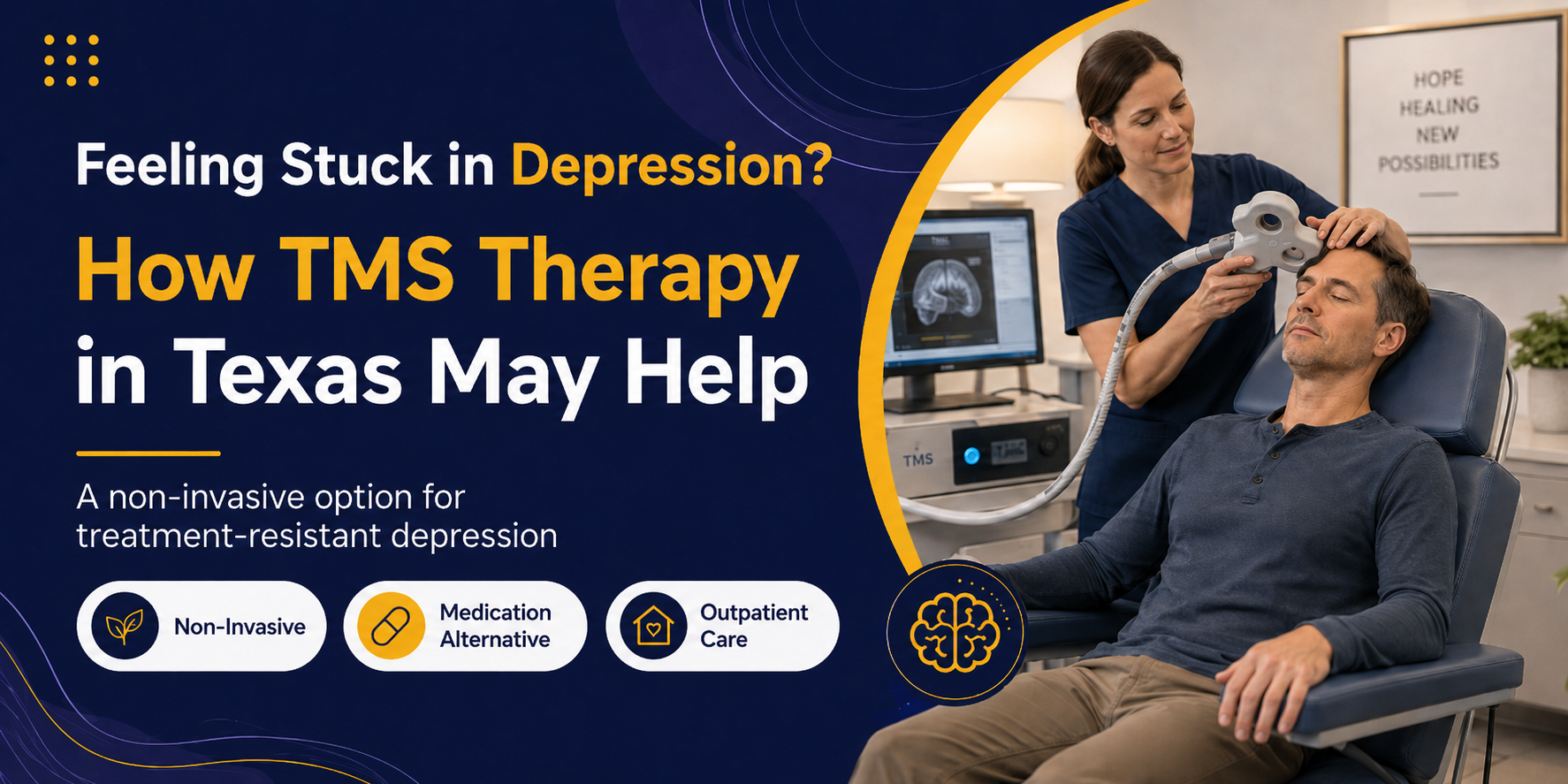
Depression can affect much more than mood. Persistent sadness, low motivation, sleep changes, difficulty concentrating, and loss of interest in normal activities can gradually interfere with work, relationships, and everyday responsibilities.
For some people, standard treatment does not provide enough relief, or unwanted effects make it difficult to continue. TMS therapy for depression is a noninvasive treatment option that uses magnetic pulses to stimulate specific areas of the brain involved in mood regulation. It may be considered when additional treatment is needed.
How TMS Therapy Works?
Transcranial magnetic stimulation, commonly called TMS, uses a treatment device placed near the head to deliver controlled magnetic pulses. These pulses stimulate nerve cells in brain regions associated with mood. Unlike medications, TMS does not require medicine to travel throughout the body.
Treatment is performed during an appointment while the patient remains awake and alert. A typical session involves positioning the TMS device and delivering repeated magnetic pulses. The exact treatment schedule can vary depending on the clinical approach and the person’s condition.
Who May Consider TMS for Depression?
TMS may be considered for adults with depression when symptoms have continued despite appropriate treatment. It can also be discussed when medication has not provided sufficient improvement or side effects have become difficult to manage. A psychiatric evaluation is important before starting treatment.
The clinician needs to understand the person’s symptoms, previous treatments, other health concerns, and individual circumstances. TMS is not automatically appropriate for every person with depression. A qualified psychiatrist can determine if it is a reasonable option after reviewing the patient’s overall situation.
What Happens During a TMS Appointment?
During treatment, the patient generally sits in a comfortable chair while the treatment device is positioned near the scalp. Magnetic pulses are then delivered to the targeted area. Patients remain awake throughout the session and can usually return to their normal activities afterward.
Some people notice tapping or clicking sensations during treatment. The number and frequency of sessions depend on the treatment plan. TMS generally involves a series of appointments rather than a single session, so consistency can be an important part of the process.
Importance of TMS Therapy in Richardson
People searching for TMS therapy in Richardson may be looking for a noninvasive option for depression after trying other approaches. A local psychiatric evaluation can help determine if TMS is appropriate and explain what the treatment process involves. Treatment planning should begin with understanding the symptoms rather than selecting a therapy based only on convenience.
Depression can have different patterns, and treatment needs can vary from person to person. A Richardson-based provider can also discuss practical questions about appointment frequency, treatment expectations, possible side effects, and other available options.
Find the Best TMS Therapy Clinic
When looking for a TMS therapy clinic in Richardson, consider the experience of the psychiatric team and the type of evaluation provided before treatment begins. A proper assessment is an important part of responsible TMS care. Patients may also want to ask how treatment progress is monitored and what happens if symptoms do not improve as expected.
Open communication can make it easier to understand the treatment process. If you are searching for a TMS therapy near me, location can be another practical consideration because TMS usually requires multiple appointments. Choosing a clinic that is reasonably accessible may make it easier to maintain the treatment schedule.
Can TMS Help When Depression Treatment Has Not Worked?
Depression treatment does not produce the same results for everyone. Some people improve with medication or psychotherapy, while others continue to experience significant symptoms despite receiving care. TMS can provide another treatment option for certain patients with persistent depression.
It may be discussed when previous treatment has not produced adequate improvement. This does not mean medication or therapy should automatically be stopped. TMS may be used as part of a broader treatment approach depending on the individual’s clinical needs.
What About Anxiety and Depression Together?
Depression and anxiety can occur at the same time. Someone may experience low mood and loss of interest alongside excessive worry, restlessness, tension, or difficulty relaxing. For people looking for anxiety treatment in Richardson, a psychiatric assessment can help identify which symptoms are present and how they interact.
Treatment may involve psychotherapy, medication, lifestyle changes, or other approaches depending on the diagnosis.TMS is primarily associated with treatment of certain depressive conditions, so a person experiencing both depression and anxiety should receive an evaluation before deciding on a treatment approach.
What are the Possible Side Effects?
TMS is generally considered noninvasive, but some people may experience temporary effects during or after treatment. Common complaints can include scalp discomfort or headache during the treatment period. The clinician should explain possible risks before treatment begins.
Patients should also provide information about medications, medical conditions, and any implanted devices or metal in the body. A complete medical history helps the treatment team determine if TMS is appropriate and identify any safety concerns.
Why Professional Evaluation Matters
Depression can have several possible contributing factors, and symptoms can overlap with other mental health conditions. A professional assessment helps establish a clearer picture before treatment begins. Mayur Patel, MD is associated with psychiatric care in Richardson and can be considered by individuals seeking evaluation for depression and related concerns.
His role as an Interventional Psychiatrist in Richardson is relevant to patients exploring interventional psychiatric treatment options. The purpose of an evaluation is not simply to select TMS. It is to understand the person’s symptoms and treatment history and determine which available options may be suitable.
What Should You Ask Before Starting TMS?
A first consultation is a good opportunity to ask questions about the treatment process and expected schedule. Understanding the practical side of therapy can help you prepare for a course of treatment. Useful questions may include:
-
How many sessions might I need?
-
How long does each appointment take?
-
What sensations might I experience during treatment?
-
How will my progress be monitored?
-
What other treatment options are available?
-
What should I do if my symptoms change during treatment?
Frequently Asked Questions
Is TMS therapy painful?
TMS is noninvasive, although some people may experience tapping sensations or temporary scalp discomfort during treatment. Your clinician can explain what you may feel during a session.
Can I return to normal activities after TMS?
Because patients remain awake during treatment, many can return to their normal routine afterward. Your provider can give specific guidance based on your circumstances.
Is TMS only used for depression?
TMS is primarily used for certain depressive conditions, although related applications may exist. A psychiatric evaluation is needed to determine if it is appropriate for a particular condition.
Can TMS replace antidepressants?
Not necessarily. Treatment decisions depend on the individual’s symptoms and history. TMS may be considered alongside or after other approaches rather than automatically replacing medication.
Conclusion
Living with persistent depression can make ordinary responsibilities feel difficult and can leave you searching for another path when previous treatment has not provided enough relief. TMS therapy for depression may be an option for some people with persistent depressive symptoms, but suitability depends on an individual psychiatric evaluation. A qualified provider can discuss the potential benefits, risks, treatment schedule, and other available approaches. Seeking help is an important step toward managing depression and improving daily functioning.

 Bangla