

Finding well-fitting clothing can be challenging, particularly when standard sizes do not match an individual’s exact proportions. This is where men's alteration NYC becomes relevant. Clothing alterations can adjust the fit of trousers, shirts, jackets, suits, coats, and other garments without requiring an entirely new wardrobe.
In New York City, where professional and social settings often require polished clothing, men’s alterations are commonly used to improve comfort, appearance, and functionality. Understanding the most frequently requested alterations can help men determine what changes may be appropriate for their garments.
What Does Men's Alteration NYC Mean?
The term men's alteration NYC generally refers to tailoring and garment-adjustment services available for men's clothing in New York City. Alterations can involve changing the length, width, shape, or positioning of different parts of a garment.
Unlike made-to-measure clothing, alterations begin with an existing garment. A tailor evaluates the garment, considers the wearer's measurements and preferences, and determines which adjustments can be made while maintaining the original structure.
Common alterations include shortening trousers, adjusting waistbands, tapering shirts, modifying jacket sleeves, and changing the fit of suit jackets.
Common Men's Clothing Alterations
Trousers are among the garments most frequently altered. Trouser hems can be shortened when they are too long, while waist adjustments can help when the waistband is either loose or tight. The leg can also be tapered to create a narrower silhouette, depending on the garment's construction.
Jacket alterations require greater attention because jackets contain structured elements. Sleeve length is often adjusted to create the appropriate relationship between the jacket sleeve and shirt cuff. The jacket's sides may also be taken in to reduce excess fabric.
Shirts can be altered through sleeve shortening, side-seam adjustments, and body tapering. However, the amount of alteration possible depends on the shirt's original construction and available seam allowance.
Coats and outerwear can also be modified, although heavier fabrics, linings, zippers, and other construction details may make certain adjustments more complicated.
Suit Alterations in New York City
Suit alterations are particularly important because a suit contains several interconnected components. A change to one area can affect the overall appearance of the garment.
Trouser length, waist size, jacket sleeve length, and jacket body width are common areas of adjustment. More complex changes, such as modifying the shoulders or reshaping the jacket, may require substantial reconstruction and may not always be practical.
A properly assessed suit alteration considers the garment as a whole rather than treating each measurement independently. The goal is generally to maintain balance between the jacket, trousers, shirt, and the wearer's proportions.
Why Measurements Matter
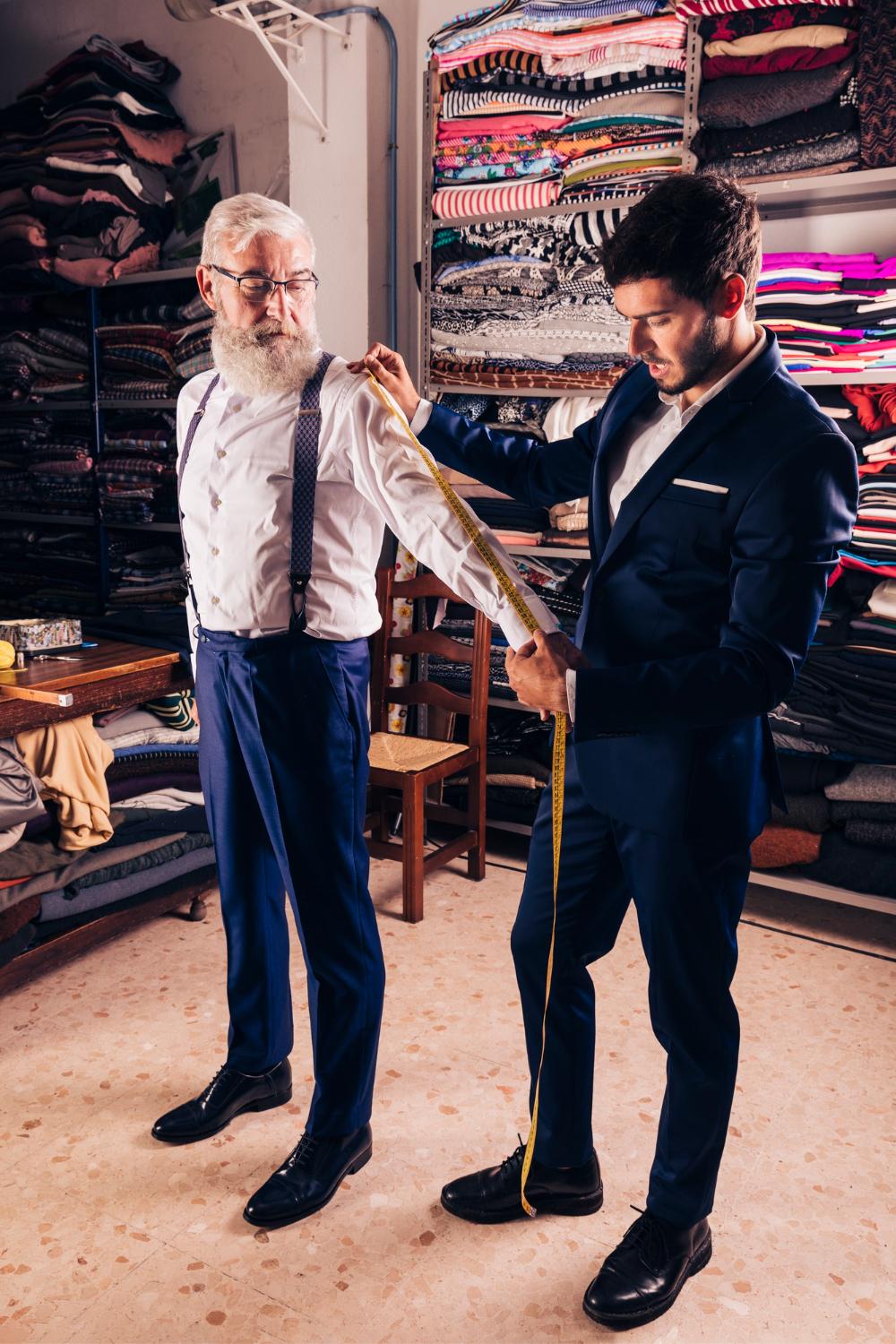
Accurate measurements are central to men's alteration NYC. A tailor typically examines several points of the garment and compares them with the wearer's body measurements.
Measurements may include waist, inseam, sleeve length, chest, shoulders, and jacket length. Posture can also influence how clothing sits on the body. For this reason, fitting a garment while it is being worn can provide information that measurements alone may not reveal.
A fitting may also identify issues such as excess fabric, pulling, uneven hems, or restricted movement. These observations can help determine which alterations are necessary.
Alterations Versus Buying a New Garment
Alterations can sometimes provide a practical alternative to replacing clothing that does not fit correctly. A garment may have suitable fabric, construction, and overall style but require changes in only a few areas.
However, not every garment can be altered indefinitely. Major size changes, damaged construction, insufficient seam allowance, or significant structural problems can limit what a tailor can reasonably modify.
The original size also matters. A garment that is only slightly too large may be easier to adjust than one that is several sizes away from the desired fit.
What to Consider Before a Men's Alteration
Before having clothing altered, the garment's fabric, construction, age, and condition should be considered. Expensive or heavily structured garments may require more careful evaluation than simple casual clothing.
It is also useful to identify the specific fit issue. For example, trousers may be the correct waist size but too long, while a jacket may fit through the chest but have sleeves that extend beyond the desired length.
Clear communication about the preferred fit can help reduce misunderstandings. During a fitting, the wearer can explain whether comfort, mobility, or a particular silhouette is the priority.
Choosing Alterations for Different Occasions
The appropriate fit can depend on how clothing will be used. Business suits may require a more structured and precise fit, while casual trousers or shirts may allow greater freedom of movement.
Formal garments generally benefit from careful attention to proportions because small differences in sleeve or trouser length can be noticeable. Everyday clothing may prioritize comfort while still maintaining a clean appearance.
Final Thoughts
Men's alteration NYC covers a broad range of adjustments designed to improve the fit of existing clothing. From trouser hems and waistbands to jacket sleeves and suit proportions, different garments require different approaches.
The most suitable alteration depends on the garment's construction, the wearer's measurements, and the specific fit problem. Understanding these factors allows men to make more informed decisions about modifying their clothing rather than assuming that an off-the-rack size will provide the right fit automatically.
In New York City, where men's clothing ranges from everyday casual wear to highly structured formal attire, alteration needs can vary considerably. Careful fitting and realistic expectations remain important when determining whether a garment can be successfully adjusted.
