

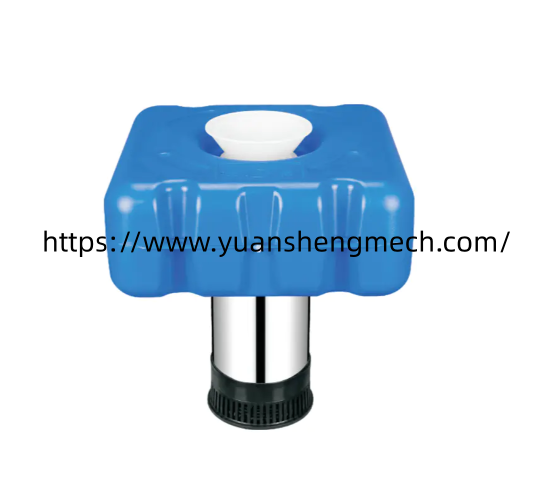

In modern aquaculture, water movement and oxygenation are closely connected, and a Float Type Aerator can provide a flexible way to support these functions across different pond environments. Because the equipment operates at the water surface, buyers need to consider buoyancy, material selection, mechanical structure, water circulation, maintenance, and installation together. Taizhou Yuansheng Aquacul Ture Machinery Co., Ltd. develops floating aerators and other aquaculture machinery for fish pond oxygenation, water management, and related applications.
Material selection is particularly important for equipment that remains in regular contact with water. Aquaculture environments may expose components to moisture, algae, organic matter, salt, and other substances. A suitable combination of corrosion-resistant structural materials and durable floating components can help the equipment maintain its working condition over extended use. Yuansheng's floating equipment includes corrosion-resistant components and floating structures designed for aquatic environments.
The floating structure itself is one of the defining characteristics of this type of aerator. Instead of depending entirely on a fixed installation, the equipment remains supported at the water surface. This can provide greater flexibility when the pond layout changes or when operators need to reposition equipment. Yuansheng describes floating aerators as suitable for different water environments and emphasizes the convenience of installation and repositioning.
When choosing an aerator, buyers should begin with the pond rather than the equipment catalog. Pond shape, water movement, stocking conditions, water quality, access for maintenance, and daily management practices can all affect equipment selection. Yuansheng's recent guidance also emphasizes that pond conditions should be considered before choosing an aerator for fish farming.
Water circulation is another important purchasing consideration. Aeration is not simply about introducing oxygen into water; mechanical movement can also help distribute oxygenated water and reduce areas where water remains relatively stagnant. Floating equipment can create movement close to the surface while allowing operators to position the aerator according to the overall pond arrangement.
The method used to create water movement varies between aerator designs. Some floating systems use pumping action, while others combine surface agitation with rotating components. Yuansheng's product range includes fully automatic floating aerators, floating oxygenators for aquatic environments, waterwheel aerators, impeller aerators, and other mechanical aeration systems.
The relationship between the floating platform and the working mechanism also affects equipment stability. The supporting structure needs to keep the aerator appropriately positioned while the rotating or pumping components operate. A well-coordinated structure can make the equipment easier to manage and can reduce the need for constant manual repositioning.
Installation is another area where floating equipment can offer a different user experience from fixed aeration systems. A floating design can reduce the need for complicated supporting structures in some applications, while allowing the equipment to be moved when pond management conditions change. Yuansheng's floating oxygenator information highlights straightforward placement and connection as part of its installation approach.
For aquaculture operators, ease of handling can be particularly valuable. Pond environments change throughout the production cycle, and equipment may need to be inspected, cleaned, relocated, or temporarily removed. A floating structure that can be handled without unnecessarily complicated procedures can make routine management more convenient.
Maintenance should also influence purchasing decisions. Aerators operate in environments where algae, sediment, and organic material can accumulate around exposed components. Buyers should therefore examine whether important working parts are accessible for inspection and cleaning. Straightforward construction can make routine maintenance easier and help operators identify unusual conditions before they interfere with normal pond management.
Yuansheng describes its production process as covering multiple stages, including mold design and processing, component turning, punching, pressing, grinding, and finished-product assembly. The company also states that it maintains an independent research and development team and its own testing laboratory. For buyers, an integrated production structure can make communication about product development and customization more direct.
Customization can be useful when a standard floating aerator does not fully match a particular installation. Different ponds may have different layouts, water conditions, operating practices, or equipment combinations. Yuansheng states that it can develop and produce products according to customer drawings or samples, which can support applications requiring customized equipment solutions.
User experience also includes the way operators interact with the equipment during everyday work. Controls should be understandable, maintenance points should be accessible, and the floating structure should be practical to handle. A product that is technically capable but difficult to inspect or reposition may create unnecessary work for pond managers.
The surrounding environment should also be considered. Noise and vibration can influence the working atmosphere around aquaculture facilities, especially when operators spend considerable time near ponds. Mechanical components that are properly coordinated can contribute to smoother operation. Equipment placement should also take nearby walkways, pond edges, electrical arrangements, and maintenance areas into account.
Visual design has a practical role in aquaculture machinery as well. A clean structure can make equipment easier to inspect, while an organized arrangement of floats, supports, motors, and working components can improve the overall appearance of a pond installation. For commercial farms and demonstration facilities, equipment that looks orderly can also contribute to a more professional working environment.
Material and structural choices can also differ according to water conditions. Freshwater ponds, saltwater environments, and wastewater applications can expose equipment to different forms of corrosion and contamination. Yuansheng offers a floating oxygenator specifically described for seawater environments, using corrosion-resistant components intended for aquatic conditions. This illustrates why buyers should discuss the actual working environment with the supplier rather than selecting equipment solely from a general product category.
Taizhou Yuansheng Aquacul Ture Machinery Co., Ltd. specializes in aquaculture machinery and produces floating aerators, impeller aerators, waterwheel aerators, surge aerators, vortex aeration equipment, and various submersible pumps. Its broader product range allows buyers to consider aeration and water movement as part of a complete aquaculture equipment system.
For buyers evaluating floating aeration equipment, material selection, buoyancy, water circulation, installation, maintenance, customization, mechanical structure, and everyday handling can be considered together. This approach helps connect the aerator with the actual pond environment and the routine responsibilities of aquaculture operators. More information about Taizhou Yuansheng Aquacul Ture Machinery Co., Ltd. and its aquaculture machinery is available at https://www.yuanshengmech.com/
