

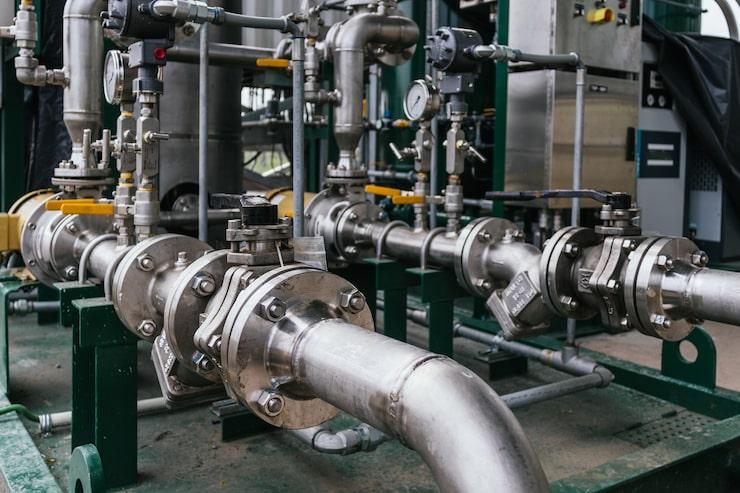

India’s growing pressure on freshwater resources is strengthening interest in rainwater harvesting as a practical approach to water conservation and groundwater recharge. Rapid urbanization, population growth, agricultural consumption, and declining groundwater levels are encouraging households, institutions, commercial buildings, and industries to consider systems that capture rainfall and redirect it toward storage or aquifer replenishment.
The India rainwater harvesting market report states that the sector was valued at USD 278 million in 2025 and is projected to reach USD 428 million by 2032, rising at a CAGR of 6.34% during 2026–2032. The above-ground harvesting segment represented about 64% of the market in 2026, while wet systems accounted for around 42%, reflecting demand for accessible and efficient collection infrastructure.
Groundwater Stress Strengthens the Need for Recharge
Groundwater depletion is one of the strongest structural factors influencing rainwater harvesting adoption. India relies extensively on groundwater for domestic, agricultural, and industrial requirements, while recharge varies significantly across regions and climatic conditions.
The Central Ground Water Board’s 2025 national assessment provides updated information on groundwater resources and their assessment across India. The continued annual assessment of recharge, extraction, and resource availability illustrates the importance of monitoring aquifers as water demand increases.
Northern states such as Punjab, Haryana, Uttar Pradesh, and Delhi are facing substantial groundwater pressure, while Rajasthan and Gujarat also experience depletion associated with arid conditions and irrigation requirements. These regional differences are encouraging governments and property developers to consider localized harvesting and recharge infrastructure.
Government Programs Support Water Conservation
Policy support is creating a broader framework for rainwater harvesting adoption. Government initiatives increasingly connect rainwater collection with groundwater recharge, water conservation, and long-term source sustainability rather than treating harvesting as an isolated infrastructure activity.
The Jal Jeevan Mission incorporates source-sustainability measures that include groundwater recharge, greywater management, water conservation, and rainwater harvesting. This approach places harvesting within a wider water-security framework and encourages integration with community-level water management.
The Ministry of Jal Shakti has also continued the Jal Shakti Abhiyan: Catch the Rain campaign, which promotes the creation of rainwater harvesting structures, groundwater recharge measures, water-body conservation, and community participation. These initiatives can support adoption across both rural and urban areas.
Above-Ground Systems Offer Practical Deployment
Above-ground rainwater harvesting represented approximately 64% of the market in 2026, according to the study. Its position is associated with comparatively simpler installation, lower excavation requirements, and accessibility for maintenance.
These systems typically collect rooftop runoff and channel it through conveyance and filtration components into storage tanks positioned above ground. Their accessible design can simplify inspection, cleaning, and repair, making them suitable for residential buildings, housing societies, schools, and smaller commercial properties.
Above-ground systems can also be incorporated into existing buildings without extensive structural modification. This characteristic is relevant in urban areas where retrofitting existing properties may be more practical than developing entirely new underground infrastructure.
Wet Systems Support Larger Collection Networks
Wet systems accounted for around 42% of the system-type segment in 2026. These configurations can connect multiple collection points to centralized storage, making them suitable for buildings with larger roof areas or multiple structures.
In wet systems, underground pipes can remain filled with water after rainfall, creating a continuous pathway between collection areas and storage facilities. Their configuration can support larger collection networks where several roof surfaces need to be connected.
Commercial complexes, institutional campuses, and larger residential developments can therefore provide suitable applications. The ability to route collection infrastructure across complex sites can also support integration into dense urban developments where available space is limited.
Smart Technologies Add a Digital Layer
Technology is becoming increasingly integrated with rainwater harvesting systems. Sensors, Internet of Things devices, automated pumps, and digital monitoring platforms can provide information about rainfall, tank levels, water flow, and storage capacity.
The report highlights an IoT-enabled water-management initiative in Erode district, Tamil Nadu, where sensors were deployed across 50 habitations in 16 villages. The initiative reportedly improved water availability by around 20% while reducing electricity consumption by approximately 40%.
Digital systems can also help prevent overflow and improve pump operation. By monitoring storage levels and rainfall intensity, automated controls can regulate valves and pumps according to changing water conditions. This moves rainwater harvesting toward a more data-driven model of water management.
Institutional Projects Create Deployment Opportunities
Large public and institutional facilities offer significant opportunities because they often have extensive rooftops and land areas capable of capturing substantial quantities of rainfall. Railway stations, hospitals, schools, government buildings, and institutional campuses can integrate collection, storage, and recharge systems into broader water-management plans.
The report notes that Indian Railways has implemented rainwater harvesting systems at more than 2,428 locations. Such projects demonstrate how large infrastructure networks can contribute to groundwater recharge while reducing reliance on externally supplied freshwater.
Community-level initiatives are also expanding. Municipal programs involving residential societies and public buildings can create wider adoption by combining individual installations with neighborhood-scale recharge infrastructure.
Initial Costs Remain a Barrier
Despite the long-term water-conservation benefits, installation costs remain a challenge. A complete system may require storage tanks, filtration units, conveyance pipes, recharge pits, pumps, first-flush devices, and professional installation.
The financial burden can be particularly significant for households, small businesses, and institutions operating with limited budgets. Although subsidies and incentives are available in some areas, support may cover only part of the initial expenditure.
This cost barrier can slow adoption even in locations experiencing significant water stress. Consequently, scalable system designs, locally appropriate technologies, and public-sector support can influence the pace at which rainwater harvesting becomes more widespread.
Southern India Leads Adoption
Southern India represents the leading regional market, with Tamil Nadu, Karnataka, Telangana, and Andhra Pradesh identified as important contributors. Water stress, urbanization, groundwater dependence, and government mandates have encouraged wider implementation across the region.
Cities such as Chennai, Bengaluru, and Hyderabad have developed regulations and infrastructure programs supporting rainwater harvesting. The combination of urban density and water-supply pressure creates strong incentives for rooftop collection, recharge pits, and other conservation systems.
Building a More Resilient Water System
India’s rainwater harvesting sector is developing alongside a broader shift toward groundwater conservation and decentralized water management. Rising resource pressure is supporting demand, while government programs and technological developments are expanding the range of applications.
The sector’s projected growth through 2032 reflects increasing recognition that rainfall can serve as a supplementary water resource when captured and managed effectively. Above-ground systems, wet configurations, smart monitoring, institutional projects, and community-based initiatives are contributing to a more diversified adoption landscape.
Long-term development will depend on balancing installation costs with water-security benefits, strengthening local implementation, and integrating harvesting systems into wider groundwater-recharge and urban water-management strategies.
