


Unmanned Underwater Vehicles: Autonomous Systems Reshape Maritime Operations
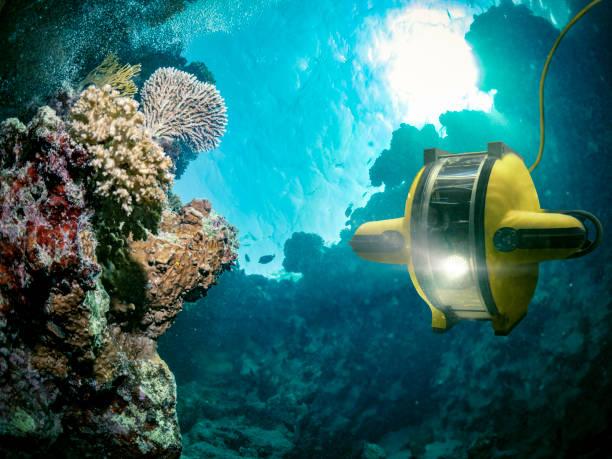
Unmanned underwater vehicles (UUVs) are becoming increasingly important across defense, offshore energy, scientific research, and subsea infrastructure operations. These systems can perform underwater missions with limited or no direct human intervention, supporting activities ranging from intelligence and surveillance to hydrographic surveys and infrastructure inspection. Advances in autonomous navigation, artificial intelligence, underwater communications, and energy storage are expanding their operational capabilities.
A comprehensive market assessment by MarkNtel Advisors reveals that the Unmanned Underwater Vehicles (UUV) Market was valued at around USD 4.11 billion in 2025 and is projected to grow from USD 6.11 billion in 2026 to USD 23.28 billion by 2032, registering a CAGR of 24.98% during 2026–2032. The Unmanned Underwater Vehicles market analysis indicates that North America led globally with a 56% revenue share in 2026, while Autonomous Underwater Vehicles (AUVs) accounted for 56% and Intelligence, Surveillance & Reconnaissance (ISR) represented 34%.
Maritime Infrastructure Is Expanding the Role of UUVs
The world's oceans support critical infrastructure for energy production, telecommunications, transportation, scientific research, and national security. The expansion of subsea pipelines, offshore wind farms, communication cables, and offshore energy assets is increasing the need for technologies capable of inspecting and monitoring underwater environments.
Submarine telecommunications cables carry more than 95% of international internet traffic, making subsea infrastructure an important component of the global communications network. UUVs can support inspection and maintenance activities in environments that are difficult, costly, or time-consuming to access using conventional methods.
The growing importance of underwater observation is also reflected in public-sector investment. In 2026, the U.S. National Oceanic and Atmospheric Administration awarded USD 21.6 million to support uncrewed marine systems for hydrographic mapping and ocean observation. The initiative demonstrates the expanding role of autonomous underwater technologies beyond defense applications. (noaa.gov)
Naval Modernization Supports Autonomous Underwater Systems
Defense modernization remains an important driver of UUV adoption. Naval forces are increasingly exploring autonomous platforms for intelligence gathering, surveillance, mine countermeasures, reconnaissance, and protection of maritime infrastructure. These systems can provide persistent underwater monitoring while reducing the need to expose crewed vessels to certain operational environments.
The U.S. Department of Defense requested USD 13.4 billion for autonomy and autonomous systems in its Fiscal Year 2026 budget, including USD 1.7 billion for maritime autonomous platforms and USD 734 million for underwater autonomous systems. Such investments demonstrate the growing emphasis on autonomous capabilities within modern defense planning.
The UK's Ministry of Defence is also advancing autonomous mine-countermeasure capabilities through its Mine Hunting Capability programme. These developments illustrate how UUVs are increasingly being incorporated into naval modernization programs alongside conventional vessels and other autonomous platforms.
Artificial Intelligence Is Increasing Mission Autonomy
The integration of artificial intelligence and autonomous navigation is changing how UUVs perform complex underwater missions. Conventional underwater operations can require extensive human supervision because GPS signals do not normally penetrate seawater, making navigation more difficult than in surface or airborne environments.
AI-enabled navigation can allow UUVs to process sensor data, identify environmental conditions, optimize routes, and make certain operational decisions with reduced human intervention. These capabilities can improve mission efficiency while enabling vehicles to operate for longer periods without continuous support from surface vessels.
Recent technological developments illustrate this transition. In August 2025, Exail secured a contract to supply 100 Phins compact inertial navigation systems for military UUVs. The systems are designed to support precise navigation in GPS-denied environments. Beam has also introduced Scout, an AI-powered AUV designed for offshore wind operations, combining autonomous navigation with real-time subsea data collection.
AUVs Lead Vehicle-Type Adoption
Autonomous Underwater Vehicles accounted for approximately 56% of the global UUV market in 2026, making them the leading vehicle type. Their ability to operate without tethered connections or continuous support from surface vessels provides greater flexibility for long-duration missions.
AUVs are being used across defense, offshore energy, hydrographic surveying, environmental monitoring, and scientific research. Their untethered architecture allows them to cover larger areas and operate in environments where maintaining a physical connection to a surface vessel would be impractical.
Defense applications are also supporting technological development. France's Directorate General for Armaments awarded a contract for eight next-generation AUVs under the SLAM-F programme to strengthen the French Navy's mine-countermeasure capabilities. Such procurement programs are increasing the operational maturity of autonomous underwater systems.
ISR Emerges as a Leading Application
Intelligence, Surveillance & Reconnaissance accounted for approximately 34% of the global UUV market in 2026, representing the leading application segment. Persistent underwater intelligence is becoming increasingly important as governments and naval forces seek greater awareness of subsea environments.
ISR-focused UUVs can collect information across large underwater areas while reducing the need for continuous human presence. Their applications include seabed monitoring, maritime surveillance, intelligence gathering, and underwater infrastructure observation.
The operational capabilities of these systems are also advancing. Kongsberg's HUGIN Superior, accepted by the U.S. Navy in 2025, is designed for Intelligence Preparation of the Operational Environment and Subsea and Seabed Warfare missions, with more than 70 hours of endurance. BAE Systems' Herne XLAUV has also demonstrated a pre-programmed ISR mission using its Nautomate autonomous control system.
Battery Limitations Create an Innovation Opportunity
Limited battery endurance remains a significant challenge for UUV deployment, particularly during deep-sea exploration, maritime surveillance, and extended infrastructure inspection missions. Underwater vehicles operate with finite onboard energy and cannot always return easily to a support vessel for recharging.
This limitation is encouraging development in high-energy-density batteries, fuel-cell propulsion, and autonomous underwater charging systems. Longer endurance could expand the range of missions that UUVs can undertake while reducing recovery and redeployment requirements.
In 2025, the U.S. Department of Energy awarded USD 1 million to Oregon State University under its Marine Energy University Foundational R&D Program to develop a wave-to-wire autonomous docking and recharging system for AUVs. The project aims to enable underwater vehicles to recharge using wave-energy infrastructure.
North America Maintains a Strong Position
North America accounted for approximately 56% of global UUV revenue in 2026. The region's position is supported by sustained naval modernization, investment in autonomous maritime systems, and an established defense technology ecosystem.
The U.S. Department of the Navy's FY2027 budget request allocates USD 65.8 billion for shipbuilding, with significant emphasis on unmanned maritime platforms under the Golden Fleet Initiative. Continued investment in autonomous maritime capabilities is supporting the development and deployment of advanced UUV systems.
Canada also contributes to the region's technological capabilities through its established underwater engineering and manufacturing base. Collaboration involving companies such as Cellula Robotics, BAE Systems, and International Submarine Engineering is supporting the development of advanced autonomous underwater platforms.
Subsea Energy and Infrastructure Expand Commercial Applications
UUV adoption is extending beyond defense as offshore renewable energy and subsea infrastructure expand. Offshore wind farms require recurring inspection of turbine foundations, subsea cables, and surrounding seabed conditions. Autonomous vehicles can perform these tasks while reducing dependence on crewed vessels.
Global offshore wind capacity reached 92.5 GW by the end of 2025, according to the data cited in the study. As offshore installations expand, the requirement for underwater inspection and monitoring can increase correspondingly.
The combination of offshore energy development and subsea communications infrastructure is therefore creating additional opportunities for UUV manufacturers. Commercial operators are increasingly looking for autonomous systems capable of collecting accurate underwater data efficiently and repeatedly.
Outlook for Autonomous Underwater Operations
The UUV sector is entering a period of rapid technological development as defense modernization, subsea infrastructure expansion, offshore renewable energy, and scientific exploration converge. Autonomous navigation, artificial intelligence, advanced sensors, and improved energy systems are expanding the range and complexity of underwater missions.
The industry growth trends indicate that future adoption will depend partly on overcoming battery limitations, underwater communication constraints, and the challenges of operating reliably in GPS-denied environments. Continued investment in autonomous charging, energy storage, navigation, and mission-control technologies could address some of these limitations.
With the global market projected to reach USD 23.28 billion by 2032, UUVs are increasingly becoming part of the technological infrastructure supporting maritime security, subsea asset management, scientific observation, and offshore energy operations. Their expanding role reflects a broader transition toward autonomous systems capable of performing complex tasks in environments where conventional human-operated platforms can face significant operational constraints.

 Bangla