

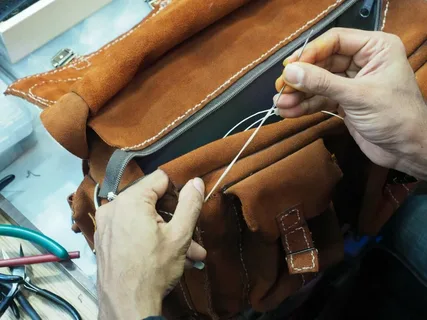

Searching for luggage repair near me usually means your suitcase has developed a problem that you want fixed before your next trip. A broken handle, damaged wheel, faulty zipper, or cracked shell can make a bag difficult to use.
Before taking your luggage for repair, it helps to identify the damaged parts and consider whether the suitcase is worth repairing.
Start With a Complete Luggage Check
Do not focus only on the part that has stopped working.
Place the suitcase on a flat surface and inspect the entire bag.
Check the:
-
Wheels
-
Telescopic handle
-
Zippers
-
Locks
-
Shell or fabric
-
Carry handles
-
Seams
-
Corners
-
Interior lining
A problem in one area can sometimes affect another component.
For example, a damaged wheel may place extra stress on the lower corner of the suitcase.
Check the Wheels First
Wheels receive a lot of wear during travel.
Roll the suitcase across a flat surface and notice whether it moves normally.
Watch for:
-
Wobbling
-
Grinding sounds
-
A wheel that does not turn
-
Uneven movement
-
Cracked wheel housing
-
A missing wheel
Do not keep dragging a suitcase with a damaged wheel if you can avoid it.
Continued use may damage the wheel mount or surrounding shell.
If the wheel itself is worn but the mounting area is still intact, replacement may be possible.
Test the Telescopic Handle
Pull the handle up and lower it several times.
It should extend and retract without excessive force.
A handle that gets stuck, moves unevenly, or refuses to lock into position may have a damaged internal mechanism.
Avoid repeatedly forcing it.
A broken handle can become inconvenient during a trip, particularly when you need to move the suitcase through an airport or train station.
Inspect the Zippers
Zippers are another common luggage problem.
Check whether the zipper:
-
Opens smoothly
-
Gets stuck
-
Separates behind the slider
-
Has missing teeth
-
Has a damaged pull
-
No longer closes completely
A zipper problem does not always mean the entire zipper needs replacement.
Sometimes the slider or pull is the part that needs attention.
If the zipper has missing teeth or significant fabric damage, a more extensive repair may be necessary.
Look for Shell Damage
Hard-shell luggage can develop cracks after impact.
Inspect the corners and areas around the wheels and handles carefully.
Small scratches are usually different from structural cracks.
A deep crack, broken corner, or damaged mounting area deserves closer attention.
Avoid using heavy pressure on a cracked shell because the damage may spread.
Check Fabric Suitcases for Tears
Soft luggage can develop tears around seams, pockets, handles, and corners.
Look for:
-
Frayed fabric
-
Open seams
-
Torn pockets
-
Damaged lining
-
Loose stitching
-
Holes around attachment points
A small seam problem may be easier to address before it becomes a larger tear.
Empty the suitcase before taking it for repair so the technician can access the affected areas properly.
Inspect the Locks
If your suitcase has a combination lock, key lock, or another locking mechanism, test it carefully.
Do not force the lock if it does not operate normally.
A lock problem may be caused by the mechanism itself or by pressure from the zipper or surrounding luggage structure.
If the suitcase can still be opened, keep the contents secure while arranging repair.
Think About the Timing of the Repair
The best time to inspect luggage is before you urgently need it.
Do not wait until the night before a flight to discover that the wheels are damaged or the handle is stuck.
If you are preparing for a trip, roll the suitcase, test the handle, operate the zippers, and check the locks several days in advance.
This gives you time to arrange a repair without unnecessary travel stress.
Ask Whether the Part Can Be Repaired or Replaced
A luggage repair does not always require replacing the complete bag.
Depending on the damage, a technician may be able to replace individual components.
For example, you may only need:
-
A new wheel
-
A replacement handle
-
A zipper slider
-
A new zipper
-
Stitching
-
A replacement lock
-
Shell or corner repair
The available solution depends on the suitcase design and the condition of the damaged area.
Take Photos Before the Repair
If the suitcase is valuable or has extensive damage, take clear photos before handing it over.
Photograph the damaged area and the overall condition of the bag.
This gives you a simple record of its condition before the repair.
It can also help when explaining the problem during an initial enquiry.
What About Branded Luggage?
Branded luggage may use specific wheels, handles, locks, and other components.
Avoid assuming that a generic replacement part will fit correctly.
If you own a Samsonite suitcase, for example, you may specifically look for Samsonite repair Dubai when the bag needs brand-specific attention.
The correct replacement depends on the suitcase model and the damaged component.
When Professional Luggage Repair Makes Sense
Professional assistance may be useful when:
-
A wheel has broken
-
The handle is stuck
-
The zipper has failed
-
The shell is cracked
-
A lock is damaged
-
Seams have opened
-
You cannot identify the cause of the problem
-
A branded suitcase needs a compatible part
A proper inspection can help determine whether repair is practical before you spend money on a replacement suitcase.
Test the Bag After Repair
Once the repair is complete, test the suitcase before your next trip.
Roll it across a flat surface.
Extend and retract the handle.
Open and close every zipper.
Check the lock.
Inspect the repaired area for loose stitching or movement.
If a wheel was replaced, make sure the suitcase rolls evenly.
A few minutes of testing can help identify an issue while it is still easy to address.
Final Thoughts
Searching for luggage repair near me is often the first step when a suitcase develops a problem before or after a trip.
Start with a complete inspection instead of focusing only on the obvious damage. Check the wheels, handle, zippers, locks, shell, fabric, and seams.
Where possible, identify the damaged component and ask whether it can be repaired or replaced separately. Getting the problem addressed before your next journey can help you avoid dealing with a broken suitcase while travelling.
