

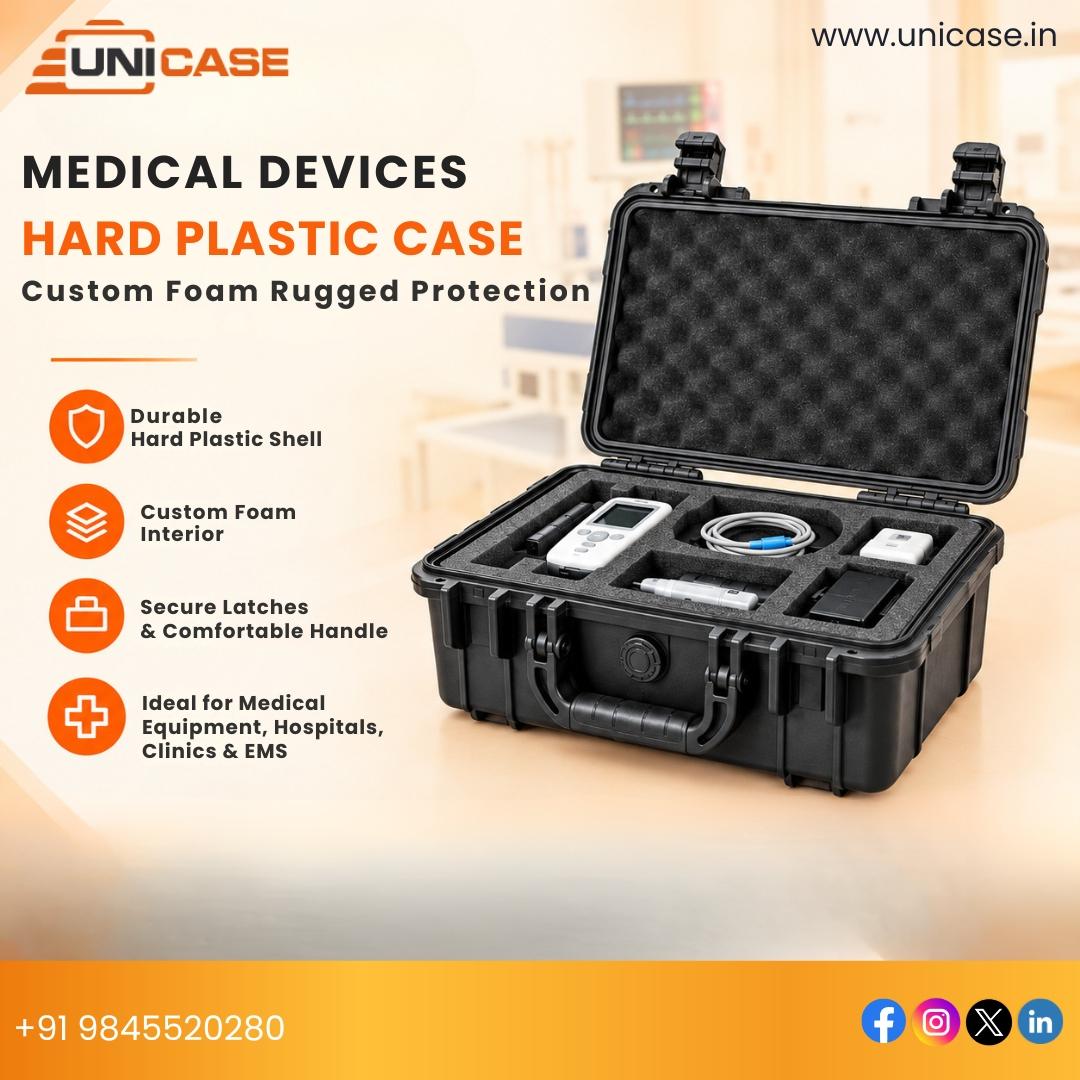

Modern healthcare depends on equipment that must remain functional, organized, and ready for use. From diagnostic instruments and electronic devices to specialized testing equipment, many medical tools need to travel between hospitals, laboratories, clinics, service centers, and field locations.
Transportation can introduce risks that are easy to overlook. Equipment may experience vibration, accidental drops, dust, moisture, or repeated handling. A properly selected Medical Devices Hard plastic Case can provide a practical layer of protection while making equipment easier to organize and transport.
The Importance of Proper Medical Equipment Protection
Medical instruments can contain precision components and electronic systems that require careful handling. Even relatively small impacts can potentially affect delicate components or external parts.
Using an appropriate protective case helps establish a dedicated environment for transportation. Instead of placing instruments inside general-purpose bags or boxes, users can choose a rigid enclosure designed around the dimensions and handling requirements of the equipment.
This approach can be particularly valuable for equipment that is transported frequently.
Understanding the Role of a Hard Protective Case
A hard protective case generally combines a rigid outer shell with internal space designed to accommodate specific equipment.
The outer structure provides a physical barrier, while the internal configuration can help prevent unnecessary movement. Secure latches keep the case closed during transportation, and handles allow users to carry the equipment more conveniently.
For professional applications, the case should be selected according to the actual equipment rather than simply choosing the largest available option.
Custom Internal Protection
The interior of a protective case is just as important as its external construction.
Medical equipment may come with cables, sensors, adapters, chargers, probes, and other accessories. Without an organized interior, these items can shift during transportation or become difficult to locate.
Custom foam inserts can create individual spaces for different components. This can help keep equipment organized and reduce movement inside the case.
A well-designed foam layout can also make the packing process more consistent. Staff members can see where each component belongs, making it easier to prepare equipment for transportation and check that accessories have been returned after use.
Selecting the Right Medical Equipment Case
When comparing protective cases, organizations should consider several practical factors.
A suitable Medical equipment case should accommodate the complete equipment setup while remaining manageable for its intended users.
Consider the following:
Equipment Dimensions
Measure the length, width, and height of the primary equipment and accessories. Accurate measurements help prevent a case from being unnecessarily oversized or too small.
Weight
The total weight of the equipment and case affects portability. If technicians regularly carry the case, handles and overall weight should be considered carefully.
Transportation Conditions
Think about where the equipment will travel. Indoor transportation has different requirements from outdoor field use, vehicle transportation, or frequent air travel.
Environmental Exposure
Determine whether the case needs protection against dust, moisture, or other environmental conditions. Always check the manufacturer's specifications for the actual protection level.
Interior Organization
If the equipment includes multiple accessories, custom foam may provide a more practical internal arrangement than an open compartment.
Why Portability Is Important
A protective case needs to balance durability with usability. A case that is difficult to carry may create unnecessary inconvenience for technicians and healthcare personnel.
Ergonomic handles can make lifting and carrying easier. For larger equipment, cases with wheels may be considered when appropriate.
The best configuration depends on the size and weight of the equipment, frequency of transportation, and environment in which the case will be used.
Reusable Protection for Repeated Transportation
Medical equipment is often moved repeatedly rather than transported only once. A reusable hard case can therefore be a practical long-term packaging solution.
Instead of repeatedly replacing disposable packaging, organizations can use a dedicated case designed for recurring transportation. A consistent internal layout also allows staff to follow the same packing process each time.
This can be useful for service engineers, equipment suppliers, diagnostic teams, and organizations that regularly move specialized instruments.
Unicase Protective Case Solutions
Unicase provides hard protective case solutions for professional applications involving sensitive equipment. Its cases are intended to support the transportation and storage of equipment across different industries, including applications where organization and physical protection are important.
Depending on the equipment, users can consider suitable case dimensions and internal foam configurations to create a more purpose-oriented storage and transportation setup.
Before selecting a case, businesses should evaluate their equipment dimensions, accessories, handling requirements, and transportation environment.
A Simple Selection Checklist
A practical purchasing checklist can make the selection process easier:
-
Measure the complete equipment setup.
-
Include cables and accessories in the space calculation.
-
Determine the expected transportation frequency.
-
Consider indoor and outdoor conditions.
-
Check whether moisture or dust protection is required.
-
Evaluate the case's carrying options.
-
Determine whether custom foam is needed.
-
Review the manufacturer's specifications.
-
Consider future equipment or accessory requirements.
Taking these factors into account helps organizations choose protective packaging based on actual operational needs.
FAQ
What makes a hard case useful for medical equipment?
A hard case provides a rigid outer enclosure that can help protect equipment during storage and transportation. The appropriate level of protection depends on the case specifications and application.
Can a hard case accommodate medical accessories?
Yes. Cases can be selected with sufficient internal space for accessories, while custom foam layouts can create dedicated compartments for individual components.
Is custom foam necessary for every medical device?
Not necessarily. The need for custom foam depends on the equipment's shape, sensitivity, accessories, and transportation requirements.
What should I measure before buying a case?
Measure the equipment's length, width, and height, and account for cables, adapters, probes, chargers, and other accessories that need to travel with it.
Can protective cases be reused?
Many hard protective cases are designed for repeated use. Their suitability for a particular application depends on the case construction, specifications, and handling conditions.
Conclusion
Reliable transportation is an important consideration when medical instruments move between locations. Selecting a protective case based on equipment dimensions, environmental exposure, portability, and internal organization can help create a more secure and practical transportation system.
For businesses and professionals handling sensitive instruments, a durable hard case with an appropriately designed interior can provide a reusable solution for everyday storage and transportation. Unicase offers protective case options that can be considered for medical equipment and other professional applications where organized, durable protection is required.
Contact:
phone number: +91 9845520280
Visit Website: https://www.unicase.in/
More Social Media
Facebook | YouTube | Instagram | Twitter | LinkedIn | Pinterest
