

The Role of Chitosan-Based Dressings in Modern Bleeding Control - Axiobio

Bleeding remains one of the most important challenges in trauma and emergency medicine. Rapid and appropriate haemostasis can be critical while a patient receives definitive medical care. Advances in biomaterials have introduced new approaches to bleeding control, including dressings that incorporate chitosan.
Chitosan-based medical technologies combine material science with practical wound-care requirements. Companies such as Axiobio are developing solutions intended for trauma, surgical, and advanced wound-management applications.
Understanding Chitosan as a Medical Biomaterial
Chitosan is a naturally derived biopolymer obtained through the processing of chitin. Its chemical and physical characteristics have made it a subject of interest in several biomedical applications.
In haemostatic products, chitosan can provide properties that differ from conventional wound-covering materials. Its charge characteristics allow interactions with blood components when the material comes into contact with a bleeding wound.
This interaction is one reason chitosan has been investigated and incorporated into haemostatic dressing technologies.
The Role of Chitosan Gauze in Trauma Care
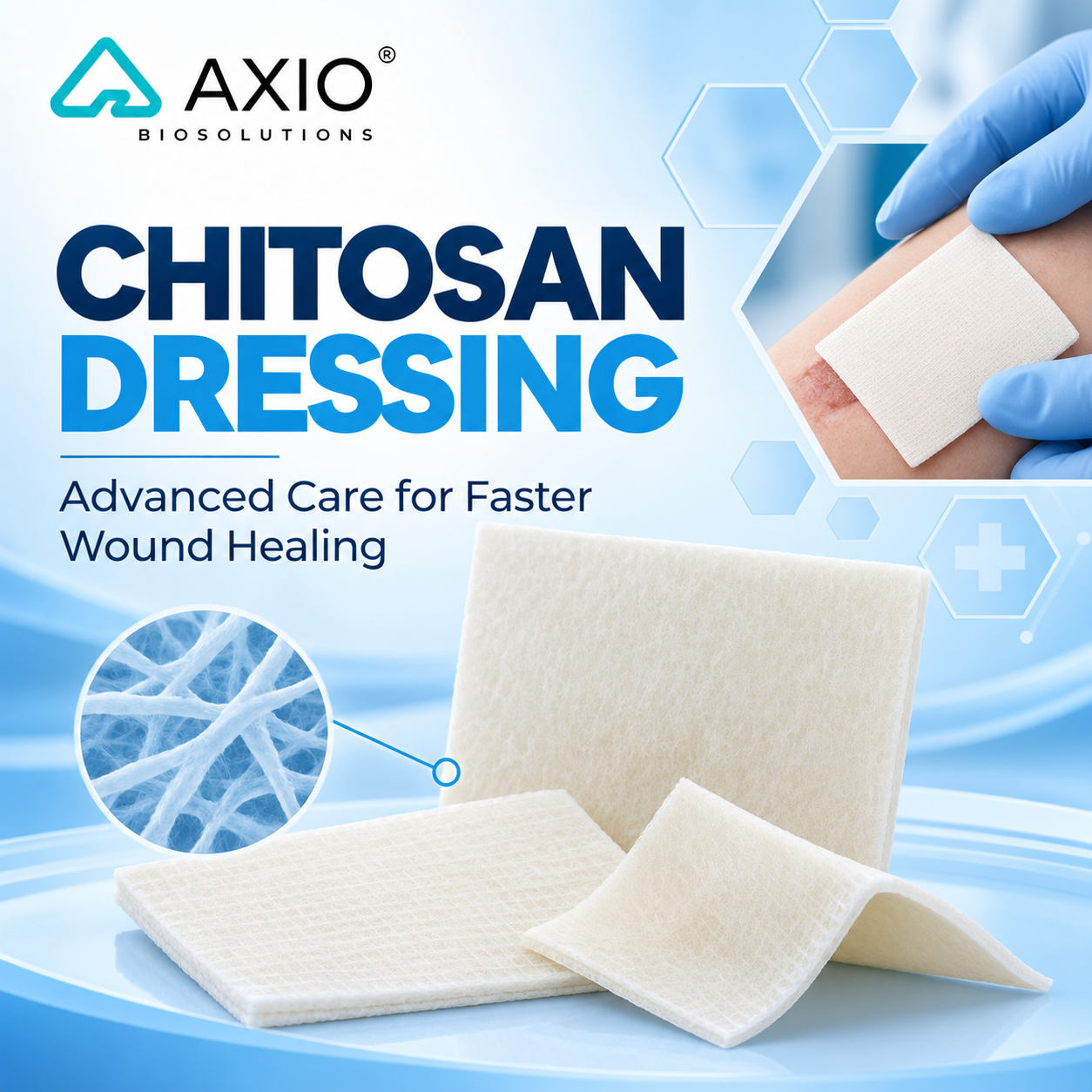
Chitosan gauze is designed to provide haemostatic support while maintaining the practical format of a gauze dressing.
In trauma care, accessibility and ease of application are important considerations. A dressing may need to be placed quickly, maintained against the bleeding site, and used as part of an established bleeding-control protocol.
Chitosan-based gauze can provide an additional mechanism of action compared with standard gauze because the chitosan material is intended to interact with blood components at the wound site.
Its application depends on the specific product, wound characteristics, and manufacturer's instructions.
How Chitosan-Based Haemostasis Works
One of the key features of chitosan is its positive charge under appropriate conditions. Blood contains negatively charged cellular and molecular components.
When chitosan comes into contact with blood, electrostatic interactions can contribute to the accumulation of blood components at the wound surface. This can support formation of a barrier over the bleeding area.
The mechanism illustrates the importance of biomaterial engineering in modern wound care. Rather than relying only on absorption, advanced haemostatic products can be designed to interact with the biological environment of the wound.
Chitosan Dressing Applications
A chitosan dressing can be developed for specific bleeding-control and wound-management requirements. Depending on the product's intended indication, chitosan-based technologies may have applications across trauma care, emergency medicine, surgery, and other healthcare environments.
Healthcare professionals should always distinguish between different products because design, indications, regulatory clearances, and instructions can vary.
A dressing intended for one application should not automatically be assumed to be suitable for another.
From Emergency Response to Surgical Care
The need for effective bleeding control extends across multiple healthcare environments.
In pre-hospital settings, responders may encounter injuries where immediate definitive treatment is unavailable. In hospitals, clinicians may require haemostatic materials during surgical or procedural care. In defence medicine, products may need to function in challenging environments.
These different settings create specific requirements for medical devices, including portability, ease of use, packaging, storage, sterility, and performance.
Importance of Evidence-Based Medical Devices
Healthcare innovation should be supported by appropriate evidence. For haemostatic products, this may include laboratory testing, preclinical research, clinical evaluation, regulatory documentation, manufacturing controls, and post-market monitoring.
Evidence-based development helps healthcare professionals understand what a product is designed to do and under which conditions it should be used.
It also helps distinguish scientifically developed medical devices from products making unsupported performance claims.
Axiobio and Biomaterial-Based Healthcare Innovation
Axiobio focuses on biomaterial-based medical technologies designed for trauma, surgical, and wound-care applications. Its product development approach reflects the growing role of material science in healthcare.
The development of haemostatic products requires consideration of both scientific principles and practical clinical needs. Product consistency, quality manufacturing, intended use, packaging, and clinical requirements all contribute to the overall performance of a medical device.
This multidisciplinary approach is particularly relevant as healthcare providers seek modern tools for bleeding management.
Factors to Consider When Selecting a Haemostatic Dressing
Healthcare professionals evaluating haemostatic dressings can consider several factors:
Intended Clinical Application
The product should be appropriate for the wound type and intended clinical environment.
Haemostatic Mechanism
Understanding how the dressing interacts with blood can help clinicians evaluate its role within a bleeding-control protocol.
Evidence and Regulatory Status
Clinical evidence and applicable regulatory information provide important context for product selection.
Ease of Application
In emergency situations, a practical dressing design can support efficient application according to established protocols.
Manufacturing Quality
Consistent manufacturing, sterility, packaging, and quality-control processes are important characteristics of medical devices.
The Future of Chitosan-Based Wound Care
Biomaterials are likely to remain an important area of medical-device development. Chitosan's functional characteristics make it particularly relevant to research into haemostasis and wound management.
Future innovation may focus on improving material performance, developing specialised dressing formats, expanding clinical applications, and integrating biomaterials with other wound-care technologies.
However, innovation should continue to be guided by scientific evidence, regulatory requirements, and clinically relevant needs.
Frequently Asked Questions
1. What is a chitosan-based haemostatic dressing?
It is a medical dressing that incorporates chitosan and is designed to support bleeding control through interactions between the material and blood components.
2. Why is chitosan used in haemostatic products?
Chitosan has chemical and material characteristics that allow it to interact with blood components, making it useful for developing hemostatic technologies.
3. Can chitosan gauze be used for all wounds?
No. Suitability depends on the specific product, wound characteristics, intended indication, and manufacturer's instructions.
4. What makes advanced haemostatic dressings different from standard gauze?
Advanced haemostatic dressings may incorporate materials specifically designed to support haemostasis, whereas standard gauze primarily provides coverage, compression, and absorption.
5. Why should healthcare providers consider clinical evidence?
Clinical and regulatory evidence helps providers understand a medical device's intended use, performance, safety considerations, and appropriate application.
6. What role does biomaterial science play in wound care?
Biomaterial science enables developers to engineer materials with specific physical, chemical, and biological characteristics for wound-management applications.
Contact Information
Website: https://axiobio.com
Email: [email protected]
Phone no: +91 8860786067
Follow Axiobio on Social Media
LinkedIn | Facebook | Instagram | YouTube
