

How Approved Industrial Equipment Suppliers Support Energy Projects - Notdstone
Modern energy projects require a combination of engineering expertise, reliable equipment, quality manufacturing, and careful project coordination. From pressure containment and fluid processing to material storage, industrial equipment must be designed to perform consistently under defined operating conditions.
For project owners and engineering contractors, selecting an appropriate equipment supplier is therefore an important part of procurement planning. Suppliers with experience in pressure equipment, modular process systems, and storage solutions can provide valuable technical support throughout the equipment lifecycle.
Nord Stone develops customized industrial equipment solutions for energy and process applications, supporting projects that require engineered pressure vessels, process skids, and storage equipment.
Understanding the Requirements of Energy Projects
Energy facilities can involve high pressures, temperature variations, corrosive substances, flammable materials, and continuous operation. These conditions create specific requirements for equipment design and manufacturing.
A successful equipment solution begins with understanding the application. Important parameters may include operating pressure, design pressure, temperature, process medium, equipment capacity, material compatibility, installation environment, and connection requirements.
These details help engineers determine an appropriate equipment configuration and material selection.
For this reason, selecting a supplier based solely on product availability may not be sufficient. Engineering capability and experience with similar applications can be equally important.
Pressure Vessels and Safe Process Containment
Pressure vessels are used throughout industrial facilities for containing, processing, or separating pressurized fluids and gases. Their design must account for the intended operating environment and applicable engineering requirements.
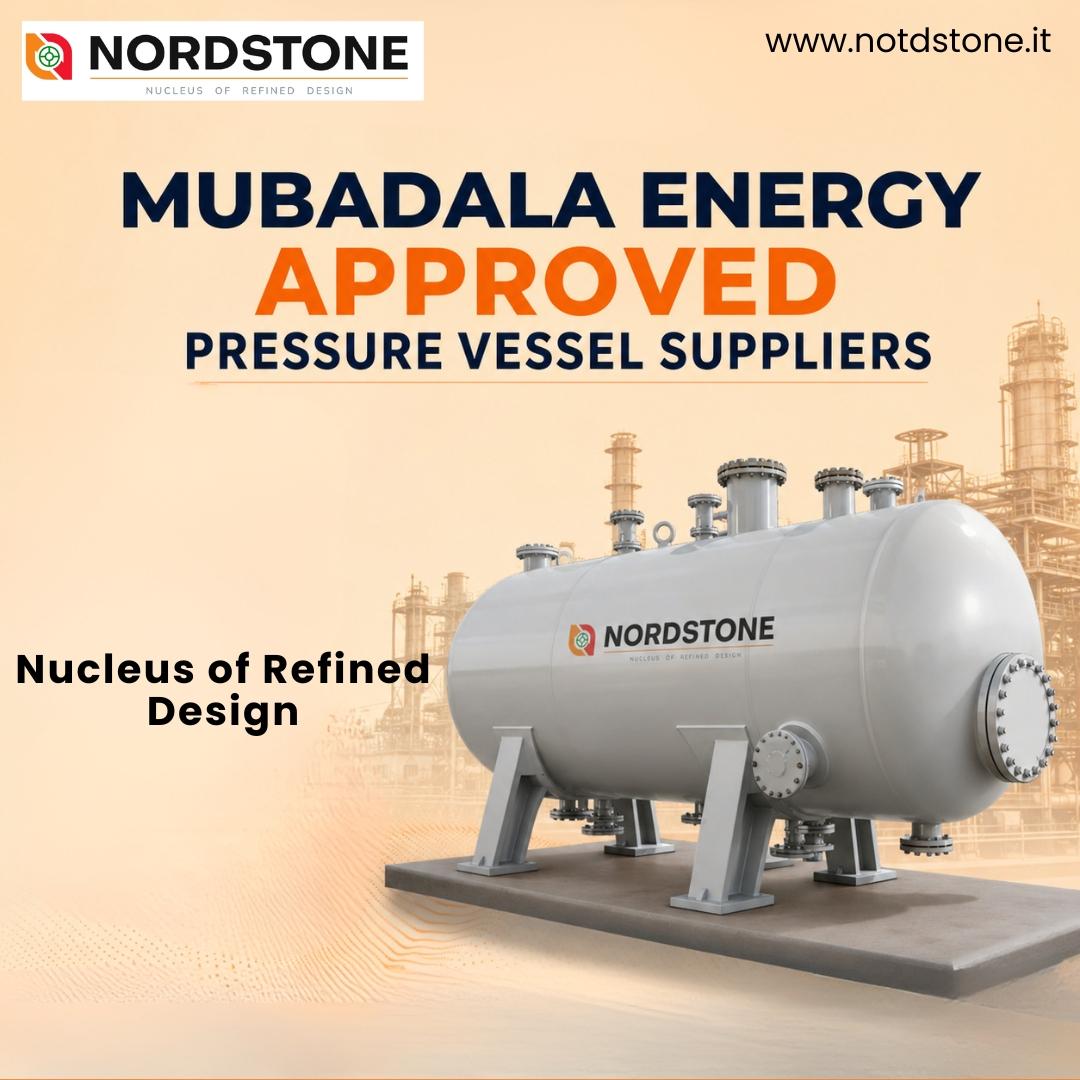
Organizations evaluating Mubadala Energy Approved Pressure Vessel Suppliers can examine factors such as engineering capabilities, fabrication experience, inspection procedures, material traceability, and technical documentation.
Nord Stone develops pressure equipment according to project-specific requirements. The design process can consider vessel dimensions, capacity, operating conditions, materials, nozzles, supports, connections, and other project parameters.
Proper engineering at the beginning of the project can help minimize complications during fabrication and installation.
The Role of Modular Process Skids
Process skids are increasingly useful for projects where equipment integration, installation efficiency, and controlled manufacturing are priorities. A skid can combine several components into a compact, pre-engineered package.
Depending on the process, a skid may incorporate piping, valves, pumps, vessels, instrumentation, heat-transfer equipment, and other components.
When selecting Mubadala Energy Approved Process Skid Suppliers, project teams should consider the supplier's ability to manage both fabrication and equipment integration.
A modular approach can allow more work to be completed in a controlled manufacturing environment. Factory assembly and inspection may also help reduce the amount of installation work required at the final project location.
Nord Stone's customized approach allows process equipment packages to be developed around the intended process and available site conditions.
Storage Tanks for Industrial Facilities
Storage requirements vary depending on the material being stored and the operating environment. Tanks may be required for fuels, chemicals, process liquids, utilities, wastewater, or other industrial materials.
When evaluating Mubadala Energy Approved Storage Tank Suppliers, customers should review the supplier's experience with relevant tank applications and manufacturing requirements.
Tank design can involve several considerations, including storage capacity, material compatibility, temperature, pressure, structural requirements, connections, access, maintenance, and installation conditions.
Nord Stone provides customized storage equipment solutions based on individual project specifications. Such customization can help ensure that tank configurations are appropriate for their intended industrial application.
Why Quality Assurance Matters
Industrial equipment can play a critical role in plant operation. A structured quality assurance process therefore provides an important layer of control during manufacturing.
Depending on project requirements, quality activities can include incoming material inspection, material identification and traceability, welding controls, dimensional inspection, non-destructive testing, pressure testing, surface inspection, and final documentation.
Documentation is also important. Material certificates, inspection reports, test records, drawings, and manufacturing documentation can provide a record of how the equipment was produced and verified.
Project teams should identify documentation requirements early so that quality records can be incorporated into the manufacturing process rather than addressed only at the end.
Engineering and Customization
Industrial projects rarely have identical requirements. Even when two facilities use similar equipment, differences in capacity, process conditions, layout, materials, and installation requirements can affect the final design.
Customized engineering allows the equipment to be developed around these differences.
Nord Stone's project-focused approach considers the technical requirements provided by the customer and develops equipment accordingly. This can be useful when standard equipment configurations do not meet a project's specifications.
Customization can involve dimensions, materials, connections, supports, equipment arrangement, process integration, and other technical features.
Evaluating an Industrial Equipment Supplier
Before placing an equipment order, procurement and engineering teams can review several areas:
Technical Expertise
Assess whether the supplier has experience with the type of equipment and industrial application required.
Manufacturing Capability
Review fabrication facilities, production capacity, equipment, and ability to manage project-specific manufacturing requirements.
Quality Procedures
Consider inspection, testing, material traceability, welding controls, and quality documentation.
Engineering Support
Determine whether the supplier can support drawings, technical clarifications, calculations, equipment configuration, and project coordination.
Customization
Confirm whether the supplier can adapt equipment to the project's dimensions, materials, process requirements, and installation conditions.
Documentation
Check that the supplier can provide the documentation required for procurement, inspection, commissioning, and project records.
Supporting Energy Projects Through Better Supplier Selection
Choosing an industrial equipment supplier involves more than comparing product prices. Project teams need to consider technical compatibility, manufacturing quality, documentation, delivery requirements, and long-term equipment performance.
A supplier capable of managing engineering and fabrication requirements can make coordination easier between procurement teams, engineering contractors, and end users.
For pressure vessels, process skids, and storage tanks, project-specific engineering is particularly important because operating conditions can vary significantly between facilities.
Frequently Asked Questions
What should companies look for in an energy equipment supplier?
Companies can assess engineering expertise, relevant manufacturing experience, quality procedures, customization capabilities, inspection and testing, technical documentation, and project coordination.
Why are pressure vessel specifications important?
Pressure vessel specifications define important design parameters such as pressure, temperature, capacity, materials, and configuration. Accurate specifications help ensure that the equipment is suitable for its intended application.
What are the benefits of modular process skids?
Modular skids can combine multiple components into an integrated package. They may simplify transportation, installation, inspection, and site assembly depending on the project.
How should storage tank materials be selected?
Material selection should consider the stored product, temperature, operating conditions, corrosion considerations, structural requirements, and applicable project specifications.
Can suppliers manufacture equipment according to customer specifications?
Yes. Industrial equipment manufacturers can develop customized solutions based on project drawings, technical specifications, operating parameters, dimensions, material requirements, and other customer requirements.
Conclusion
Energy projects depend on equipment that meets defined engineering, quality, and operational requirements. Pressure vessels provide controlled containment, process skids support modular process integration, and storage tanks enable reliable material management.
Working with an experienced industrial equipment manufacturer can help project teams address these requirements through engineering, fabrication, inspection, documentation, and customization.
Nord Stone focuses on project-specific industrial equipment solutions for energy and process applications, helping customers develop equipment configurations aligned with their technical and operational requirements.
Contact:
Website: https://www.notdstone.it/
Social Media:
FaceBook: https://www.facebook.com/Notdstone/
Twitter: https://x.com/NordStoneit
Instagram: https://www.instagram.com/nordstoneitaly/
Linkedin: https://www.linkedin.com/in/nord-stone-03a510414/
Pinterest: https://it.pinterest.com/nordstoneit
Youtube: https://www.youtube.com/@NordStoneit
